Brushes by Shape


Shop All Brushes by Shape
344 products
Displays products in a grid view
Displays products in a detail view
Shop All Brushes by Shape
344 products
50+ Options
Princeton Velvetouch Synthetic Brushes and Sets
50+ Options
Item #: 06426
Containing a blend of luxurious NextGen synthetic filaments, Princeton Velvetouch Synthetic Brushes are the ultimate mixed media tool for watercolors,...
50+ Options
Blick Scholastic Wonder White Synthetic Brushes and Sets
50+ Options
Item #: 05377
Blick Scholastic Wonder White Brushes come in a wide range of shapes and sizes. White Taklon filaments deliver the texture and responsiveness of Red S...
+ 48 Options
Princeton Heritage Series 4050 Synthetic Sable Brushes and Sets
+ 48 Options
Item #: 06160
These excellent quality short handle brushes for the watercolor painter have the best point and spring of all Princeton synthetics.The special blend o...
50+ Options
Princeton Select Series 3750 Synthetic Brushes
50+ Options
Item #: 06381
The Princeton Select line of brushes goes beyond the basic brush shapes and sizes that make up the artist's arsenal. Joining a range of high-quality R...
+ 33 Options
Princeton Neptune Series 4750 Synthetic Squirrel Brushes and Sets
+ 33 Options
Item #: 09082
Neptune is Princeton's thirstiest brush ever, delivering oceans of color to the sheet. Princeton is proud to offer Neptune in a beautiful range of sha...
50+ Options
Princeton Catalyst Polytip Bristle Brushes and Sets
50+ Options
Item #: 06421
Princeton Catalyst Polytip Bristle Brushes are another Princeton breakthrough that advances the science of synthetic hair. By giving each individual h...
+ 38 Options
Blick Masterstroke Interlocking Bristle Brushes and Sets
+ 38 Options
Item #: 05226
The Interlocking Hog Bristle series is one of our finest brush lines, and the finest hog bristle you'll find. The very best craftsmanship goes into ea...
50+ Options
Princeton Aspen Synthetic Brushes and Sets
50+ Options
Item #: 09158
Princeton Aspen Synthetic Brushes combine performance, practicality, and style. Made from synthetic bristles with the same stiffness as natural bristl...
+ 23 Options
Winsor & Newton Series 7 Kolinsky Sable Brushes and Set
+ 23 Options
Item #: 05002
Considered by many artists to be the world's best brush. Has finest hair from tail of kolinsky. With polished black handle and seamless, cupro-nickel ...
50+ Options
Blick Scholastic Golden Taklon Brushes and Sets
50+ Options
Item #: 05382
Easy to clean and extraordinarily durable, this improved grade of Golden Taklon is an excellent choice for oils and acrylics because of its resistance...
+ 38 Options
Blick Masterstroke Golden Taklon Brushes
+ 38 Options
Item #: 09015
Redesigned to meet the standards of our other Masterstroke brushes, this professional grade of Golden Taklon is carefully engineered with tapered fila...
+ 4 Options
Blick Essentials Brown Nylon Value Brush Sets
+ 4 Options
Item #: 06280
Available in a range of shapes, sizes, and hair types, these very affordable brush sets are great for students, beginners, and the price-conscious pro...
+ 39 Options
Princeton Aqua Elite Series 4850 Synthetic Brushes and Sets
+ 39 Options
Item #: 05465
Princeton Aqua Elite Series 4850 Brushes feature Princeton's NextGen synthetic fibers that are almost indistinguishable from natural Kolinsky in appea...
50+ Options
Blick Masterstroke Finest Red Sable Brushes
50+ Options
Item #: 04650
Hand-selected and hand-cupped by skilled artisans, the highly resilient hair in Blick Masterstroke Pure Red Sable Brushes offers unsurpassed spring, s...
+ 43 Options
Robert Simmons Signet Bristle Brushes and Sets
+ 43 Options
Item #: 06645
Robert Simmons Signet brushes are handmade using high-quality Chungking hog bristle, interlocked and deep-set in extra-long, seamless, nickel-plated f...
50+ Options
Winsor & Newton Cotman Watercolor Brushes and Sets
50+ Options
Item #: 05046
A range of synthetic brushes made by blending fibers of different thicknesses to achieve the most important qualities sought after by the watercoloris...
50+ Options
Simply Simmons Synthetic Brushes
50+ Options
Item #: 06725
For students, amateurs, and professionals alike, Simply Simmons Brushes offer excellent performance, dependability, and value — all at one low price. ...
+ 40 Options
Silver Brush Black Velvet Brushes and Sets
+ 40 Options
Item #: 06196
A blend of natural squirrel hair and black synthetic filament combines to provide excellent carrying capacity with control, spring, and precise pointi...
+ 29 Options
Utrecht Natural Chungking Pure Bristle Brushes and Sets
+ 29 Options
Item #: 04616
Utrecht Natural Chungking Pure Bristle Brushes are handmade using only the highest quality natural Chinese Chungking Hog Bristles. The Series 209 brus...
+ 31 Options
Utrecht Manglon Synthetic Brushes and Sets
+ 31 Options
Item #: 04627
Utrecht Manglon Synthetic Brushes are known for their excellent paint capacity, their silky feel, an extraordinary snap-back, and great shape retentio...
+ 6 Options
Royal & Langnickel Clear Choice Golden Taklon Brush Sets
+ 6 Options
Item #: 05891
These economical brush sets have clear acrylic handles that won't crack or peel, even when left in water! Available in both short handle and long hand...
+ 46 Options
Liquitex Basics Synthetic Brushes and Sets
+ 46 Options
Item #: 09128
These long-handled white nylon brushes are durable, easy to clean, and hold ample amounts of color. Their medium-soft bristles provide the ideal respo...
+ 31 Options
Princeton Dakota Series 6300 Firm Synthetic Hair Brushes and Set
+ 31 Options
Item #: 05358
Princeton's long handle synthetic bristle brush has excellent stiffness, snap, and hair shape retention for maximum control. Easier to clean than natu...
100+ Options
Da Vinci Maestro Kolinsky Brushes and Set
100+ Options
Item #: 09053
Exquisitely crafted for unsurpassed performance and durability, Da Vinci Maestro Kolinsky Brushes are made with male winter Siberian kolinsky red sabl...
+ 46 Options
Winsor & Newton Monarch Brushes
+ 46 Options
Item #: 05275
This unique synthetic fiber is so much like mongoose, it even has the tapered point and surface texture of the natural hair. Yet it has better durabil...
50+ Options
Utrecht Rhenish Pure Hog Bristle Brushes
50+ Options
Item #: 04609
Utrecht Rhenish Pure Hog Bristle Brushes are made from hand-tied bundles of naturally curved, interlocked bristles with soft flagged tips. They offer ...
+ 4 Options
Blick Essentials White Nylon Value Brush Sets
+ 4 Options
Item #: 06280
Available in a range of shapes, sizes, and hair types, these very affordable brush sets are great for students, beginners, and the price-conscious pro...
+ 10 Options
Royal & Langnickel Soft Grip Golden Taklon Brush Sets
+ 10 Options
Item #: 05890
Inspire versatility while stretching your budget further with Royal & Langnickel Soft Grip Gold Taklon Brushes. These durable brushes feature soft, er...
100+ Options
Escoda Versatil Synthetic Brushes and Sets
100+ Options
Item #: 09331
The Escoda Versatil Synthetic Brush is the modern-day alternative to natural Kolinsky. Utilizing a carefully selected custom blend of uniquely pattern...
+ 4 Options
Royal & Langnickel Aqualon Soft Synthetic Fan Brushes
+ 4 Options
Item #: 04316
Royal & Langnickel Aqualon Brushes are soft fan brushes made from durable, multi-diameter synthetic fibers, perfect for covering large surfaces with c...


Featured Article

Brush Shape Differences
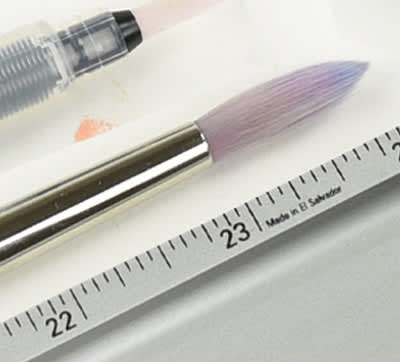
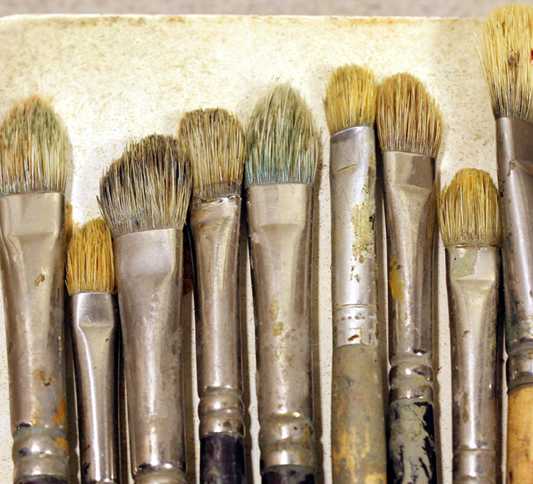
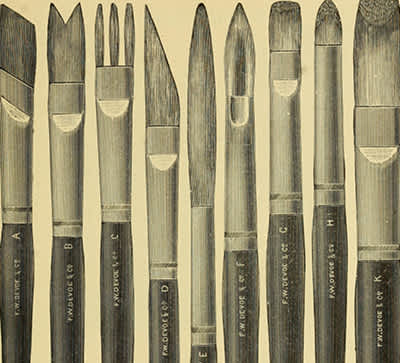
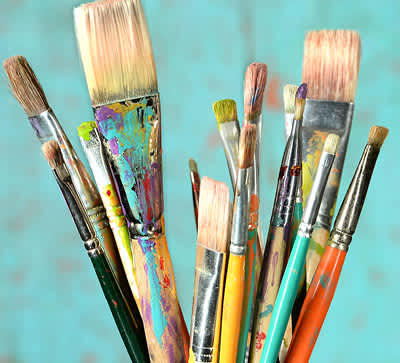
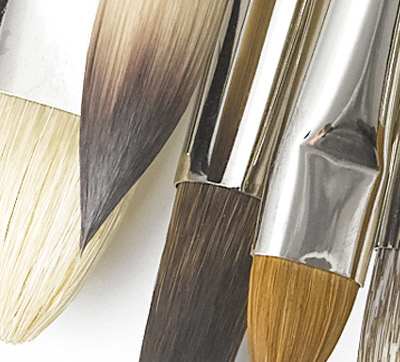
Paintbrushes are available in a wide variety of shapes. Selecting a brush shape that is suitable for your media, style, and scale can help you more easily achieve your artistic goals. Whether you’re adding intricate details and textures or laying in large areas of water or color, our comprehensive guide will help you select the right brush shape for any painting project. To learn more about brushes, visit [Brush Fiber Differences](https://www.dickblick.com/lp/brush-fiber-differences/ "Brush Fiber Differences") and [How to Measure a Brush](https://www.dickblick.com/lp/how-to-measure-a-brush/ "How to Measure A Brush").
Frequently Asked Questions
Featured Lesson Plans
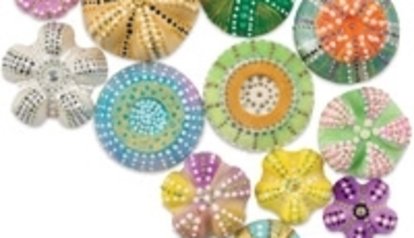
Use the bases of discarded containers to make a plaster sea urchin sculpture. Many bases are already divided into fifths — perfect symmetry for a sea urchin “test”, or shell. Embellish dry plaster by adding dots of paint using a paintbrush handle, detail writers, or a small squeeze bottle. Create an entire colony of sea creatures for the classroom!

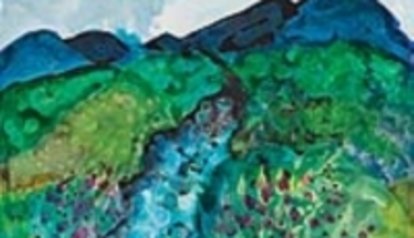
Use inks and alcohol to create interactive diffused patterns on paper. Bright inks and common rubbing alcohol work together to create surprising results! Experiment with dark over light, or light over dark. Try applying alcohol with tools such as brush handles, by dripping, or with an atomizer bottle. Use this technique in compositions or as a way to make decorative papers for other uses.

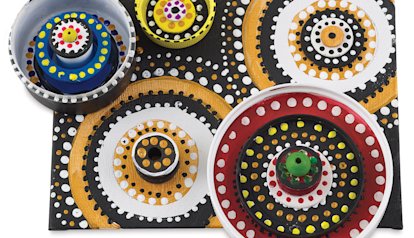
Yayoi Kusama is obsessed with dots and has been using them since her role as an avant-garde artist in 1960s counterculture. And why not? Dots are fun, dots are fast, dots are universal. They can be rounded or spherical, they can rise above a surface or remain flat. Anyone can start with a dot, diverge to a pattern, and end with a painting or assemblage. The trick is repetition — of shape, sizes, colors, and patterns.


