Home Decor


Displays products in a grid view
Displays products in a detail view
Shop All Home Decor
414 products
50+ Options
Blick Wood Gallery Frames
50+ Options
Item #: 18862
Made of fine-quality solid hardwood with a lovely natural woodgrain, Blick Gallery Wood Frames are ideal for when you want your artwork to do all the ...
100+ Options
Lefranc Bourgeois Flashe Vinyl Paints and Sets
100+ Options
Item #: 00697
Lefranc Bourgeois Flashe Vinyl Paint offers versatility and outstanding coverage, giving creative projects of all types a flawless, uniform look. This...
+ 14 Options
Mod Podge
+ 14 Options
Item #: 02916
Available in a variety of finishes, Mod Podge is a milky white liquid that dries transparent in less than 10 minutes. Use it as a finish for decoupage...
+ 34 Options
Rainbow Duo-Finish Economy Kraft Paper
+ 34 Options
Item #: 11510
This lightweight paper is designed to be versatile. It has two distinct surfaces, one smooth (ideal for chalk, markers, and pen), and one rough (perfe...
+ 23 Options
Blick Bellevue Frames
+ 23 Options
Item #: 17707
Display your photos, artwork, and sketches in style with Blick Bellevue Frames. Available with either a glass or styrene face, the affordable frames c...
+ 15 Options
Blick Emery Gallery Frames with Mat
+ 15 Options
Item #: 17573
These gallery frames are equipped with an acid-free, beveled, white-core mat, a glass face, and wall-ready art. Blick Emery Frames have a finished bac...
+ 47 Options
The Woobles Beginner Crochet Amigurumi Kits
+ 47 Options
Item #: 62888
Learn to crochet and create cute characters with The Woobles Beginner Crochet Amigurumi Kits. These kits are perfect for beginners and come pre-starte...
+ 22 Options
Blick Wood Floater Frames
+ 22 Options
Item #: 18848
These unique frames are so named because the illusion they create is that your artwork is "floating" within the frame instead of being covered by it. ...
+ 39 Options
Richeson Casein Paint The Shiva Series and Sets
+ 39 Options
Item #: 00902
May be used on most surfaces, including furniture. Colors are brilliant, permanent, intermixable, and dry quickly. Thin with water, apply in any manne...
+ 15 Options
Blick Metal Gallery Frames
+ 15 Options
Item #: 17085
Designed to complement your artwork, not overpower it, these frames are perfect for framing your prints. Depth of 1 inch (25 mm).
50+ Options
Blick Contour Floater Frames
50+ Options
Item #: 18709
The Blick Contour Floater Frame is a beautiful contemporary frame made in the USA from American hardwood. It creates the illusion that your artwork is...
+ 13 Options
Blick Sheffield Frames
+ 13 Options
Item #: 18999
Give your favorite photos, prints, or sketches a contemporary look with the Blick Sheffield Frame. This lighweight polystyrene frame also can be hung ...
+ 2 Options
Laguna Ceramic Bisque Tiles
+ 2 Options
Item #: 32916
These fine-quality, low-fired white clay tiles are ready to decorate with your choice of glaze to make trivets, borders, table tops, coasters, etc. Th...
+ 4 Options
PanPastel Palette Trays and Storage Jars
+ 4 Options
Item #: 21934
These handy plastic jars and trays are stackable, and protect your PanPastels during transport or storage.
+ 3 Options
Pacon White Utility Paper Roll
+ 3 Options
Item #: 11502
For banners, murals, signs, posters, even table covers. Practical, all-purpose 40-lb weight paper has a dull surface. 36" wide roll contains 1000 feet...
+ 5 Options
Blick SoHo Gallery Frames with Mat
+ 5 Options
Item #: 18241
Give your photos, prints, documents, or artwork the gallery treatment with Blick SoHo Gallery Frames with Mat. These classic black frames have a 1½" w...
+ 8 Options
Blick Chelsea Metal Gallery Frames with White Mat
+ 8 Options
Item #: 17365
Blick Chelsea Metal Gallery Frames with White Mat arrive beautifully matted and outfitted with an engaging piece of abstract art. Hang and display rig...
+ 6 Options
Glass Jars and Caps
+ 6 Options
Item #: 04815
These clear glass jars and caps are ideal for storing paints, solvents, and other materials around the studio. The jars feature easy-to-clean, wide mo...
+ 29 Options
Ronan Superfine Japan Colors
+ 29 Options
Item #: 01030
This solvent-based, lead-free paint was the best-kept secret of faux finishers. Now, the secret is out.
+ 39 Options
Matisse Background Colors Acrylic Paints
+ 39 Options
Item #: 09402
Create the perfect low-tooth base for a variety of media. Matisse Background Colors are made with a combination of high-grade acrylic paint and profes...
+ 12 Options
MCS Format Frames
+ 12 Options
Item #: 17038
These simple plastic frames are perfect for showing off certificates, diplomas, and artwork. Mount vertically or horizontally using the keyhole hanger...
+ 4 Options
Creativity Street Pulp Masks
+ 4 Options
Item #: 61761
Mask making is a fun way to learn about history and culture, express emotion, and create a character or to just let your imagination run wild. These m...
+ 3 Options
Krylon Gallery Series UV Archival Varnish
+ 3 Options
Item #: 01743
Krylon UV Archival Varnish offers the highest UV protection available in a protective coating. Its non-yellowing formula protects against fading, dirt...
+ 41 Options
Smart-Fab Art and Decoration Fabric
+ 41 Options
Item #: 62500
Smart-Fab is the smart alternative to paper and cloth. Pleasantly cloth-like to the touch, it's an innovative non-woven fabric that's easy to cut, fol...
+ 9 Options
Instant Iron & Instant Rust
+ 9 Options
Item #: 27105
For applying a distinctive and authentic rust finish to anything. First apply Instant Iron solution, then Instant Rust solution. Result is real rust, ...
+ 4 Options
Mayco Earthenware Bisque Plates
+ 4 Options
Item #: 32947
Mayco Earthenware Bisque Plates are the perfect choice for creating elegant custom dinnerware or decorative home accents. Offering ample open surface ...
+ 8 Options
Mayco Stoneware Bisque Mugs
+ 8 Options
Item #: 32796
Glaze a full set of Mayco Stoneware Bisque Mugs for your home— or invite friends over for a fun paint-and-sip evening! These unfinished bisque mugs ar...
+ 12 Options
Blick Maplewood Floater Frames
+ 12 Options
Item #: 18898
Available in a variety of popular sizes to accommodate 3/4" deep or 7/8" deep canvases, the Blick Maple Floater Frame is made from genuine American ma...
+ 18 Options
Gelli Arts Stencils
+ 18 Options
Item #: 45120
Gelli Arts Stencils feature unique designs that are great for creating texture in layered prints. Use them for card making, printing backgrounds, coll...
+ 2 Options
Krylon UV-Resistant Clear Acrylic Coating
+ 2 Options
Item #: 21703
Provides permanent, protective gloss or matte coating to protect art and craft objects and materials against fading caused by UV light rays. Moisture-...


Featured Lesson Plans

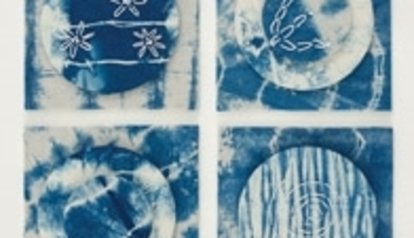
Using the traditional Japanese method of tie-dyeing called Shibori, students create a graphic wall piece of dyed muslin. Tie, fold, crimp, and bind muslin to create gorgeous patterning. Once submerged in the natural indigo dye, the fabric is transformed. Students share fabric patterns that are juxtaposed and embellished with stitching for added interest. Shibori also makes a great t-shirt, apron, or bag!
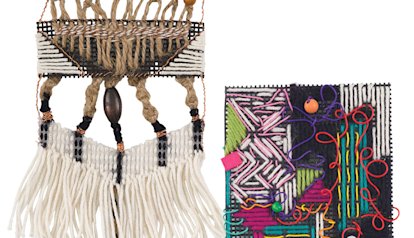
A staple for needle crafts, plastic mesh canvas becomes the base for a textural fiber and wire mash-up. An open-ended introduction to fiber art, this lesson provides students with a means to create a base structure. Once this substrate is in place, students follow their own path of exploration and experimentation, discovering the many ways fibers can communicate color, texture, and form.


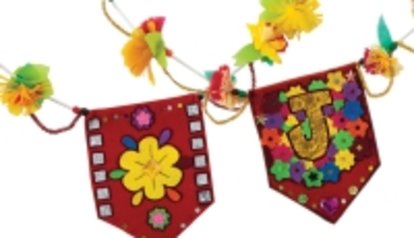
Known as the festival of lights and observed in many countries around the globe, Diwali is a celebration of light over darkness, good over evil, and knowledge over ignorance. Garlands known as "Toran" or "Bandanwar" are a traditional means of decorating doorways and windows to welcome guests with a bright and beautiful entryway.
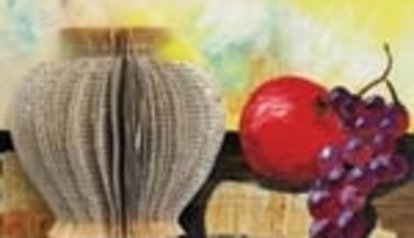
An upcycled paperback book serves as the basis for a lesson in form. Using french curves, a template of a Greek pottery form is made. Trace the template onto a book, cut the pages, and open the book to reveal a 3-D piece of paper pottery! Glue the Vase to a painted or collaged background for something truly unique.

Wind chimes are important to the Chinese philosophy of feng shui (translated as “wind-water" in English), believing that the mood and energy of a person's living space can be positively influenced by the tone, construction materials, and placement of a wind chime.This process uses hollow metal tubing and metal rings that provide a metallic chime as they strike one another.


