Natural Hair Brushes


Displays products in a grid view
Displays products in a detail view
Shop All Natural Hair Brushes
170 products
+ 38 Options
Blick Masterstroke Interlocking Bristle Brushes and Sets
+ 38 Options
Item #: 05226
The Interlocking Hog Bristle series is one of our finest brush lines, and the finest hog bristle you'll find. The very best craftsmanship goes into ea...
+ 23 Options
Winsor & Newton Series 7 Kolinsky Sable Brushes and Set
+ 23 Options
Item #: 05002
Considered by many artists to be the world's best brush. Has finest hair from tail of kolinsky. With polished black handle and seamless, cupro-nickel ...
50+ Options
Blick Masterstroke Finest Red Sable Brushes
50+ Options
Item #: 04650
Hand-selected and hand-cupped by skilled artisans, the highly resilient hair in Blick Masterstroke Pure Red Sable Brushes offers unsurpassed spring, s...
+ 43 Options
Robert Simmons Signet Bristle Brushes and Sets
+ 43 Options
Item #: 06645
Robert Simmons Signet brushes are handmade using high-quality Chungking hog bristle, interlocked and deep-set in extra-long, seamless, nickel-plated f...
+ 40 Options
Silver Brush Black Velvet Brushes and Sets
+ 40 Options
Item #: 06196
A blend of natural squirrel hair and black synthetic filament combines to provide excellent carrying capacity with control, spring, and precise pointi...
100+ Options
Da Vinci Maestro Kolinsky Brushes and Set
100+ Options
Item #: 09053
Exquisitely crafted for unsurpassed performance and durability, Da Vinci Maestro Kolinsky Brushes are made with male winter Siberian kolinsky red sabl...
+ 28 Options
Utrecht Natural Chungking Pure Bristle Brushes and Sets
+ 28 Options
Item #: 04616
Utrecht Natural Chungking Pure Bristle Brushes are handmade using only the highest quality natural Chinese Chungking Hog Bristles. The Series 209 brus...
+ 26 Options
Winsor & Newton Sceptre Gold II Brushes
+ 26 Options
Item #: 05846
Winsor & Newton's Sceptre Gold II brushes combine sable hair with a special blend of synthetic fibers to produce a brush that approaches the performan...
+ 3 Options
Blick Sumi Brushes
+ 3 Options
Item #: 04321
Featuring long, soft, dyed goat hair filaments that taper to a precise point, Blick Sumi Brushes are ideal for watercolors, ink, and Japanese calligra...
50+ Options
Utrecht Rhenish Pure Hog Bristle Brushes
50+ Options
Item #: 04609
Utrecht Rhenish Pure Hog Bristle Brushes are made from hand-tied bundles of naturally curved, interlocked bristles with soft flagged tips. They offer ...
50+ Options
Blick Economy White Bristle Brushes and Sets
50+ Options
Item #: 05170
Extra-long, white hog bristle fills these excellent-quality brushes. They are especially useful for beginning oil and acrylic painting because they ar...
+ 44 Options
Winsor & Newton Winton Hog Bristle Brushes and Sets
+ 44 Options
Item #: 05269
Winton brushes feature the finest Chinese hog bristles. The natural curve of the bristle is utilized to produce a resilient brush that retains its sha...
+ 4 Options
Bob Ross Synthetic and Bristle Blend Brushes
+ 4 Options
Item #: 05231
Bob Ross Synthetic and Bristle Blend Brushes feature a durable blend of high-quality synthetic and natural hog hair bristles shaped according to Bob R...
+ 41 Options
Silver Brush Grand Prix Bristle Brushes and Set
+ 41 Options
Item #: 06662
The Silver Brush Grand Prix Bristle Brush was made exclusively for Silver Brush by master brush makers. It contains 100% naturally curved white bristl...
50+ Options
Da Vinci Kolinsky Red Sable Oil Brushes
50+ Options
Item #: 05298
Da Vinci Kolinsky Red Sable Oil Brushes combine great resilience and softness to create a brush that is perfect for spreading color thinly and evenly ...
50+ Options
Blick Scholastic White Bristle Brushes and Sets
50+ Options
Item #: 05950
Students will love the professional feel and results these brushes deliver. The hair is 100% hog bristle - an economical, high-performance hair, ideal...
+ 30 Options
Winsor & Newton Artists' Kolinsky Sable Watercolor Brushes
+ 30 Options
Item #: 06741
Winsor & Newton have created a brush perfectly matched to their Artists' Watercolor paints. Excellent color carrying capacity, ability to point, and s...
50+ Options
Escoda Reserva Kolinsky-Tajmyr Sable Brushes and Sets
50+ Options
Item #: 09088
Escoda Reserva Kolinsky-Tajmyr Sable Brushes are crafted using only the tail hairs from the male Kolinsky found in Siberia. Renowned for their springi...
+ 30 Options
Princeton Ashley Series 5200 Natural Bristle Brushes
+ 30 Options
Item #: 06668
This is one of Princeton's best-selling and most affordable brush lines. For students, these are great brushes to start with - but they're also ideal ...
50+ Options
Da Vinci Maestro 2 Hog Bristle Brushes and Set
50+ Options
Item #: 05812
Da Vinci Maestro 2 Hog Bristle brushes are meticulously crafted, with extra strong, yet elastic double-boiled bristles to give more spring and longer ...
+ 3 Options
Blick Essentials Bristle Value Brush Sets
+ 3 Options
Item #: 06280
These very affordable brush sets are great for students, beginners, and the price-conscious professional. For good quality at a reasonable price, choo...
50+ Options
Blick Scholastic Red Sable Brushes and Sets
50+ Options
Item #: 05944
Excellent quality and traditional craftsmanship make our Scholastic Red Sable a value appreciated by beginning or professional artists. Offering snap ...
+ 6 Options
Yasutomo Bamboo Calligraphy Brush
+ 6 Options
Item #: 05418
The central core of this brush, which determines its height and basic function, is composed of relatively stiff hairs gathered to form a tapered point...
100+ Options
Escoda Clasico Chungking White Bristle Brushes and Sets
100+ Options
Item #: 06604
Escoda Clasico Chungking White Bristle Brushes contain premium-quality bristles that stand up beautifully to heavy paint. Thanks to Escoda’s patented ...
+ 7 Options
Blick Economy White Bristle Gesso Brush
+ 7 Options
Item #: 05160
This pure bristle brush is great for varnishing, glazing, gessoing and applying finishes of all kinds. Short, natural wood handle.
+ 15 Options
Escoda Natural Bristle Brushes
+ 15 Options
Item #: 04647
Escoda Natural Bristle Brushes offer oil and acrylic painters a premium range of large, handmade bristle brushes at an economical price. Each brush fe...
+ 44 Options
Princeton Refine Series 5400 Natural Bristle Brushes
+ 44 Options
Item #: 06807
This is a professional range of supple 100% natural Chungking bristle brushes. Interlocked hairs with an abundance of flags hold lots of color and ret...
+ 7 Options
Yasutomo Flat Hake Brush
+ 7 Options
Item #: 05408
This Hake is a sheep-hair brush that can be used with a wide range of media, including watercolor and oil, and is particularly suited for applying gla...
50+ Options
Blick Master Kolinsky Sable Brushes and Sets
50+ Options
Item #: 05898
The full belly of the male Kolinsky in these brushes allows greater control and fantastic fluid capacity. The brush fibers are hand-shaped with extrem...
+ 8 Options
Silver Brush White Goat Silver Mop Brushes
+ 8 Options
Item #: 09294
Perfect for blending and softening oil and acrylic colors, Silver Brush White Goat Silver Mop Brushes feature ultra-soft white goat hair bristles that...


Frequently Asked Questions
Featured Lesson Plans

The production and commerce of decorated silk fabrics began thousands of years ago in China. This project introduces fine-mesh polyester as a silk-like fabric for painting. Form a wire shape as a support and paint with transparent liquid acrylic color. Finished pieces are flexible and may be heat-set for outdoor display.
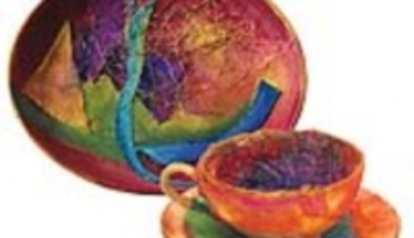
A whimsical makeover for discarded dishes! Inexpensive, diverse and unmatched pieces from thrift stores, garage sales, etc. are recycled into contemporary sculptures in this project. Pieces of unprimed canvas are layered and glued to the surface, then painted with Blick Matte Acrylic color. Center the design around a theme, as Judy Chicago did in the 1970’s with “The Dinner Party” or design a place setting for a particular artist.
Stencils and repeated patterns have been used in painting as long ago as 9,000 years, when early humans placed their hands against cave walls and outlined them in charcoal or paint. In this lesson, even a stencil made of basic shapes can be effective. Each stencil can be used repeatedly, and by changing oil pastel color, overlapping images, or using only a part of an image, the result is a cohesive composition that has depth and color fusion.

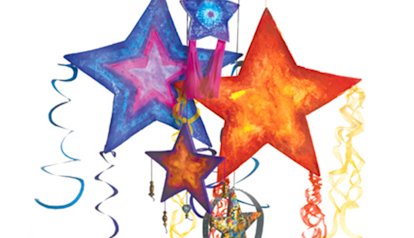
In the Philippines, during the Festival of Lights, parol (puh-roll), or star-shaped lanterns, symbolize the victory of light over darkness as well as hope and goodwill. These simple parol are created with natural reed, translucent rice paper and liquid watercolor. Displayed in a window or hanging from a light fixture, they make colorful, festive decorations for any season.


