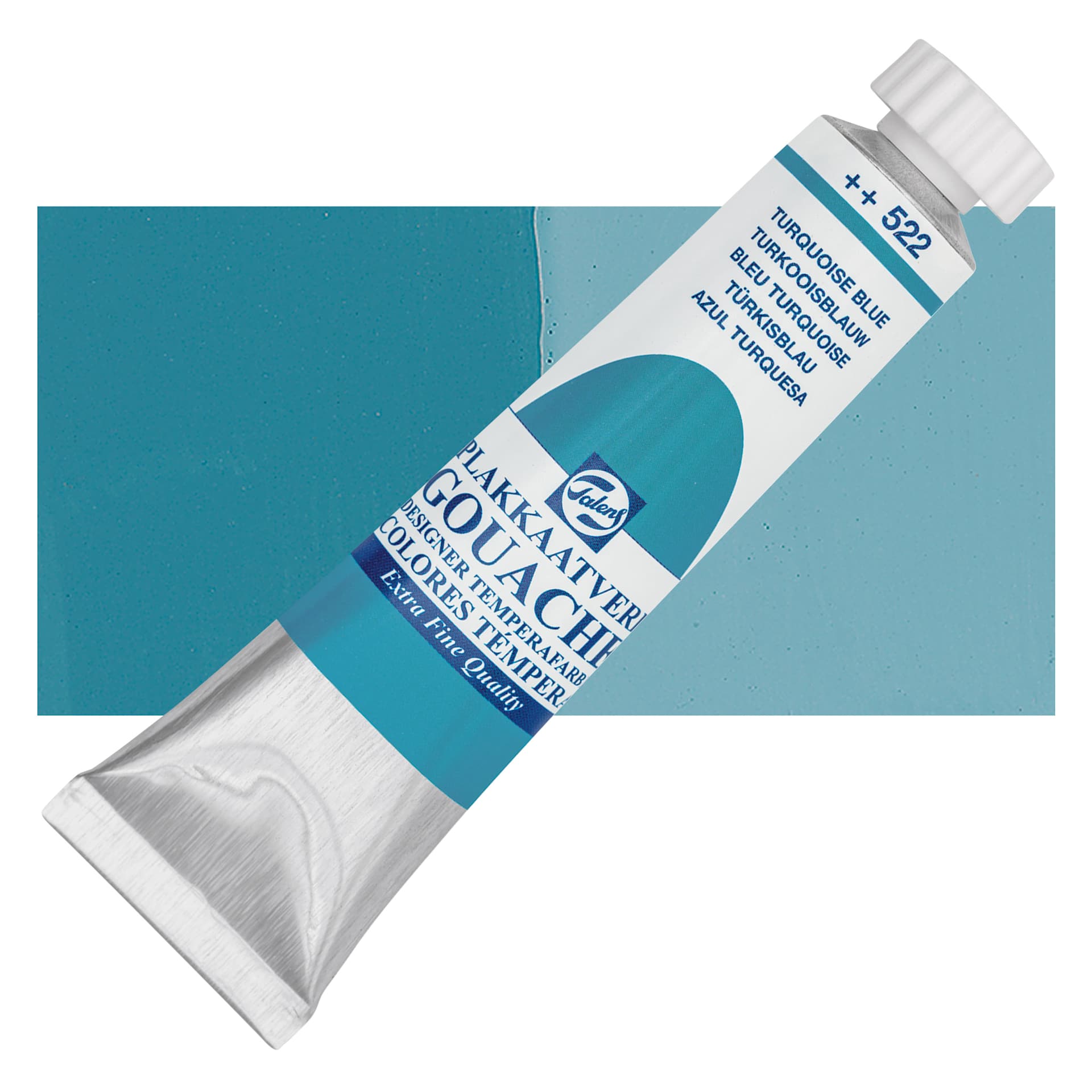
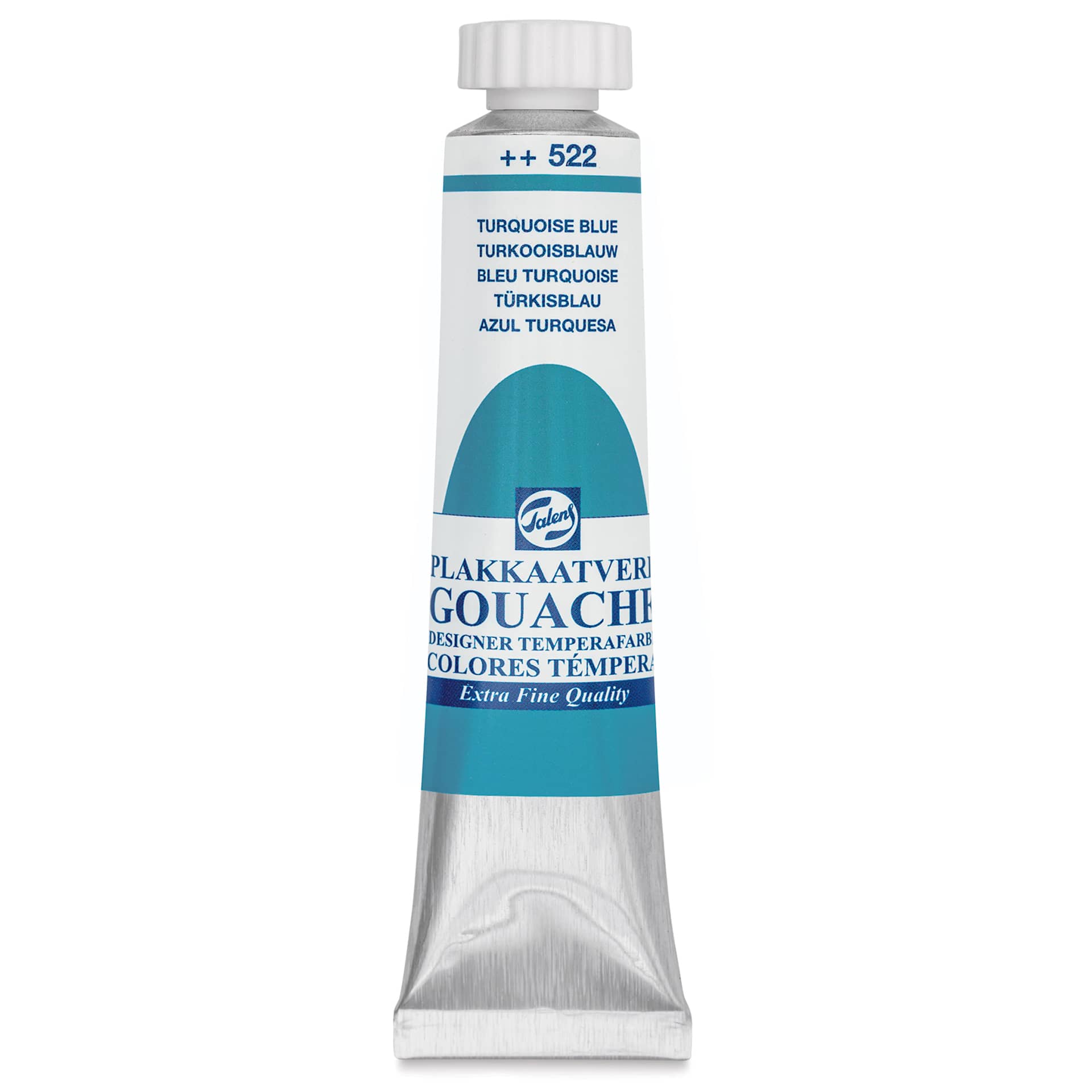
Royal Talens Gouache - Turquoise Blue, 20 ml tube
Save For Later
My Store Pickup List
Please select a storeMy Wish Lists
My BlickU List(s)
My Quick Quotes
Product Details
- No.
- 522
- Description:
- Gouache
- Color:
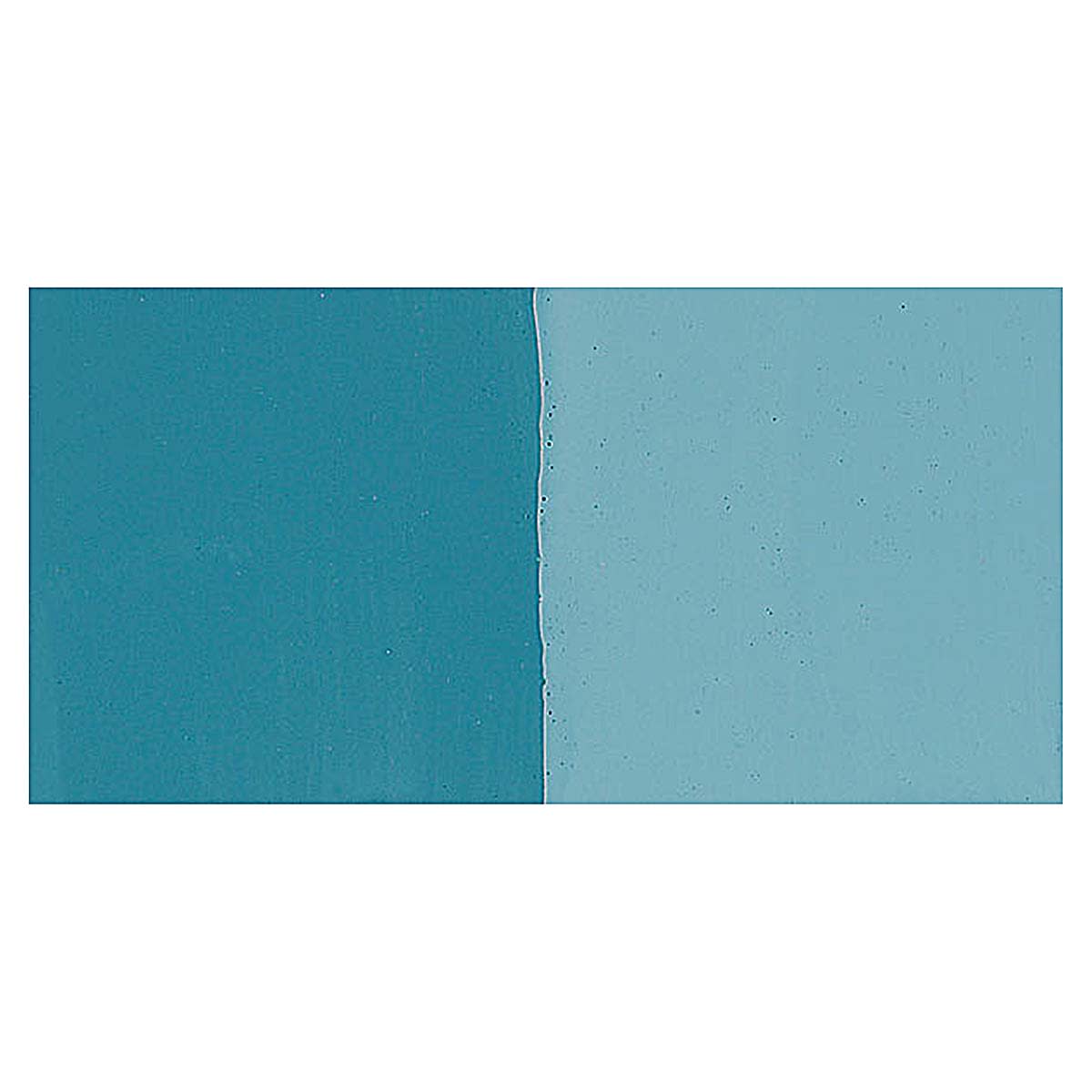
- Turquoise Blue
- Format:
- Tube
- Size:
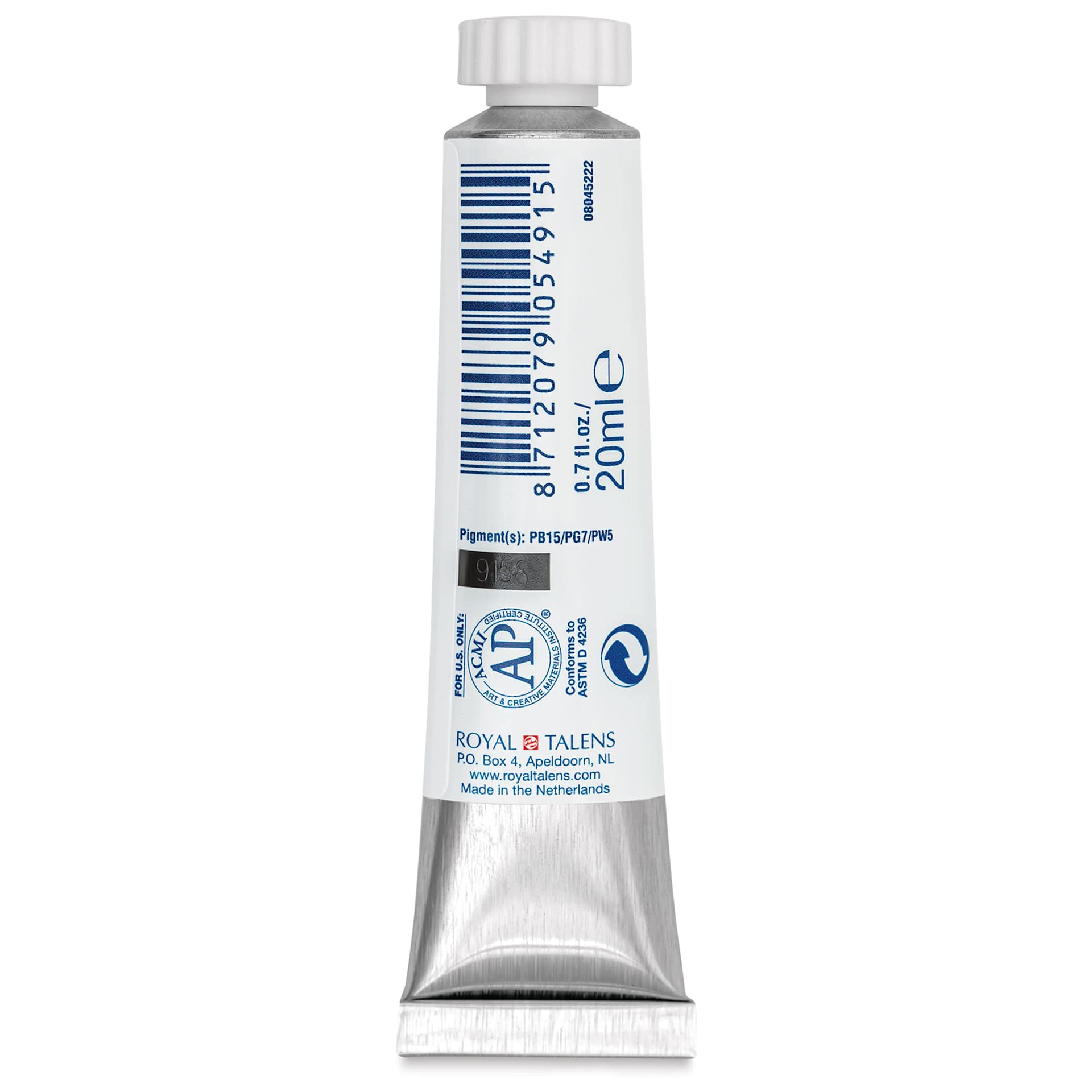
- 20 ml (0.70 oz)
Colors on Monitors -
Due to differences in users’ monitors, the colors presented are an approximation of the true color.
Reviews
Pigment Information
This color contains the following pigments:
PB15-Phthalo Blue
PG7-Phthalo Green
PW5-Lithopone
Pigment Name
PB15-Phthalo Blue
Pigment Type
organic
Chemical Name
copper phthalocyanine
Chemical Formula
C32H16CuN8
Properties
Phthalo Blues are pure and clean primary blues with superior covering power. They have a very high tinting strength and tend to overwhelm other pigments, but if color strength can be controlled, they make predictable mixed colors. In oil form, blues are very deep and slow drying. When mixed with other colors or if chlorine is added, Phthalo Blue quickly tends towards green. When using alone, mix with some white, as Phthalo Blue can be semi-transparent and almost black on its own. It is among the most compatible of modern colors with mineral colors and is considered more reliable than Prussian Blue, while sharing the same physical and color properties. Phthalo Blue is a good color for glazing.
Permanence
Phthalo Blues are completely lightfast and stable and are permanent for all paint uses. They are currently used in inks, coatings, and many plastics due to their stability and are considered a standard pigment in printing ink and the packaging industry.
History
Developed by chemists using the trade name Monastral Blue, the organic blue dyestuff now known as Phthalo Blue was presented as a pigment in November 1935 in London. Its discovery was accidental. The dark color was observed in a kettle where a dye was being made from a British dyestuff plant. The demand for such a pigment came from commercial printers who wanted a cyan to replace Prussian Blue.
Pigment Name
PG7-Phthalo Green
Pigment Type
organic
Chemical Name
polychlorinated copper(II) phthalocyanine
Chemical Formula
C32H3Cl13CuN8 to C32HCl15CuN8 or C32H16CuN8Cl15 (PG7) or C32Br6Cl10CuN8 (PG36)
Properties
Phthalo Green is a transparent, cool, bright, high intensity color used in oil and acrylics. It comes from a Phthalocyanine Blue pigment where most of the hydrogen atoms have been replaced with chlorine, forming highly stable molecules. It has similar pigment properties and permanence to Phthalo Blue. It is slow drying and an excellent base color for mixing a range of bright greens. Phthalo Green is considered a very good alternative to Viridian because it is intense and mixes well and can be used to emphasize mineral colors in various tints. However, its tinting strength is very high, so it can overpower other colors. This pigment most closely resembles the discontinued and toxic Verdigris.
Permanence
Phthalo Greens are completely lightfast and resistant to alkali, acids, solvents, heat, and ultraviolet radiation. They are currently used in inks, coatings, and many plastics due to their stability and are considered a standard pigment in printing ink and the packaging industry.
Pigment Name
PW5-Lithopone
Pigment Type
inorganic
Chemical Name
coprecipitated zinc sulphide and barium sulphate
Chemical Formula
Zn + BaSO4
Properties
Lithopone is a low tinting strength, semi-transparent white pigment that is often used as a filler or extender in other colors, or as the base for laked pigments.
Permanence
Lithopone is absolutely permanent and lightfast.
History
Lithopone was discovered by G.F. de Doubet in 1850. It was developed commercially in the 1870s as a substitute or supplement for lead carbonate, to overcome the many shortcomings of white lead pigment, including toxicity, poor weathering, and darkening in the presence of sulfur compounds. It is used most often in interior paints and enamels. Its use as a white pigment has been superceeded in many applications by titanium dioxide.
Safety Data Sheet
UPC Code: 8712079054915
ASIN #: B008UGEYLC