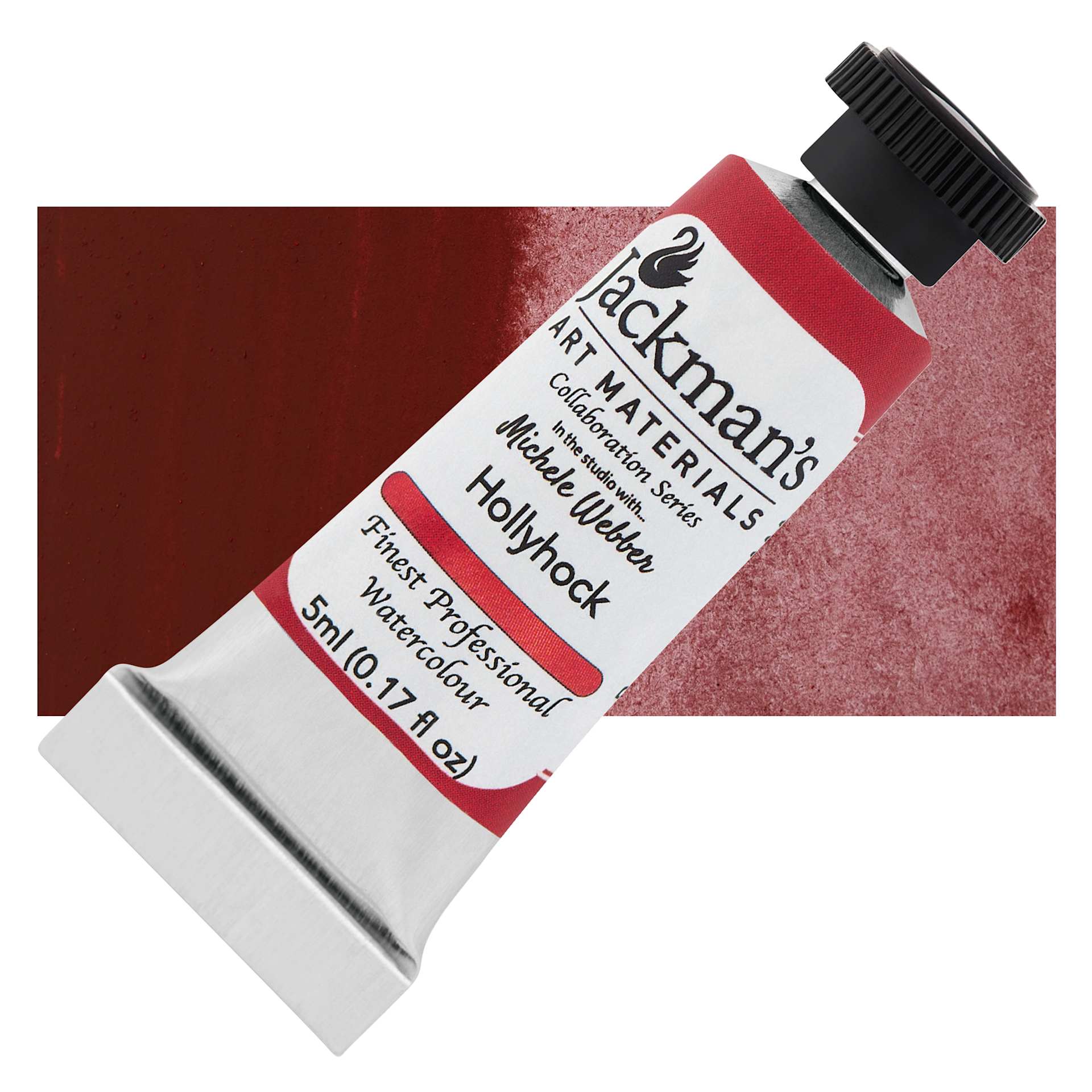
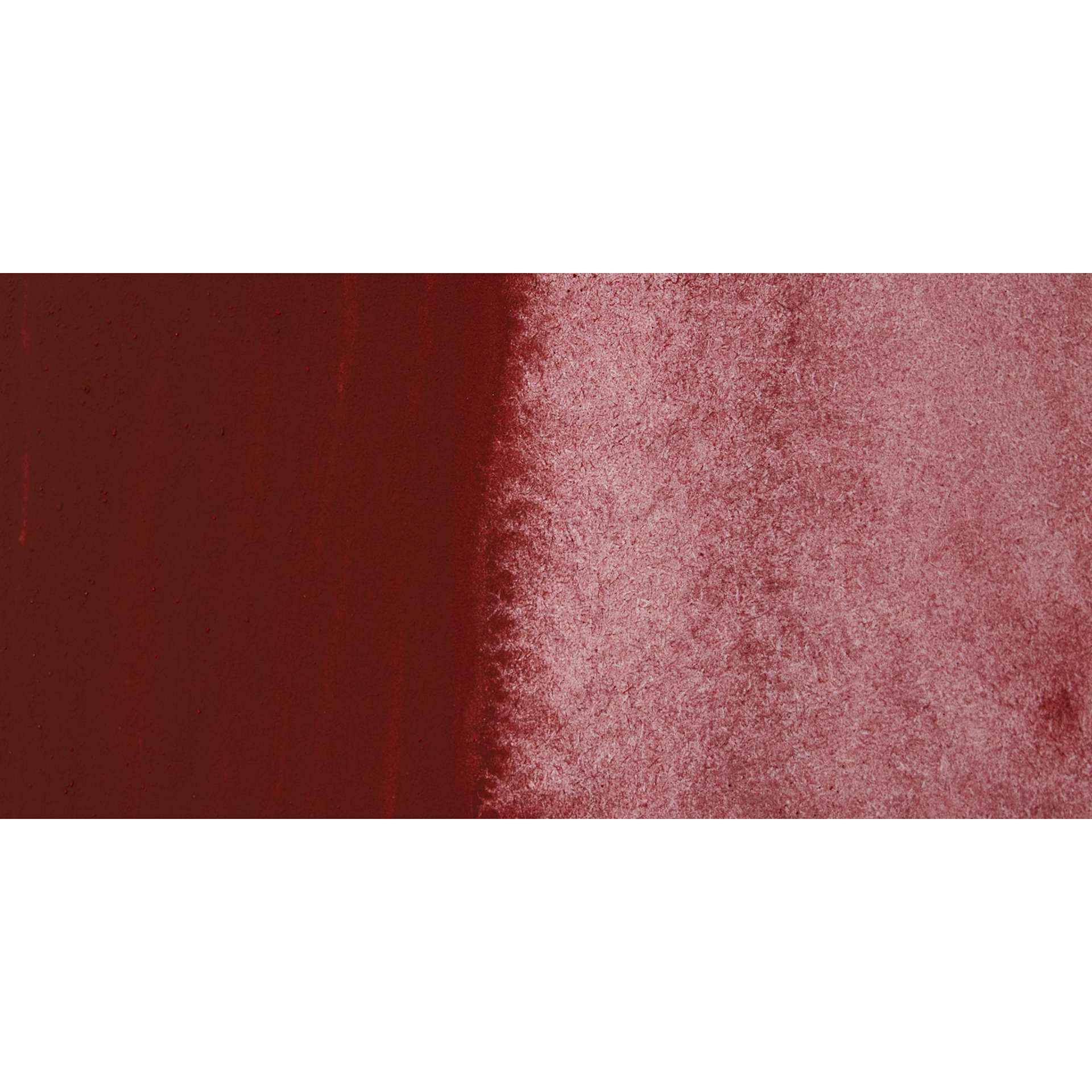
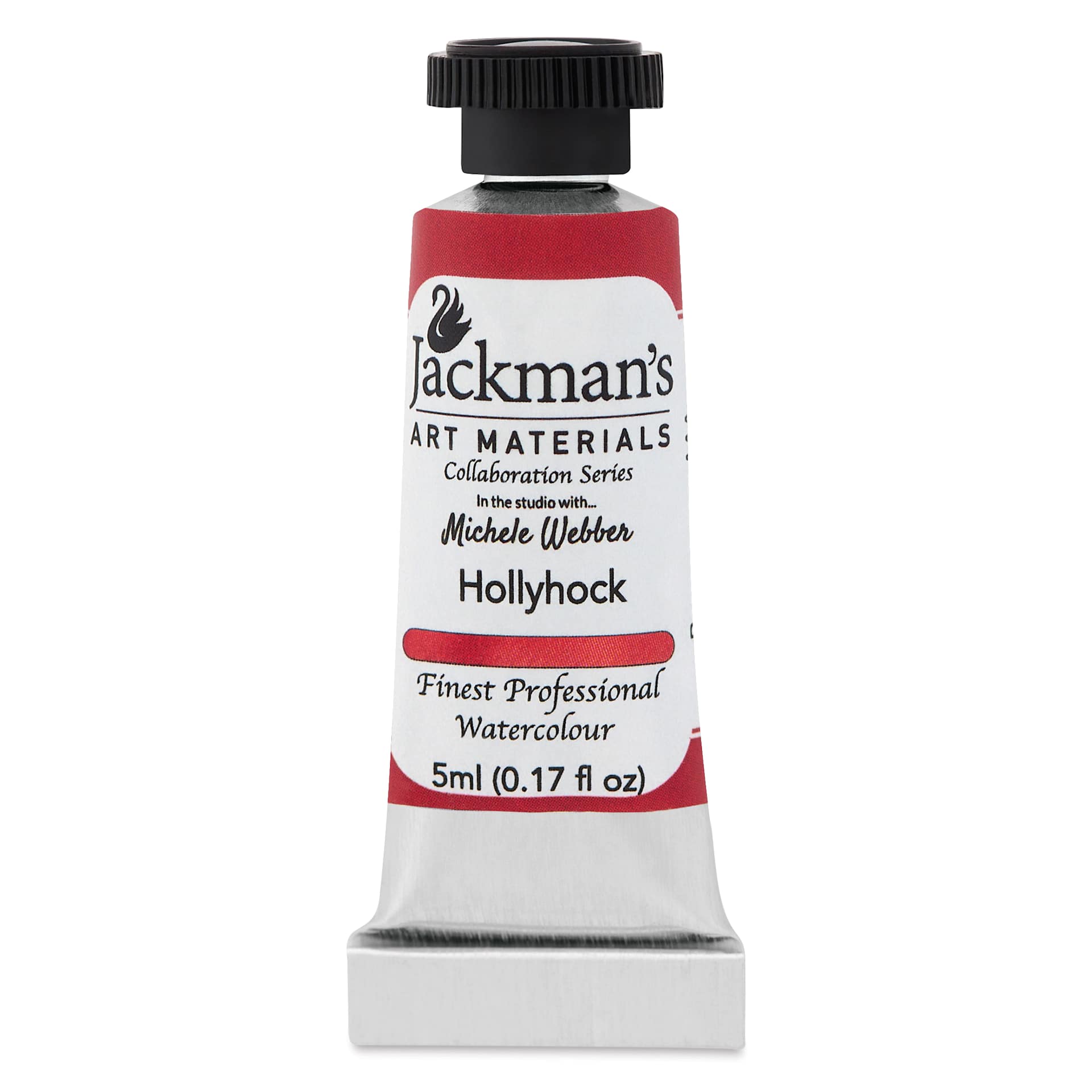
Jackman's Finest Professional Watercolour - Hollyhock, 5 ml Tube
Save For Later
My Store Pickup List
Please select a storeMy Wish Lists
My BlickU List(s)
My Quick Quotes
Product Details
- No.
- 21688
- Description:
- Professional Watercolour
- Color:
- Hollyhock
- Series:
- 3
- Lightfastness:
- 1 = Excellent
- Format:
- Tube
- Size:
- 5 ml (0.17 oz)
Colors on Monitors -
Due to differences in users’ monitors, the colors presented are an approximation of the true color.
Reviews
Pigment Information
This color contains the following pigments:
PR122-Quinacridone Magenta
PR170-Naphthol Red
PR101-Red Iron Oxide
Pigment Name
PR122-Quinacridone Magenta
Pigment Type
organic, quinacridone
Chemical Formula
C22H16N2O2
Properties
Quinacridone Magenta is a semi-transparent and powerful bluish red with an impressive mixing range. It makes an excellent glazing color and is one of the bluest of the Quinacridone colors. The pigment's properties vary considerably, depending on how it is ground. Quinacridone pigments have relatively low tinting strength in general. For this reason, quinacridone colors are often expensive, because more pigment is required in the formulation.
Permanence
Quinacridone Magenta offers very good lightfastness in most media, but some have argued that it is less lightfast in watercolor form. Although Quinacridone Magenta received only a passing grade of "fair" under ASTM test protocols, other test results have rated the pigment very good to excellent. Transparent reddish violet pigments in general have more problems with lightfastness than any other range of colors. PR122 is often used as the Magenta of CMYK (four color) process printing because it offers a better tradeoff between tinting strength and lightfastness than other pigments in its class.
History
Quinacridone Magenta came from a red violet aniline dye that was first produced in 1858 by Natanson. It was called Magenta to commemorate a battle in Magenta, Italy. Over time, Magenta became the standard color name for a deep, violet red. Although quinacridone compounds became known in the late 19th century, methods of manufacturing so as to make them practical for use as commercial pigments did not begin until the 1950s. PR122 has become particularly popular in the formulation of Magenta for CMYK process printing.
Pigment Name
PR170-Naphthol Red
Pigment Type
organic, naphthol AS
Chemical Formula
C26H22N4O4
Properties
Pigment PR170 is a bright deep red with bluish undertones. It has an average drying time. It has two crystaline forms that differ significantly in opacity. The more transparent form (F5RK) tends to be more bluish and is less lightfast.
Permanence
The lightfastness and weatherfastness of Pigment PR170 varies, depending on the application and the crystaline form. The opaque form (F3RK) has very good lightfastness, and is more weather resistant. The transparent form (F5RK) has lightfastness that is considered acceptable in pure applications, but it fades more in tints. Neither form is considered suitable for exterior use.
History
Naphthol pigments are actually dyes that are "laked" to form pigments. First developed by the German chemical company Hoechst A.G. before World War I, their use in artist paints began in the 1920s. Pigment Red PR170 is a Naphthol AS pigment, chemically related to the diarylide yellow pigments. The Naphthol AS pigments comprise a range of reds. They are used in plastics, textiles, and printing inks.
Pigment Name
PR101-Red Iron Oxide
Pigment Type
earth, synthetic
Chemical Name
iron oxides (synthetic), iron oxide, silica, alumina, lime, and magnesia or hydrated iron oxide
Chemical Formula
Fe2O2 or Fe2O3 x H2O
Properties
Red iron oxide varies in hue and transparency, depending on hydration and slight impurities. Indian Red is a slightly duller, deep brick hue with a bluish undertone. It is very dense and opaque, with excellent tinting strength and covering power. It is dependable when mixing with all other permanent pigments and yields good flesh tints when mixed with Zinc White. It is the synthetic version of PR102, which is a pigment made from earth reds, or natural red iron oxides, and the names applied to PR101 and PR102 often overlap. The synthetic red iron oxides have mostly replaced natural red iron oxides and are brighter, stronger, finer, and more permanent. Indian Red is the highest grade bluish shade. Light Red, English Red, and Venetian Red are yellowish shades. Mars Violet is a dull and subdued bluish or purplish oxide.
Permanence
Red iron oxide is very lightfast with excellent permanence.
History
Natural red iron oxide comes from the mineral ore hematite, called bloodstone by the ancient Greeks from the word hema, meaning blood. It is one of the oldest pigments, has been used by every major civilization, and was an important mineral for medieval alchemists. It was not widely used in artists' materials until the 17th century and was not produced in large quantities until the 18th century.
Safety Data Sheet
UPC Code: 5061071721688