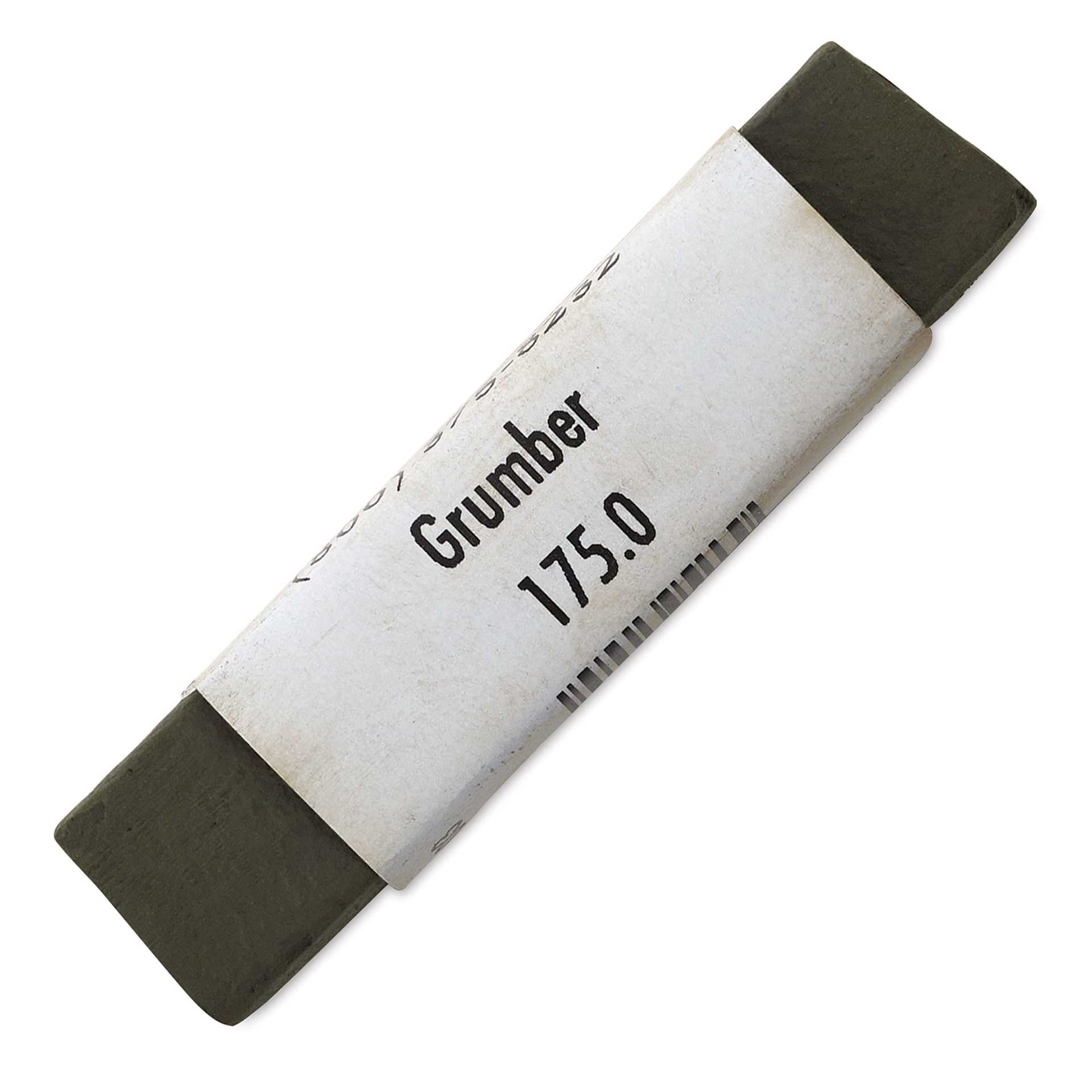
Great American Handmade Pastel - Grumber 0, 175.0


Save For Later
My Store Pickup List
Please select a storeMy Wish Lists
My BlickU List(s)
My Quick Quotes
Product Details
- No.
- 175.0
- Description:
- Pastel
- Color:
- Grumber 0
Set colors may vary - The vendor may substitute a color within a set due to stock issues without notice.
Colors on Monitors -
Due to differences in users’ monitors, the colors presented are an approximation of the true color.
Reviews
Pigment Information
This color contains the following pigments:
PBk11-Mars Black
PBr7-Raw Sienna
PW18-Calcium Carbonate
Pigment Name
PBk11-Mars Black
Pigment Type
earth
Chemical Name
iron oxides
Chemical Formula
FeO or Fe2O3
Properties
Mars Black is an opaque black with a strong and cool masstone, a slightly warm tint, and a warm brown undertone. It is not as black as Ivory Black, but it dries more quickly and has three times the tinting strength. Mars Black is normally the only black available in acrylic form and that is safe to over paint. It can be used in all media without reservation and is widely used as an alternative to Lamp Black and Ivory Black.
Permanence
Mars Black is very lightfast with excellent permanence.
History
The word Mars refers to the Roman god of iron and war. Mars Black was developed in the early 20th century from inorganic, synthetic iron oxide.
Pigment Name
PBr7-Raw Sienna
Pigment Type
earth
Chemical Name
hydrated iron oxide
Chemical Formula
α-FeO3+(OH) or Fe2O3
Properties
Raw Sienna is a moderately dull deep earth yellow with medium tinting strength and excellent transparency. It is one of the basic permanent artists' pigments and is made from a form of limonite clay whose yellow-brown color results from ferric oxides. Raw Sienna is preferable to Yellow Ochre for creating flesh tones, due to its higher subtlety of color when mixed with white. It creates a bright Ochre when mixed with Cadmium Yellow and creates greens and grays when mixed with Ultramarine. Raw Sienna dries quickly.
Permanence
Raw Sienna has good permanence.
History
Raw Sienna has been used as a pigment since prehistoric times, although its current name came about during the Renaissance. It comes from the city of Siena, in Italy, and is short for terra di Siena, meaning earth of Siena. Sienna was famous for the mining and production of earth pigments from the Renaissance until World War II. Due to the depletion of clay deposits in Tuscany, Italian siennas now come from other areas, including Sicily and Sardinia.
Pigment Name
PW18-Calcium Carbonate
Pigment Type
inorganic
Chemical Name
calcium carbonate
Chemical Formula
CaCO3
Properties
Calcium carbonate, the mineral constituent of chalk, is a low tinting strength, inexpensive white pigment that is often used is a buffer and filler. Because of its low tinting strength, it is overwhelmed by other colors. It is used in gesso and other coatings to give the surface more tooth, a desirable characteristic for some painting techniques.
Permanence
Calcium carbonate is lightfast. Like all carbonates, it reacts with strong acids
History
Naturally occuring chalk deposits have been mined since prehistoric times. Rocks and minerals that contain calcium carbonate include aragonite, calcite, vaterite, chalk, limestone. marble, and travertine. Calcium carbonate is the principle component of lime, used in many agricultural and industrial applications.