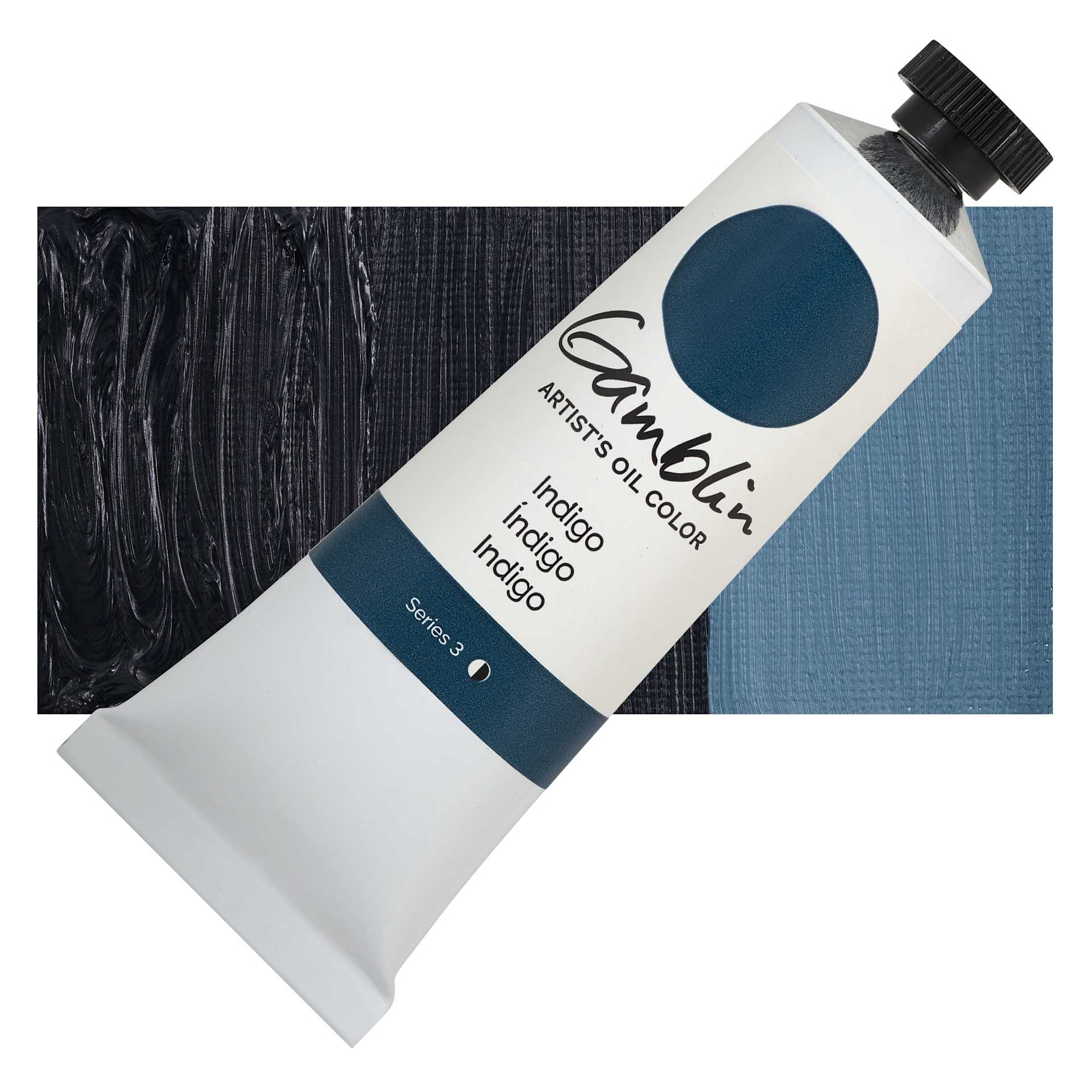
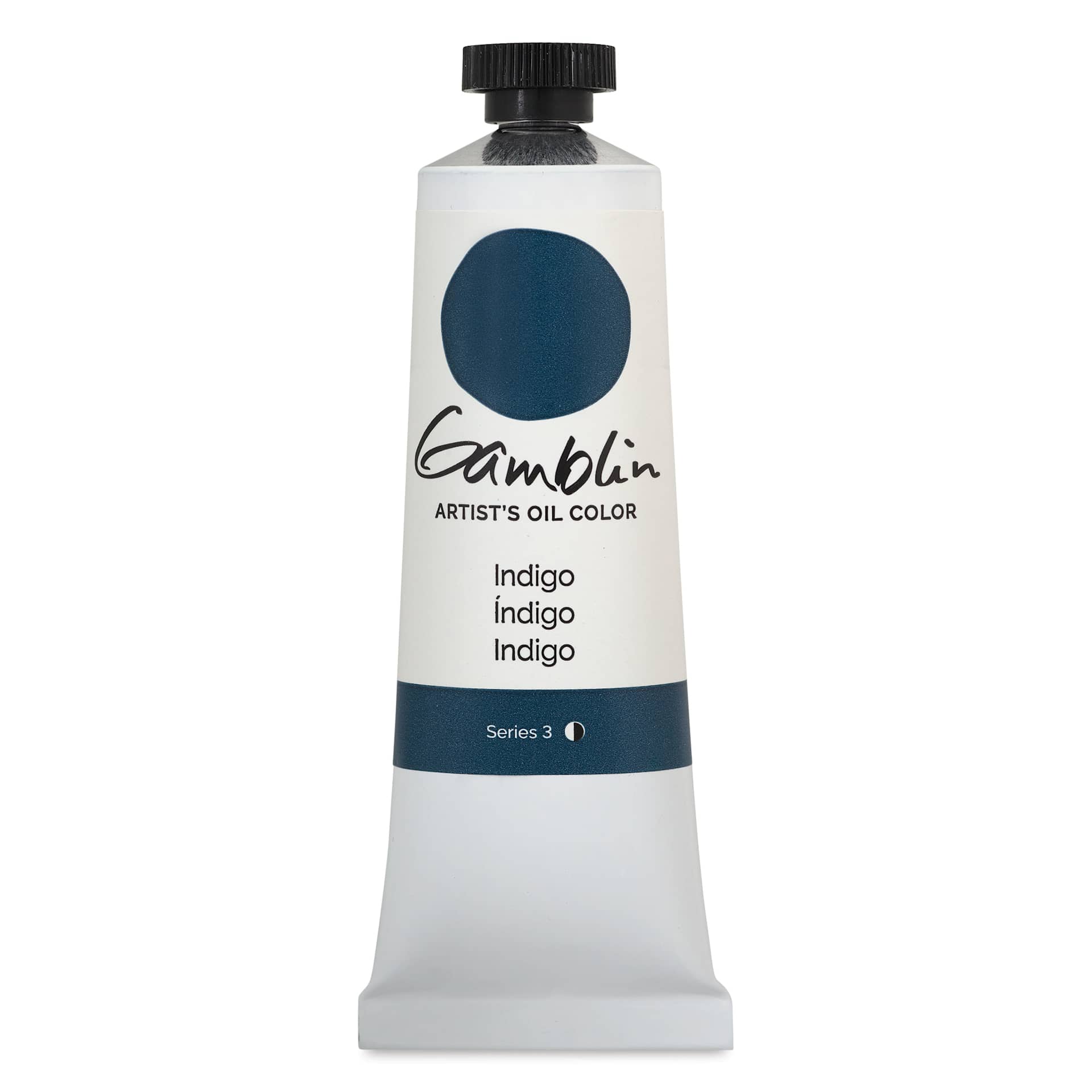
Gamblin Artist's Oil Color - Indigo, 37 ml tube
Save For Later
My Store Pickup List
Please select a storeMy Wish Lists
My BlickU List(s)
My Quick Quotes
Product Details
- Description:
- Artist Oil Paint
- Color:
- Indigo
- Size:
- 37 ml (1.25 oz)
- Format:
- Tube
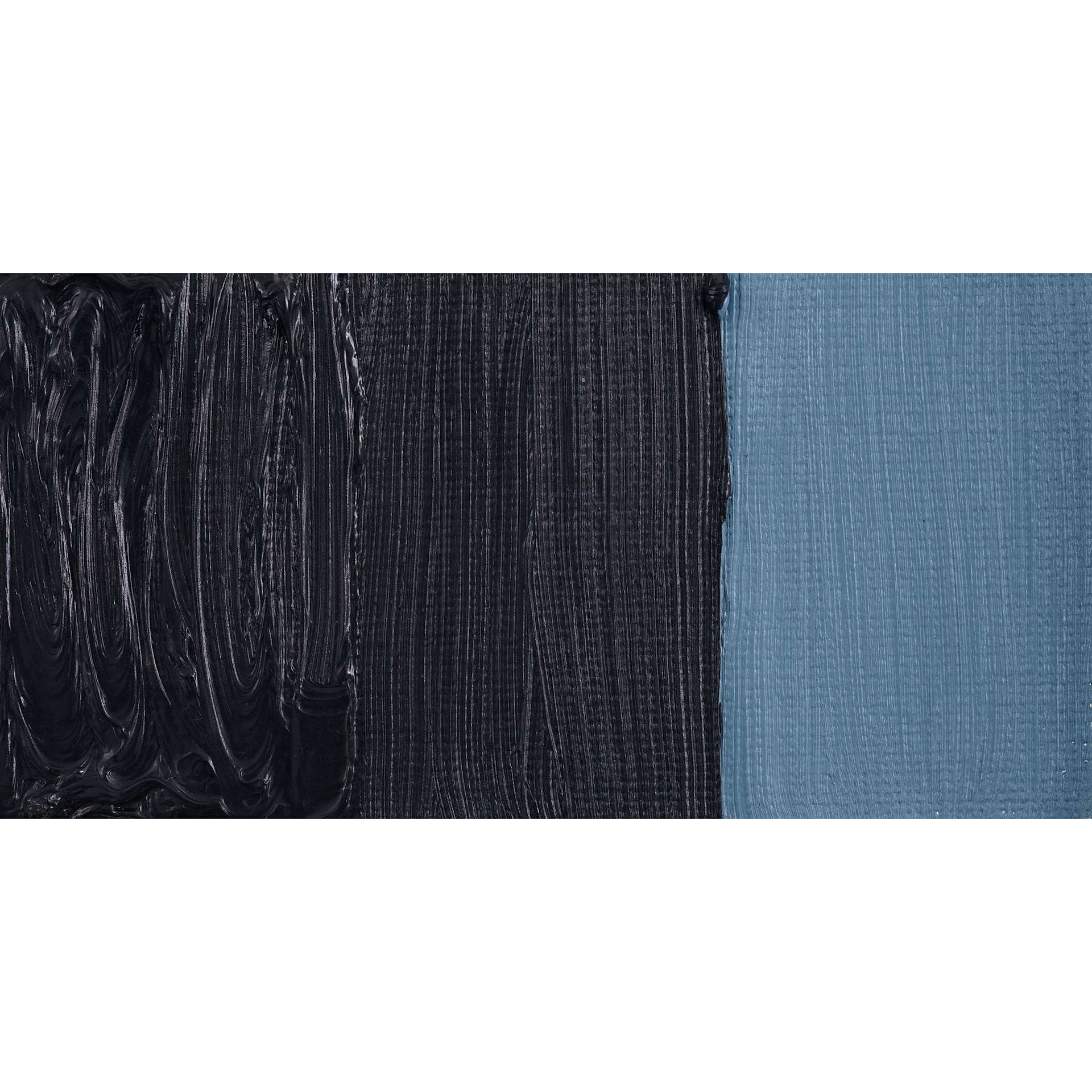
Colors on Monitors -
Due to differences in users’ monitors, the colors presented are an approximation of the true color.
Reviews
Pigment Information
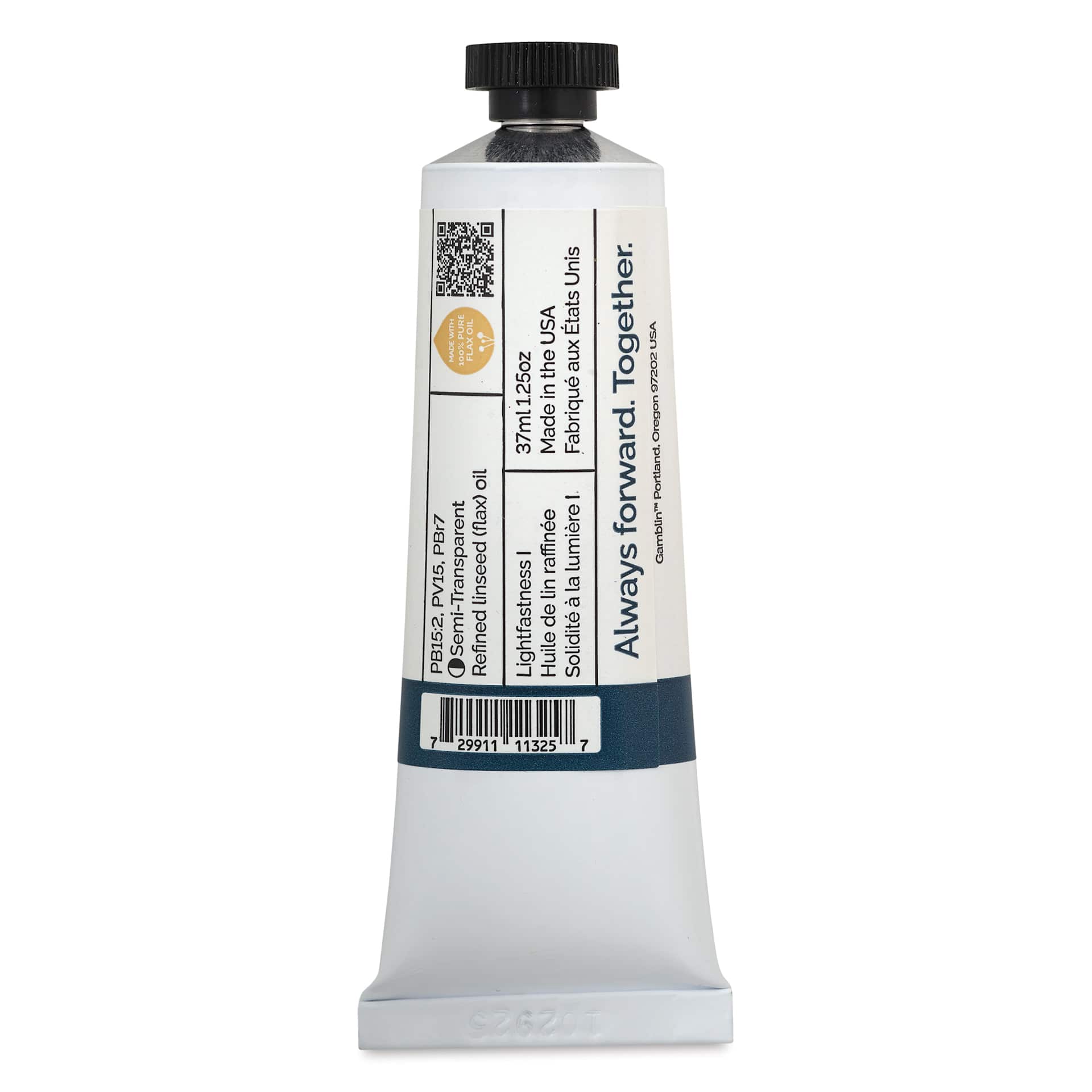
This color contains the following pigments:
PB15:2-Phthalo Blue
PV15-Ultramarine Violet
PBr7-Burnt Sienna
Pigment Name
PB15:2-Phthalo Blue
Pigment Type
organic
Chemical Name
copper phthalocyanine
Chemical Formula
C32H16CuN8
Properties
Phthalo Blue PB15:2 is a structural variant of Phthalo Blue PB15 that produces more greenish tones.
Permanence
Phthalo Blues are completely lightfast and stable and are permanent for all paint uses. They are currently used in inks, coatings, and many plastics due to their stability and are considered a standard pigment in printing ink and the packaging industry.
History
Developed by chemists using the trade name Monastral Blue, the organic blue dyestuff now known as Phthalo Blue was presented as a pigment in November 1935 in London. Its discovery was accidental. The dark color was observed in a kettle where a dye was being made from a British dyestuff plant. The demand for such a pigment came from commercial printers who wanted a cyan to replace Prussian Blue.
Pigment Name
PV15-Ultramarine Violet
Pigment Type
inorganic
Chemical Name
complex silicate of sodium and aluminum with sulfur
Chemical Formula
H2Na(4-6)Al6Si6O24S2
Properties
Ultramarine Violet is a semi-transparent, dull purple to pale violet with low tinting strength. As a pigment, it is weak in most oil applications, but it performs better in water-based mediums, pastels, and chalks. It is generally the bluest of the violet pigments, although there can be significant differences in color across brands. It is not suitable for fresco work and does not mix well with yellows. Ultramarine Violet is a variant of Ultramarine Blue, and their pigment properties are identical.
Permanence
Ultramarine Violet has excellent permanence and lightfastness.
History
Unknown.
Pigment Name
PBr7-Burnt Sienna
Pigment Type
earth
Chemical Name
iron oxides
Chemical Formula
Fe2O3
Properties
Burnt Sienna is a warm, mid-brown color formed by burning the yellow-brown limonite clay called Raw Sienna. It ranges from semi-opaque to semi-transparent due to the combination of its opaque, red-brown mass tone and its transparent, orangey undertone. It is an excellent mixing complement for blues and greens and creates salmon or peach colored tints when mixed with white. It can be useful for subduing bright colors and does not get chalky in dark mixtures.
Permanence
Burnt Sienna has good permanence and is considered one of the most versatile of the permanent pigments.
History
Burnt Sienna has been used as a pigment since prehistoric times, but its current name came about during the Renaissance. It comes from the city of Siena, in Italy, and is short for terra di Siena, meaning earth of Siena. Sienna was famous for the mining and production of earth pigments from the Renaissance until World War II. Due to the depletion of clay deposits in Tuscany, Italian siennas now come from other areas, including Sicily and Sardinia.
Safety Data Sheet
UPC Code: 729911113257