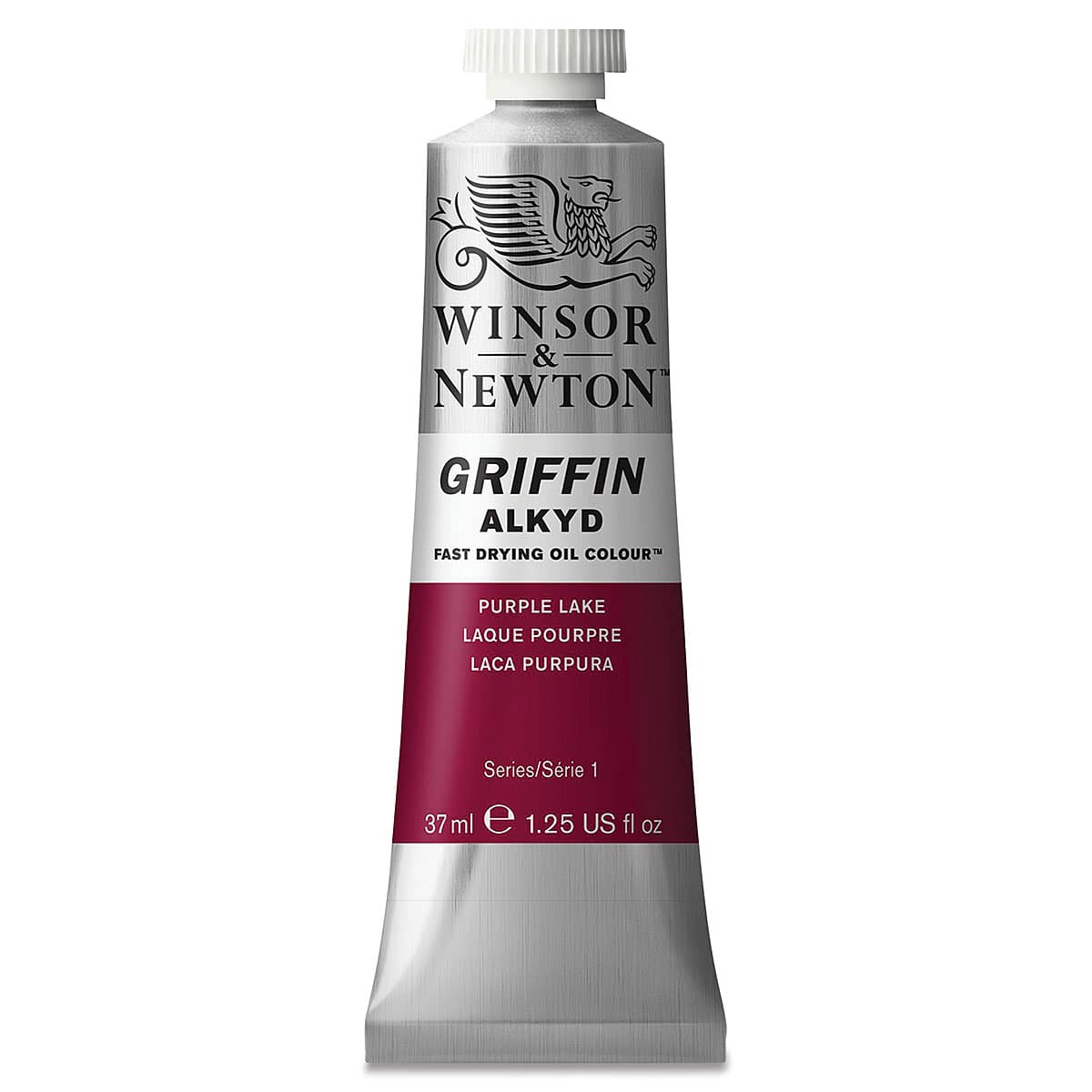
Winsor & Newton Griffin Alkyds - Purple Lake, 37 ml tube

Save For Later
My Store Pickup List
Please select a storeMy Wish Lists
My BlickU List(s)
My Quick Quotes
Product Details
- No.
- 544
- Description:
- Alkyd Oil Paint
- Color:
- Purple Lake
- Size:
- 37 ml (1.25 oz)
- Format:
- Tube
- Series:
- 1
Colors on Monitors -
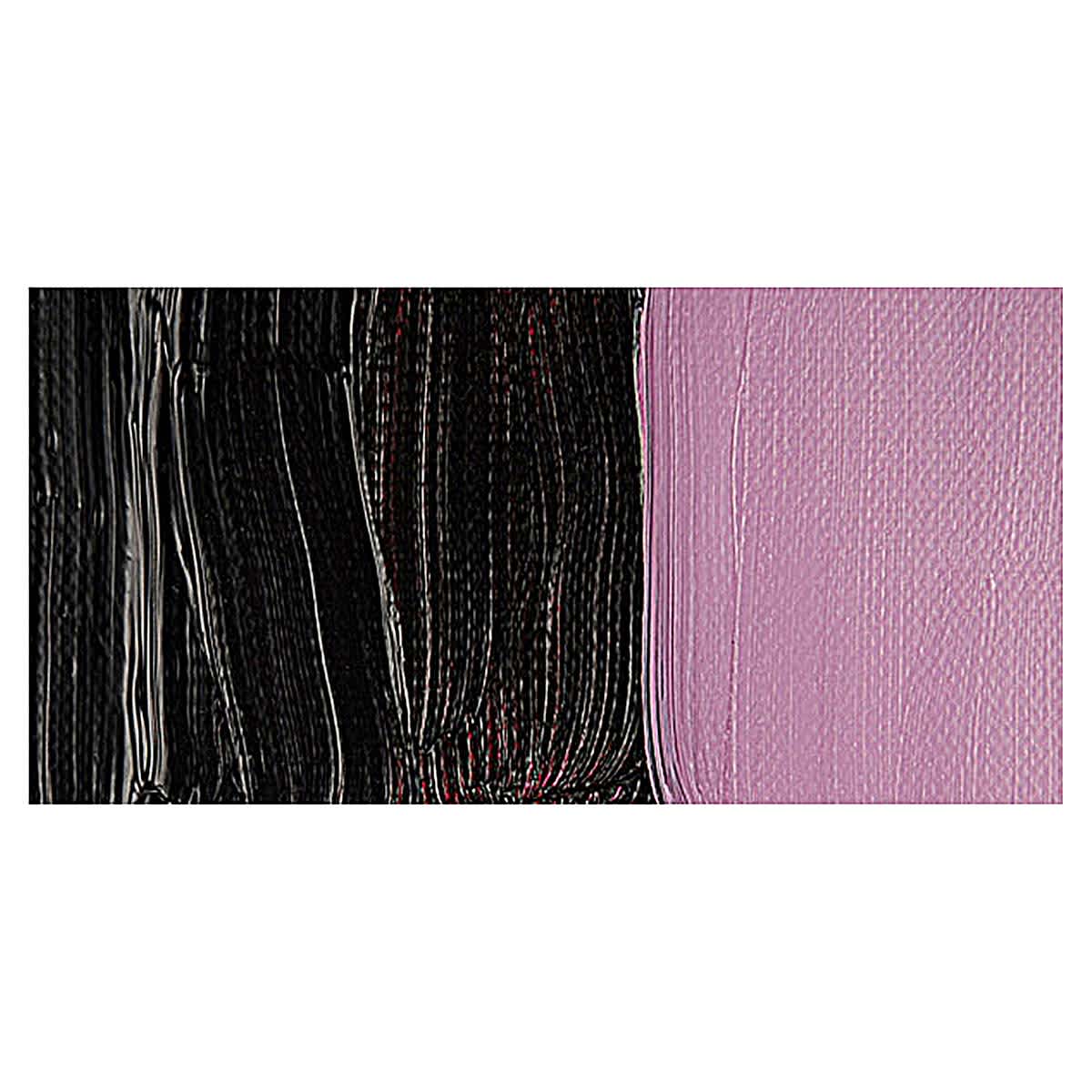
Due to differences in users’ monitors, the colors presented are an approximation of the true color.
Shipping Note - Due to manufacturer distribution restrictions, Winsor & Newton products cannot be shipped to addresses outside of North America.
Reviews
Pigment Information
This color contains the following pigments:
PR177-Anthraquinone Red
PB29-Ultramarine [Blue]
Pigment Name
PR177-Anthraquinone Red
Pigment Type
anthraquinone
Chemical Formula
C14H8O2
Properties
Anthraquinone Red is a magenta colored pigment that is transparent and moderately intense. It tends to fade in tints and is suitable for all media.
Permanence
Anthraquinone Red has good lightfastness and permanence in its masstone, while its tint lightfastness is moderate. Overall lightfastness and permanence varies by brand.
History
Anthraquinone pigments originated as textile vat dyes before being used as pigments. They became more popular with artists once it was discovered that careful preparation and grinding helped them to retain brilliance of color.
Pigment Name
PB29-Ultramarine [Blue]
Pigment Type
inorganic
Chemical Name
complex silicate of sodium and aluminum with sulfur
Chemical Formula
Na8-10Al6Si6O24S2-4 or Na6-8Al6Si6O24S2-4
Properties
Ultramarine is the standard warm blue, a brilliant blue pigment that has the most purple and least green in its undertone. It has a moderate to high tinting strength and a beautiful transparency. Synthetic Ultramarine is not as vivid a blue as natural Ultramarine. Ultramarine dries slowly in oil and tends to produce clean, though granular, washes in watercolor. French Ultramarine mixes well with Alizarin colors in oil and watercolor form to create a range of purples and violets. It can dull when mixed with white in acrylic form, but mixes well with other colors. The shade varies based on manufacturer. Considered a great color for glazes, it is not suitable for frescoing.
Permanence
Ultramarine has excellent permanence, although synthetic Ultramarine is not as permanent as natural Ultramarine. It may discolor if exposed to acid because of its sulfuric content.
History
The name for this pigment comes from the Middle Latin ultra, meaning beyond, and mare, meaning sea, because it was imported from Asia to Europe by sea. It is a prominent component of lapis lazuli and was used on Asian temples starting in the 6th century. It was one of the most expensive pigments in 16th century Europe, worth twice its weight in gold, and so was used sparingly and when commissions were larger. Ultramarine is currently imitated by a process invented in France in 1826 by Jean Baptiste Guimet, making blue affordable to artists and extending the range of colors on their palettes.
Safety Data Sheet
UPC Code: 884955094068
ASIN #: B0014ZU6OA