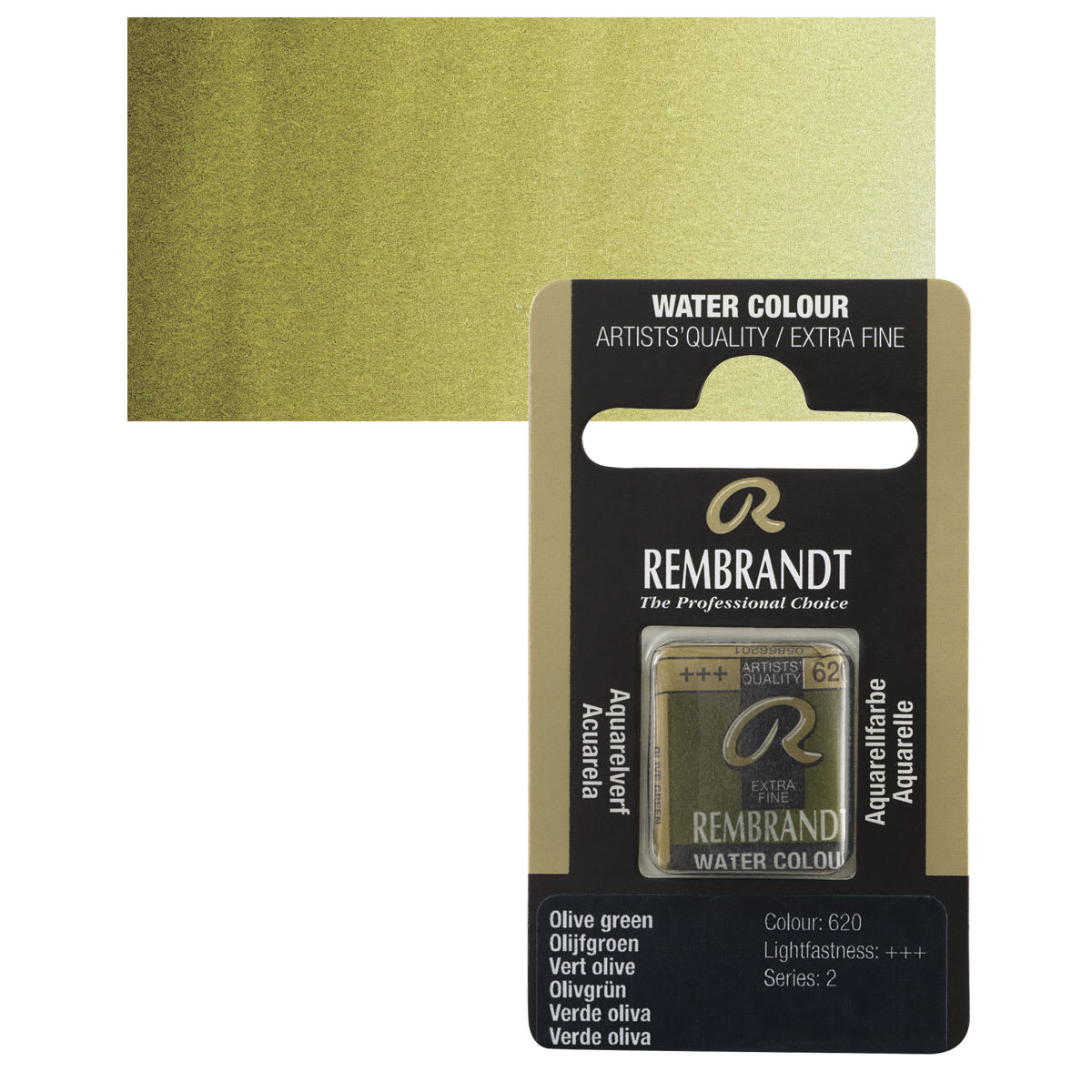
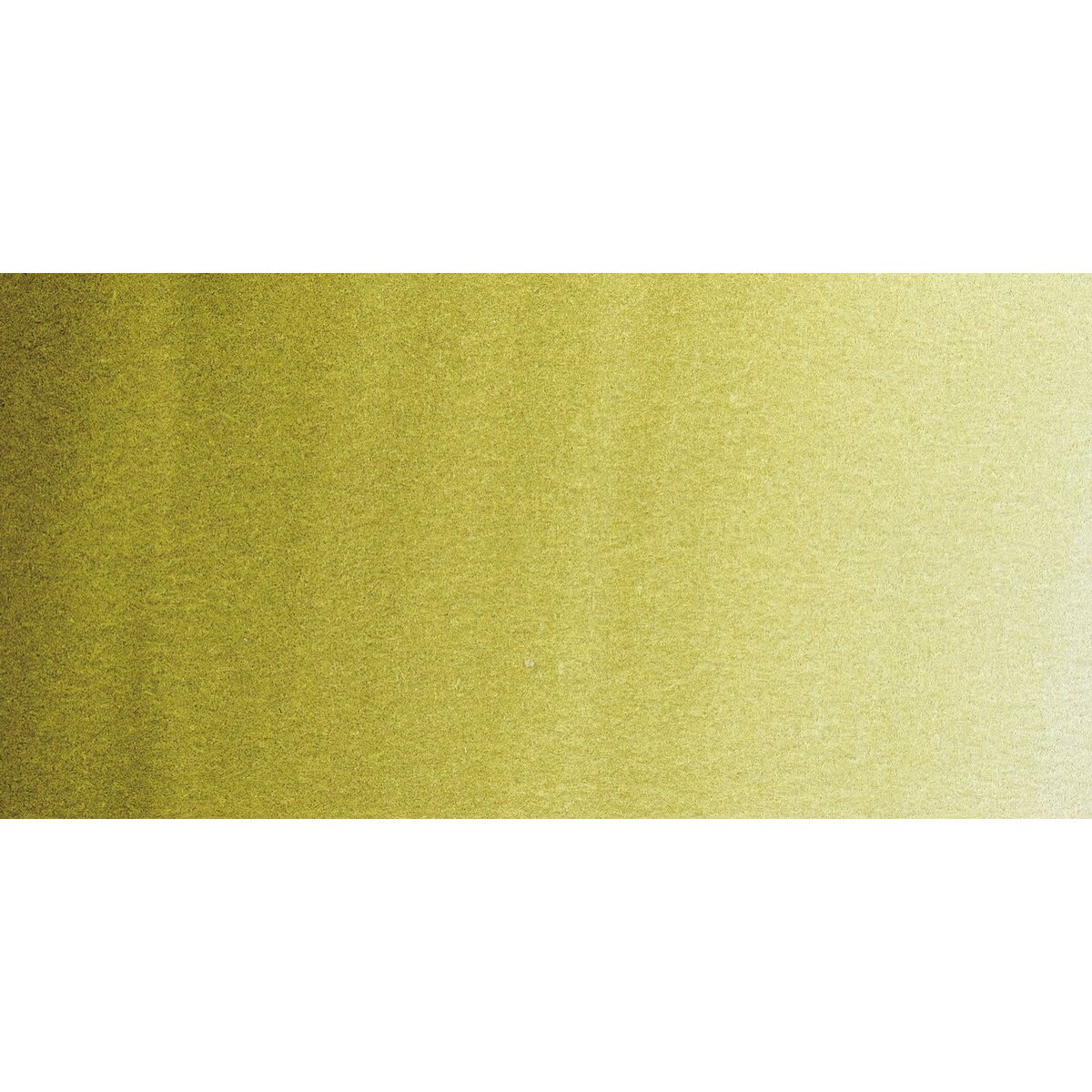
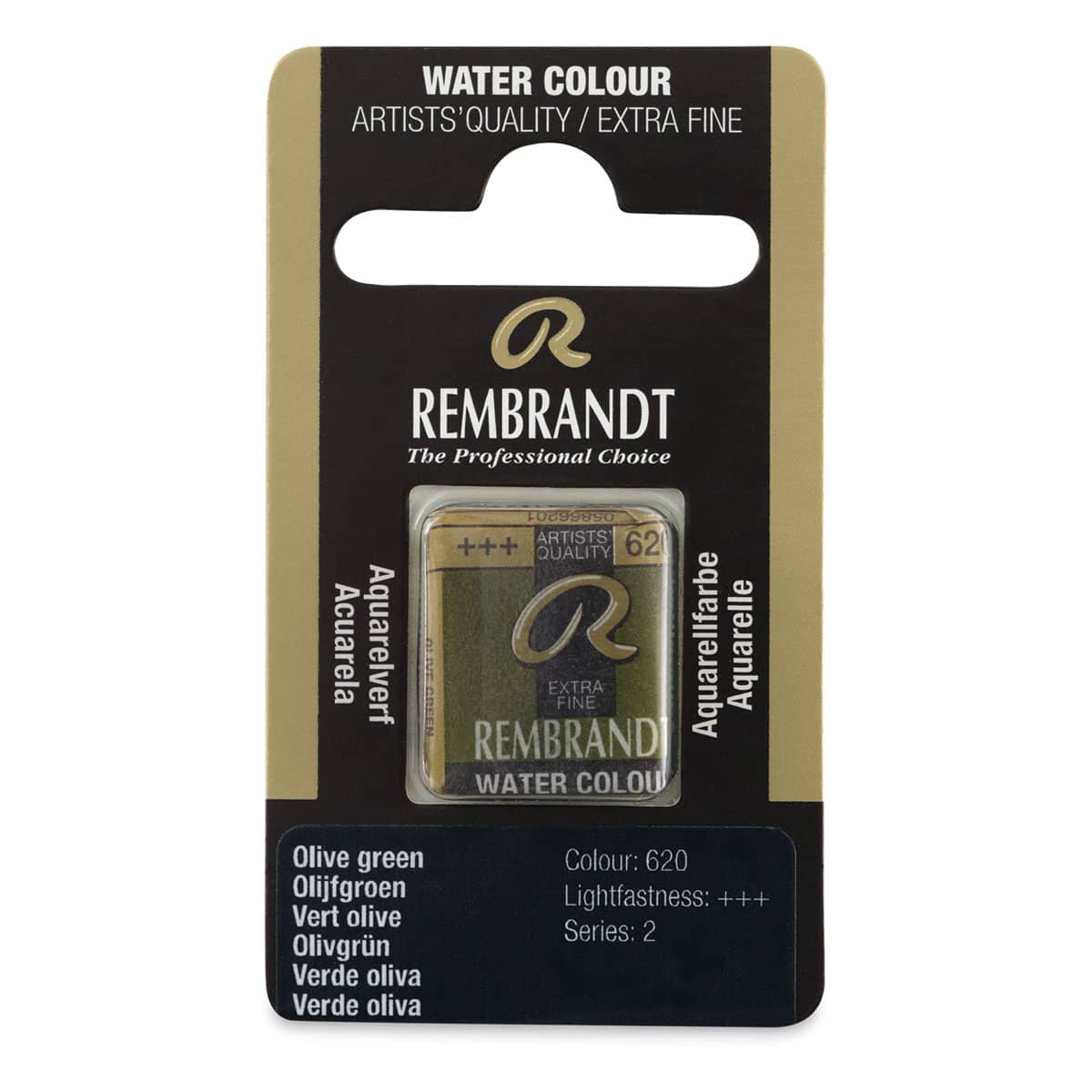
Rembrandt Watercolor Half Pan - Olive Green
Save For Later
My Store Pickup List
Please select a storeMy Wish Lists
My BlickU List(s)
My Quick Quotes
Product Details
- No.
- 620
- Description:
- Artists' Watercolor
- Color:
- Olive Green
- Format:
- Pan
- Size:
- Half Pan
Colors on Monitors -
Due to differences in users’ monitors, the colors presented are an approximation of the true color.
Reviews
Pigment Information
This color contains the following pigments:
PG7-Phthalo Green
PY150-Nickel Azo Yellow
PV19-Quinacridone Violet
Pigment Name
PG7-Phthalo Green
Pigment Type
organic
Chemical Name
polychlorinated copper(II) phthalocyanine
Chemical Formula
C32H3Cl13CuN8 to C32HCl15CuN8 or C32H16CuN8Cl15 (PG7) or C32Br6Cl10CuN8 (PG36)
Properties
Phthalo Green is a transparent, cool, bright, high intensity color used in oil and acrylics. It comes from a Phthalocyanine Blue pigment where most of the hydrogen atoms have been replaced with chlorine, forming highly stable molecules. It has similar pigment properties and permanence to Phthalo Blue. It is slow drying and an excellent base color for mixing a range of bright greens. Phthalo Green is considered a very good alternative to Viridian because it is intense and mixes well and can be used to emphasize mineral colors in various tints. However, its tinting strength is very high, so it can overpower other colors. This pigment most closely resembles the discontinued and toxic Verdigris.
Permanence
Phthalo Greens are completely lightfast and resistant to alkali, acids, solvents, heat, and ultraviolet radiation. They are currently used in inks, coatings, and many plastics due to their stability and are considered a standard pigment in printing ink and the packaging industry.
Pigment Name
PY150-Nickel Azo Yellow
Pigment Type
inorganic
Chemical Name
nickel azomethine yellow
Chemical Formula
C30H18Cl2N6NiO4
Properties
Nickel Azo Yellow is a transparent, moderately staining yellow pigment with high tinting strength. It is considered a good color match in botanical and landscape painting for natural gamboge (NY24), a historic yellow pigment with fair to poor lightfastness.
Permanence
Nickel azomethine yellow has excellent lightfastness.
History
Nickel azomethine yellow has been developed as an artist pigment becasue it is a close match for gamboge, a historic yellow.
Pigment Name
PV19-Quinacridone Violet
Pigment Type
organic synthetic, quinacridone
Chemical Formula
C20H12N2O2
Properties
Quinacridone Red is a high performance, transparent pigment with an average drying time and uneven dispersal. It is another name for Quinacridone Violet (PV19) and Quinacridone Red (PR192). Quinacridone pigments have relatively low tinting strength in general. For this reason, quinacridone colors are often expensive, because more pigment is required in the formulation.
Permanence
Quinacridone Violet has excellent lightfastness and is considered the most lightfast organic pigment in this shade range.
Safety Data Sheet
UPC Code: 8712079051334