Save For Later
My Store Pickup List
Please select a storeMy Wish Lists
My BlickU List(s)
My Quick Quotes
Product Details
- Description:
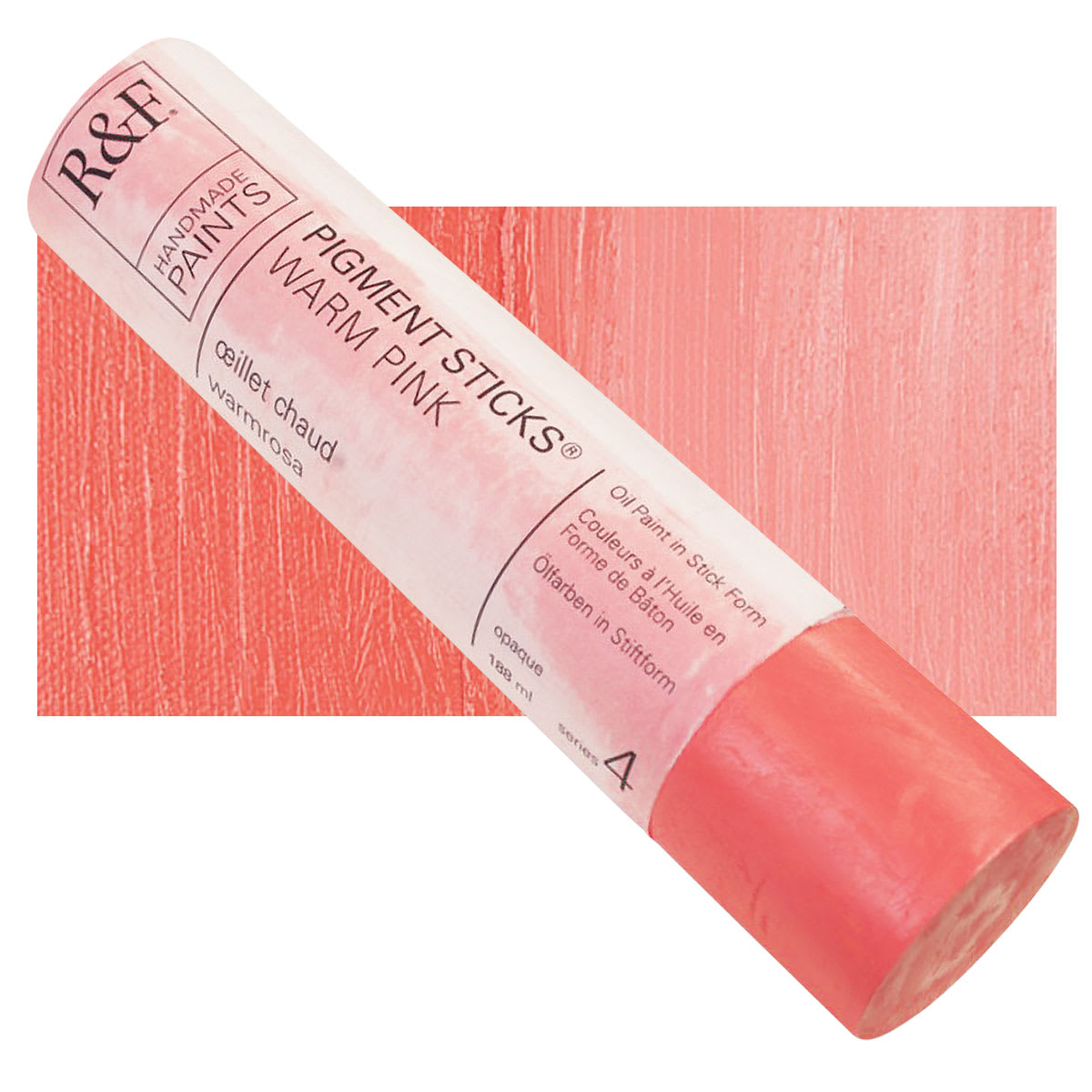
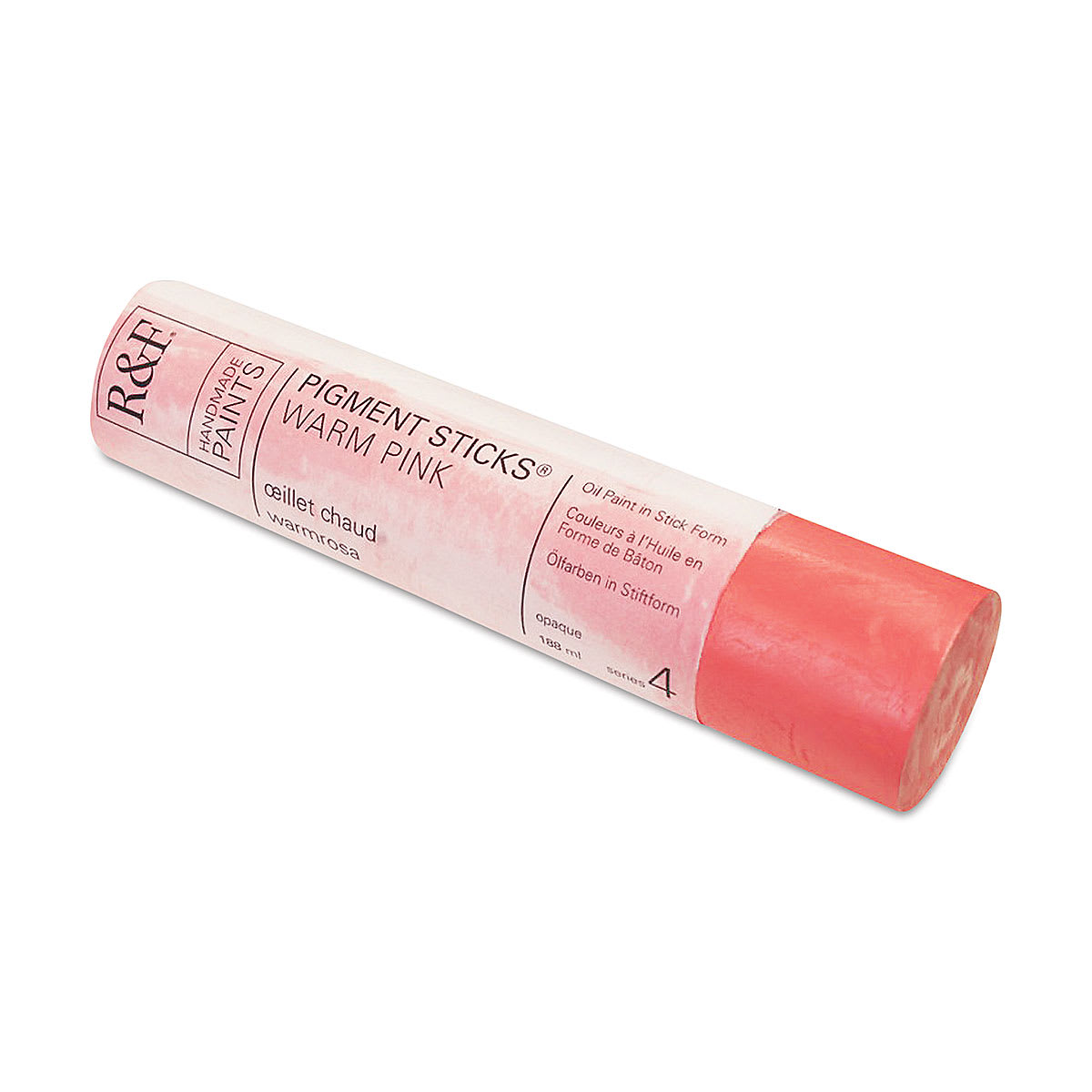
- Pigment Stick
- Color:
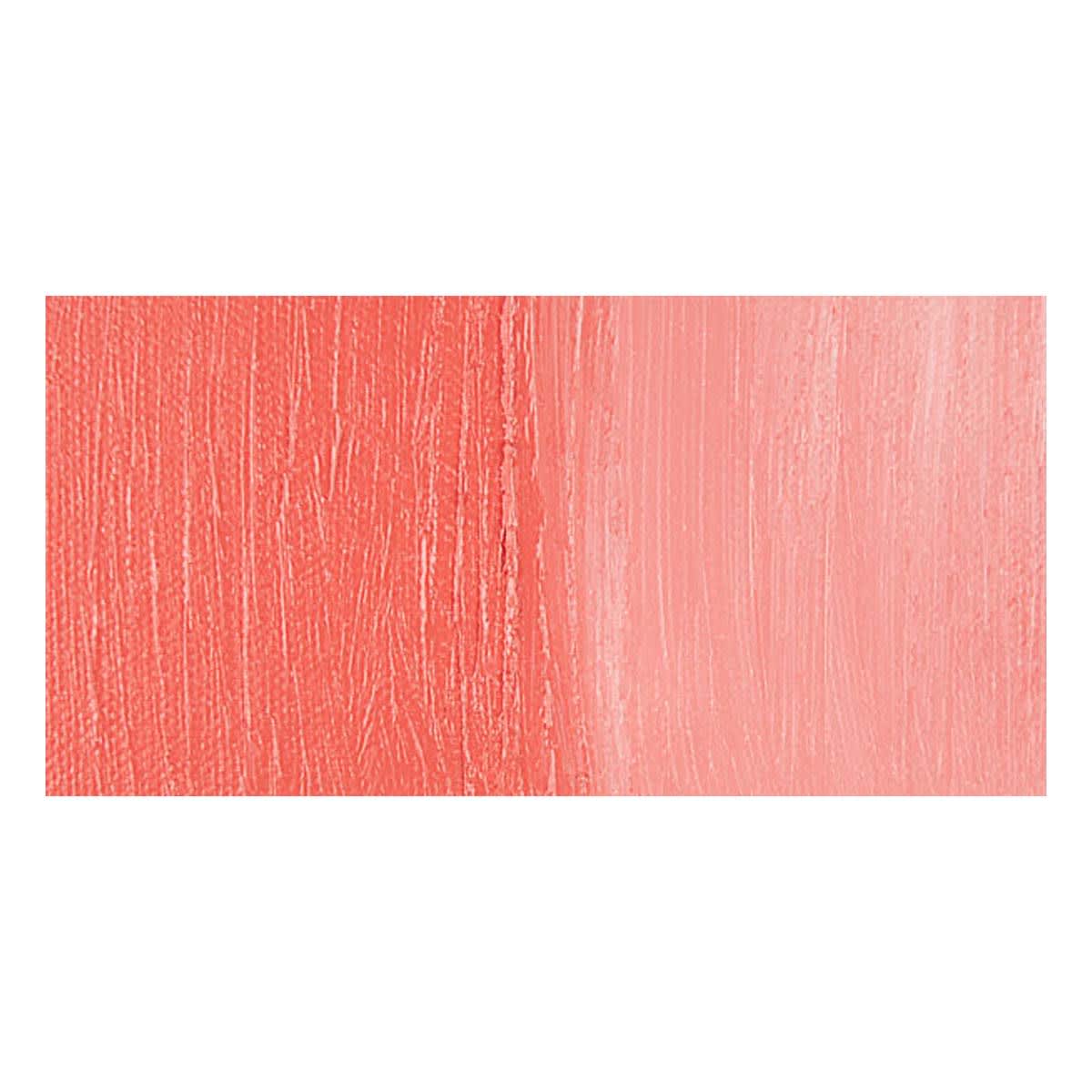
- Warm Pink
- Size:
- 188 ml (6.35 oz)
- Format:
- Stick
- Series:
- 4
Colors on Monitors -
Due to differences in users’ monitors, the colors presented are an approximation of the true color.
Reviews
Pigment Information
This color contains the following pigments:
PY37-Cadmium Yellow
PW6-Titanium White
PV19-Quinacridone Violet
PR108-Cadmium Red
PW4-Zinc White
Pigment Name
PY37-Cadmium Yellow
Pigment Type
inorganiic, cadmium
Chemical Name
cadmium(II)-sulfide
Chemical Formula
CdS
Properties
Cadmium Yellow is brilliant, dense, and opaque, with good tinting strength and very high hiding power. It is the artist’s principal bright yellow and is available in light, medium, and dark shades. The deeper shades appear deep orange and have the greatest tinting strength. It is slow-drying in oil form and is used in both oil and watercolor form. It cannot be mixed with copper-based pigments. A clean Cadmium Orange is created when Cadmium Yellow is mixed with Cadmium Red. Hues vary by brand. Cadmium pigments have been partially replaced by azo pigments, which are similar in lightfastness to the cadmium colors, cheaper, and non-toxic. Cadmium Yellow is usually available in a pure grade, or in a cadmium-barium mix. This mix has the same permanence with a lower tinting strength.
Permanence
Cadmium Yellow is lightfast and permanent in most forms, but like most cadmium colors, it will fade in fresco or mural painting. The deeper shades are the most permanent. The pale varieties have been known to fade with exposure to sunlight.
History
Cadmiums get their names from the Latin word cadmia meaning zinc ore calamine, and the Greek word kadmeia, meaning Cadmean earth, first found near Thebes, the city founded by the Phoenician prince Cadmus. Metallic cadmium was discovered in 1817 by Friedrich Strohmeyer. Oil colors were first made from Cadmium Yellow pigments in 1819, replacing toxic Chrome (lead) Yellows. However, their production was delayed until 1840 due to the scarcity of cadmium metals. Landscape painters, such as Claude Monet, preferred Cadmium Yellow to the less expensive Chrome Yellow because of its higher chroma and greater purity of color.
Pigment Name
PW6-Titanium White
Pigment Type
inorganic
Chemical Name
titanium dioxide
Chemical Formula
TiO2
Properties
Titanium White is the most brilliant of the white pigments. It is considered an all purpose oil color useful in all techniques and the best all around white. Its masstone is neither warm nor cool, placing it somewhere between Lead White and Zinc White. It is less prone to cracking and yellowing than Lead White, but it still yellows easily. Titanium White dries slowly in oil form, more slowly than Lead White but more quickly than Zinc White. It is opaque in oil and acrylic forms and semi-opaque in watercolor form. This pigment has good chemical stability, and its tinting strength is superior to both Lead White and Zinc White.
Permanence
Titanium White has excellent permanence and lightfastness.
History
Titanium is the ninth most abundant element in the Earth's crust, however mineral deposits that are economical to mine are less common. Titanium dioxide was first discovered in 1821, although it could not be mass produced until 1919. Widespread use of the pigment began in the 1940s. Since that time, it has become the most commonly used white pigment. The name comes from the Latin word Titan, the name for the elder brother of Kronos and ancestor of the Titans, and from the Greek word tito, meaning day or sun.
Pigment Name
PV19-Quinacridone Violet
Pigment Type
organic synthetic, quinacridone
Chemical Formula
C20H12N2O2
Properties
Quinacridone Red is a high performance, transparent pigment with an average drying time and uneven dispersal. It is another name for Quinacridone Violet (PV19) and Quinacridone Red (PR192). Quinacridone pigments have relatively low tinting strength in general. For this reason, quinacridone colors are often expensive, because more pigment is required in the formulation.
Permanence
Quinacridone Violet has excellent lightfastness and is considered the most lightfast organic pigment in this shade range.
Pigment Name
PR108-Cadmium Red
Pigment Type
inorganic, cadmium
Chemical Name
cadmium sulfide and cadmium selenide
Chemical Formula
CdS x CdSe
Properties
Cadmium Red is a bright, warm red that ranges in shade from orange-red to maroon and is available in light, medium, and dark versions. It is strong and opaque, with good tinting strength. Cadmium Red dries slowly. It grays down when mixed with white, mixes well with blues to create a range of browns, and mixes well with Cadmium Yellow to create a strong orange. It also works well in neutral mixes. Cadmium pigments have been partially replaced by azo pigments, which are similar in lightfastness to the cadmium colors, cheaper, and non-toxic. Hues vary by brand. Cadmium Red is usually available in either a pure grade or a cadmium-barium mix. The cadmium-barium mix has the same permanence as pure Cadmium Red, but it has a lower tinting strength.
Permanence
Cadmium Red is lightfast and permanent in most forms, but like many cadmium pigments, it will fade in fresco or mural painting. Its improved lightfastness has helped it to replace Vermilion on the artist’s palette.
History
Cadmiums get their names from the Latin word cadmia meaning zinc ore calamine, and the Greek word kadmeia, meaning Cadmean earth, first found near Thebes, the city founded by the Phoenician prince Cadmus. Metallic cadmium was discovered in 1817 by Friedrich Strohmeyer, but Cadmium Red was not introduced until 1907 in Germany.
Pigment Name
PW4-Zinc White
Pigment Type
inorganic
Chemical Name
zinc(II)-oxide
Chemical Formula
ZnO
Properties
Zinc White is the coolest white, and it has a cold, clean masstone and a slightly bluish tint. It has less hiding power and is more transparent than other whites. It dries slowly and is good for painting wet into wet and for glazing and scumbling. Zinc White is neither as opaque nor as heavy as Lead White, its covering power is not as good, and it takes much longer to dry. However, it does not blacken when exposed to sulfur in the air as Lead White does. It is very valuable for making tints with other colors. Unmixed Zinc White dries to a brittle and dry paint film that may crack over the years, so it is not good for frescoing. It is more transparent in acrylic form than Titanium White and is the most commonly used white with gouache. Chinese White is a version of Zinc White appropriate for opaque watercolor techniques.
Permanence
Zinc White has great permanence and lightfastness.
Safety Data Sheet
UPC Code: 836943006775
ASIN #: B005CU66GU