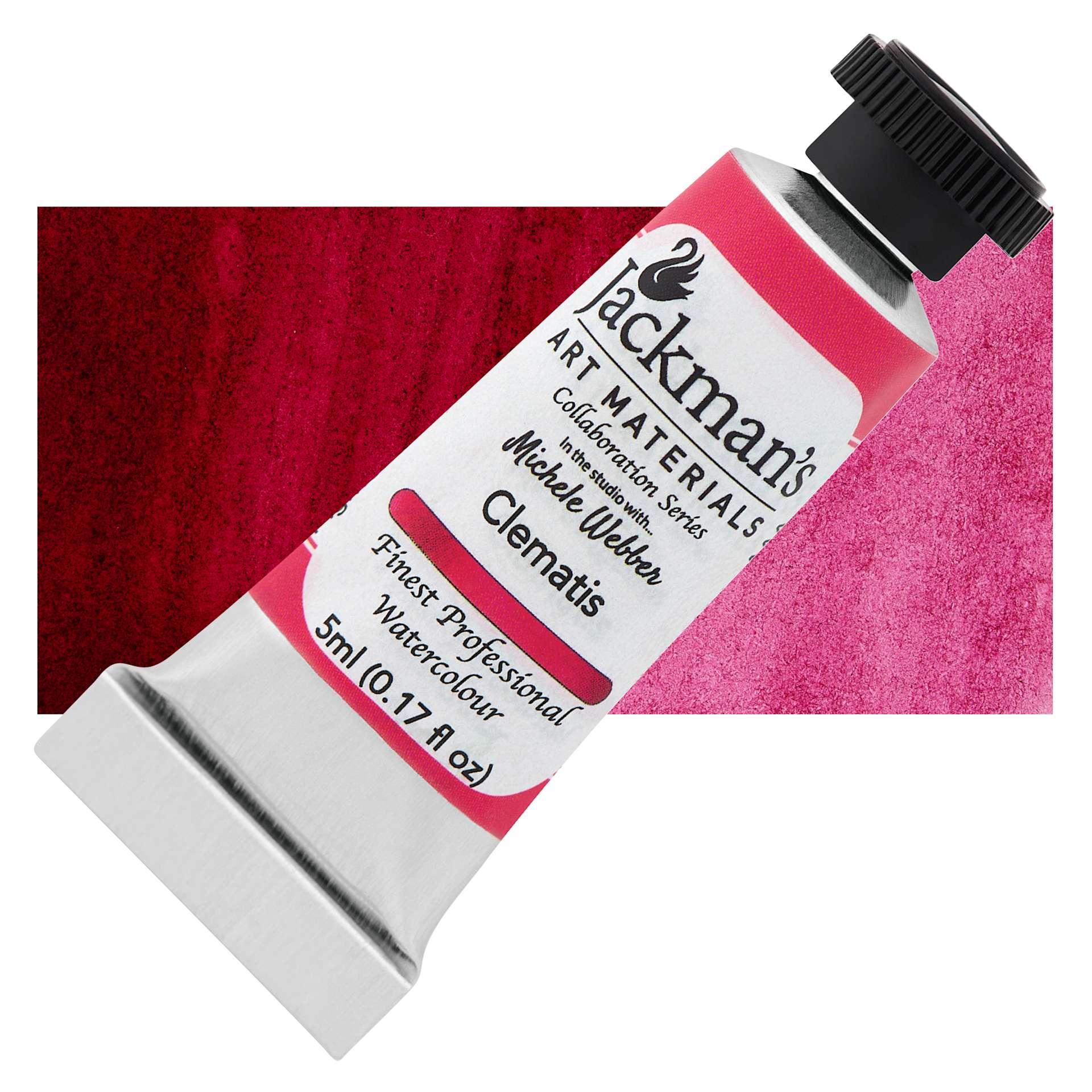
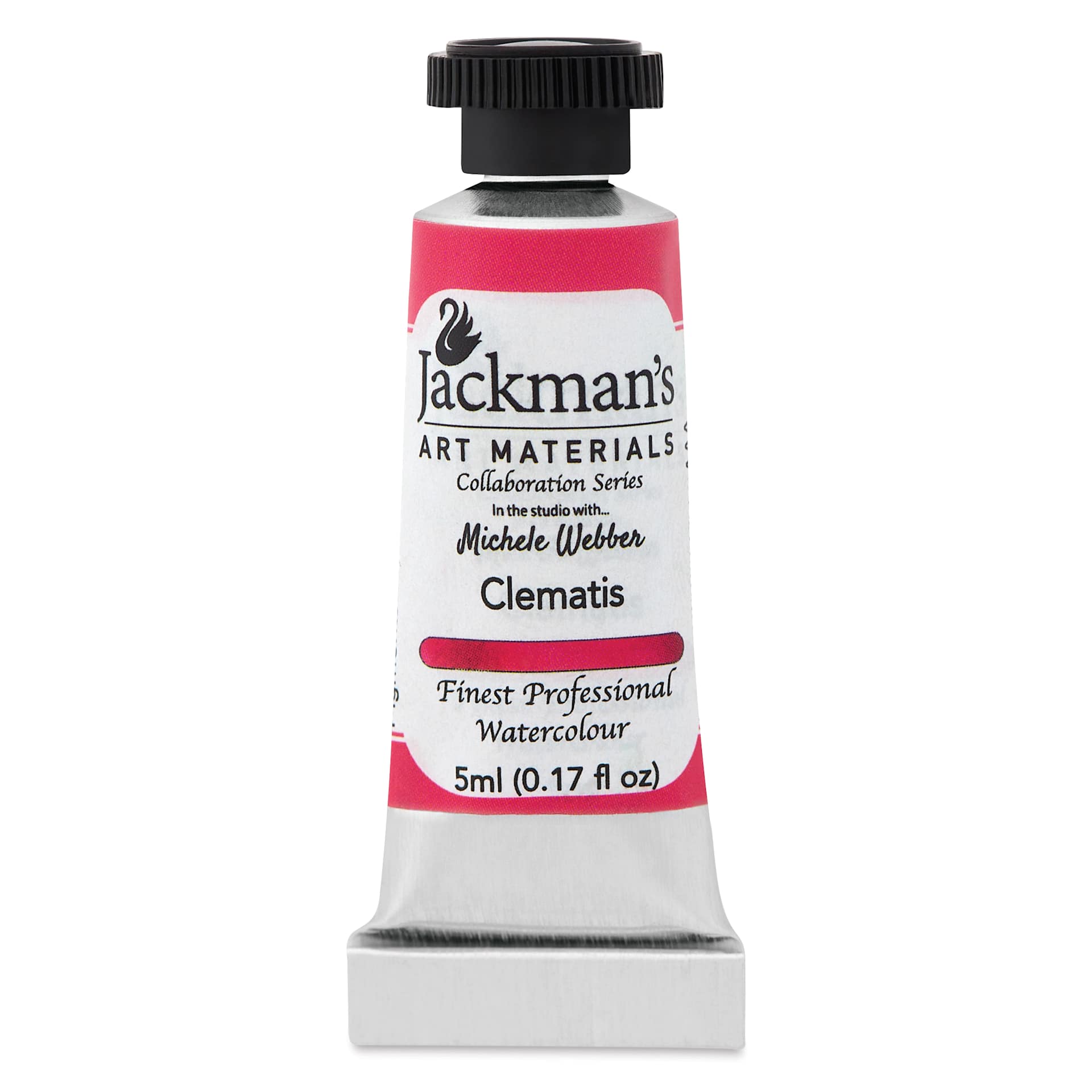
Jackman's Finest Professional Watercolour - Clematis, 5 ml Tube
Save For Later
My Store Pickup List
Please select a storeMy Wish Lists
My BlickU List(s)
My Quick Quotes
Product Details
- No.
- 21800
- Description:
- Professional Watercolour
- Color:
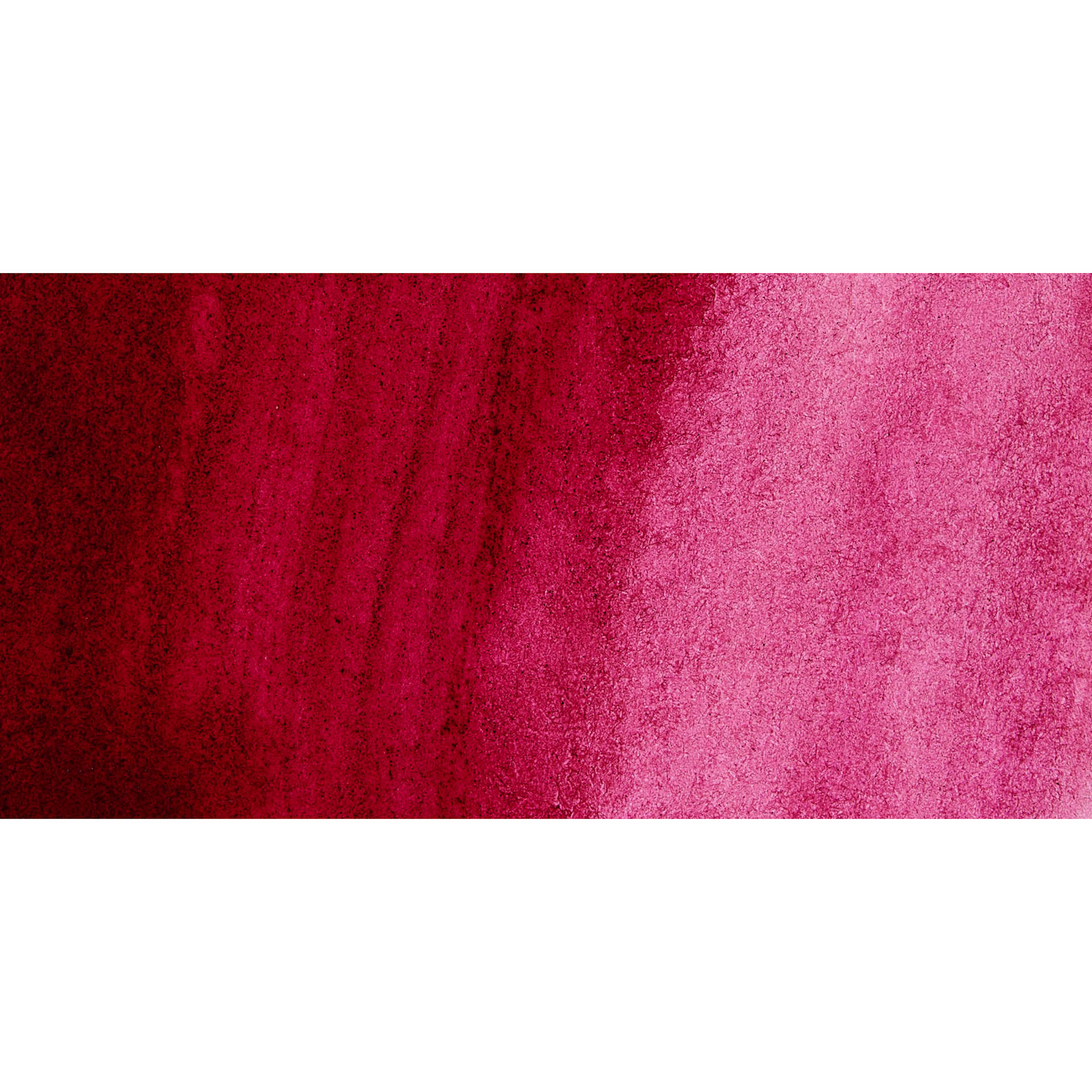
- Clematis
- Series:
- 3
- Lightfastness:
- 1 = Excellent
- Format:
- Tube
- Size:
- 5 ml (0.17 oz)
Colors on Monitors -
Due to differences in users’ monitors, the colors presented are an approximation of the true color.
Reviews
Pigment Information
This color contains the following pigments:
PR122-Quinacridone Magenta
PR254-Pyrrole Red
Pigment Name
PR122-Quinacridone Magenta
Pigment Type
organic, quinacridone
Chemical Formula
C22H16N2O2
Properties
Quinacridone Magenta is a semi-transparent and powerful bluish red with an impressive mixing range. It makes an excellent glazing color and is one of the bluest of the Quinacridone colors. The pigment's properties vary considerably, depending on how it is ground. Quinacridone pigments have relatively low tinting strength in general. For this reason, quinacridone colors are often expensive, because more pigment is required in the formulation.
Permanence
Quinacridone Magenta offers very good lightfastness in most media, but some have argued that it is less lightfast in watercolor form. Although Quinacridone Magenta received only a passing grade of "fair" under ASTM test protocols, other test results have rated the pigment very good to excellent. Transparent reddish violet pigments in general have more problems with lightfastness than any other range of colors. PR122 is often used as the Magenta of CMYK (four color) process printing because it offers a better tradeoff between tinting strength and lightfastness than other pigments in its class.
History
Quinacridone Magenta came from a red violet aniline dye that was first produced in 1858 by Natanson. It was called Magenta to commemorate a battle in Magenta, Italy. Over time, Magenta became the standard color name for a deep, violet red. Although quinacridone compounds became known in the late 19th century, methods of manufacturing so as to make them practical for use as commercial pigments did not begin until the 1950s. PR122 has become particularly popular in the formulation of Magenta for CMYK process printing.
Pigment Name
PR254-Pyrrole Red
Pigment Type
organic, aminoketone
Chemical Name
Bis-(p-chrolopheny)-1. 4-diketopyrrolo(3. 4-c)pyrrole
Properties
Pyrrole Red is opaque and has strong covering power. According to manufacturer Ciba, which uses the trade name Irgazin Red, it is a “clean, highly saturated mid shade red with high temperature resistance, excellent color strength, outstanding chemical, solvent and bleed resistance, and good weatherfastness.”
Permanence
Pyrrole Red is considered to have excellent lightfastness among organic pigments in its class. Tests in industrial applications have given it scores of 7-8 on the Blue Wool Scale.
History
Pyrrole Red, used as an automotive paint and as a colorant in plastics, was developed as one of a range of pigments to replace lead based pigments. In art materials, it is often used as a synthetic and lightfast replacement for carmine, a laked pigment that was originally produced from the body of the cochineal insect. It is also used to replace the older naphthol reds, organic red pigments that are sometimes only marginally lightfast and weatherfast.
Safety Data Sheet
UPC Code: 5061071721800