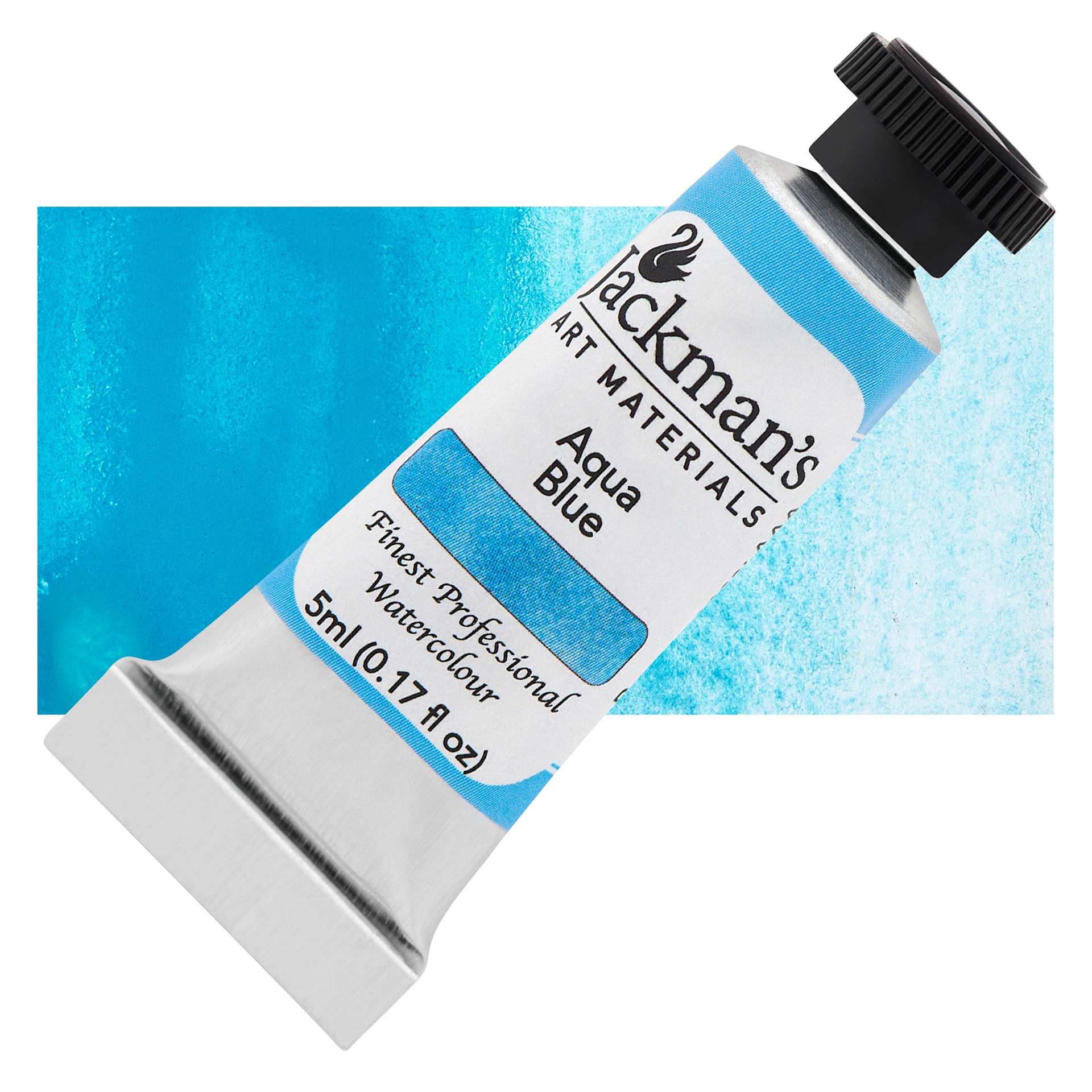
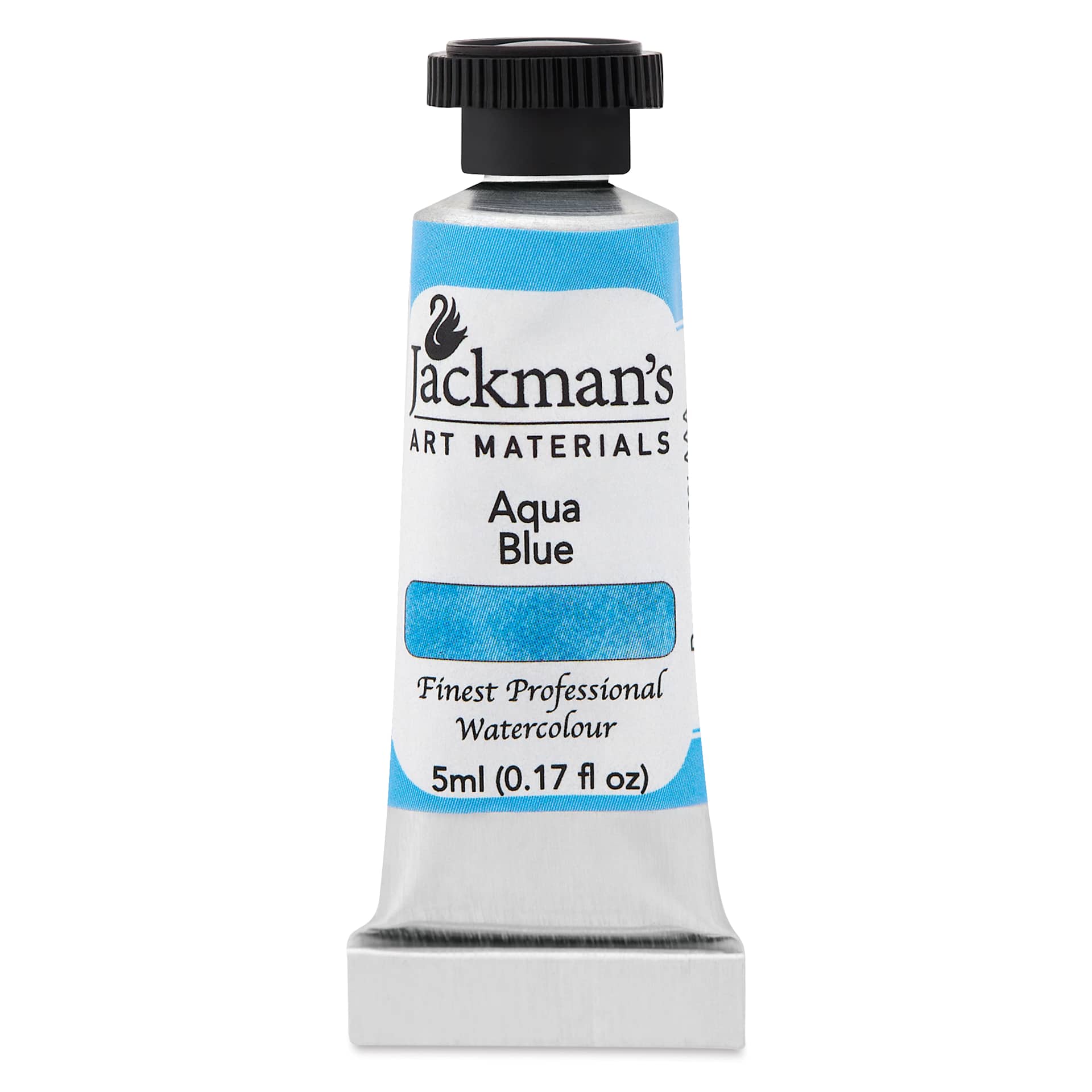
Jackman's Finest Professional Watercolour - Aqua Blue, 5 ml Tube

Save For Later
My Store Pickup List
Please select a storeMy Wish Lists
My BlickU List(s)
My Quick Quotes
Product Details
- No.
- 22838
- Description:
- Professional Watercolour
- Color:
- Aqua Blue
- Series:
- 3
- Lightfastness:
- 1 = Excellent
- Format:
- Tube
- Size:
- 5 ml (0.17 oz)
Colors on Monitors -
Due to differences in users’ monitors, the colors presented are an approximation of the true color.
Reviews
Pigment Information
This color contains the following pigments:
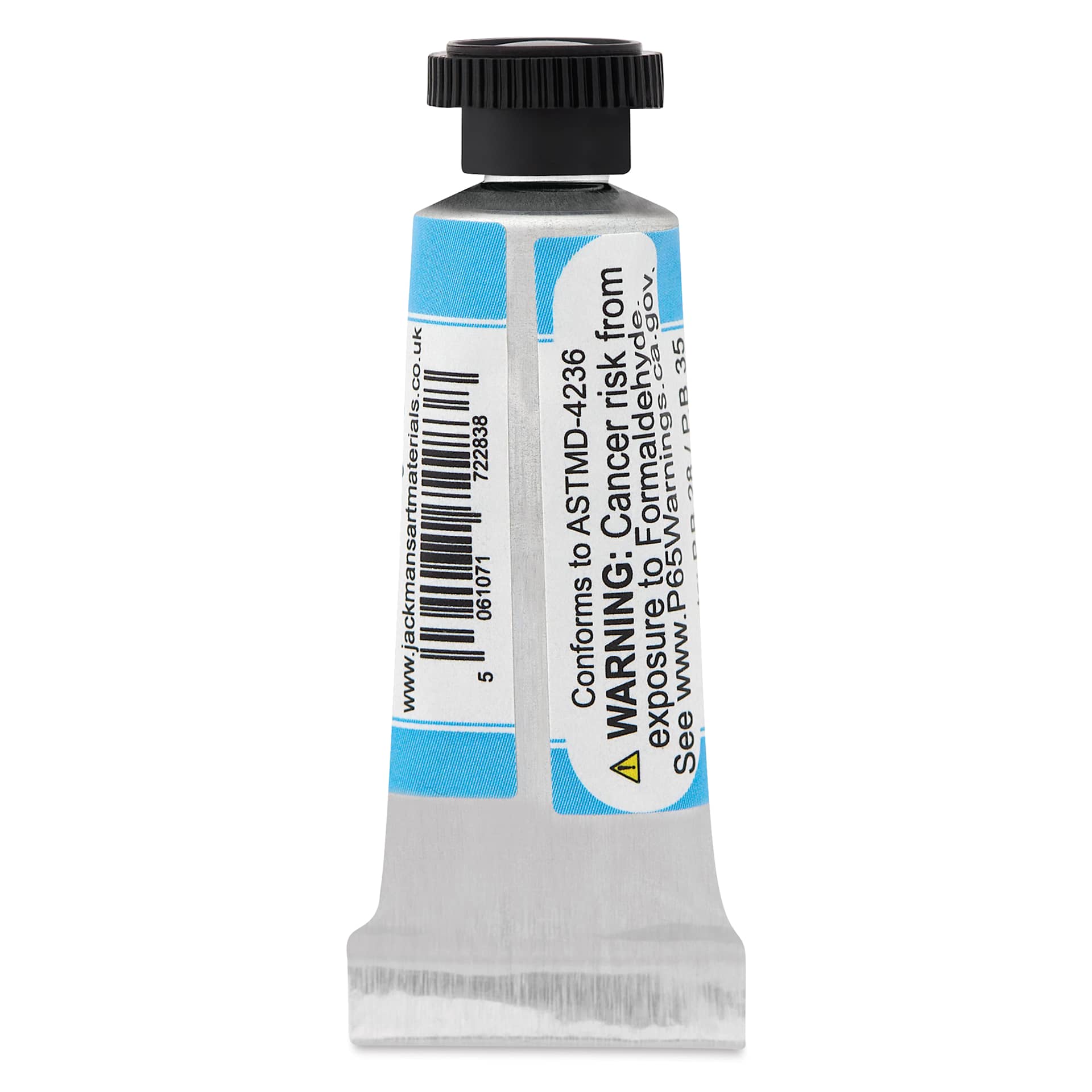
PB28-Cobalt Blue
PB35-Cerulean Blue
Pigment Name
PB28-Cobalt Blue
Pigment Type
inorganic
Chemical Name
cobalt(II) oxide + aluminum oxide
Chemical Formula
CoO + Al2O3
Properties
Cobalt blue is a semitransparent pigment with low to moderate tinting strength. When it dries, it appears lighter and less saturated. Pigment particles are large and grainy. Differences in how the pigment is ground and mixed lead to considerable differences in its performance among various manufacturers.
Permanence
Cobalt blue is absolutely lightfast and extraordinarily stable. The stability of cobalt salts at high temperatures make them the standard for blues used in ceramics and glassware.
History
Since ancient times, smalt blue has been used to color glass and ceramics. Cobalt salts, which give smalt its characteristic blue color, were identified in the 18th century. Techniques for manufacturing Cobalt Blue, a chemically pure salt of cobalt and aluminum oxide, were developed in 1802.
Pigment Name
PB35-Cerulean Blue
Pigment Type
inorganic
Chemical Name
cobalt(II) stannate
Chemical Formula
CoO n SnO2
Properties
Cerulean Blue is the standard cool blue, considered the traditional counterpart to Ultramarine, and is often used for painting atmospheric shades. It is quick drying and retains its color well, better than any other blue, in oil paint form. However, it tends to granulate or become chalky in watercolors. It has limited hiding power, is semi-opaque, and is easy to control. Its tinting capacity is low, so it can become lost when mixing.
Permanence
Cerulean Blue has excellent permanence. It is very stable and lightfast.
History
The name Cerulean Blue comes from the Latin word caelum, meaning sky. This pigment was discovered in 1805 by Andreas Hopfner, but it was not widely available until introduced by Messrs. G. Rowney & Co. in England under the name coeruleum in 1860 for use in aquarelle and oil painting. It was produced by the action of heat on cobalt oxide and other metallic bases.
Safety Data Sheet
UPC Code: 5061071722838