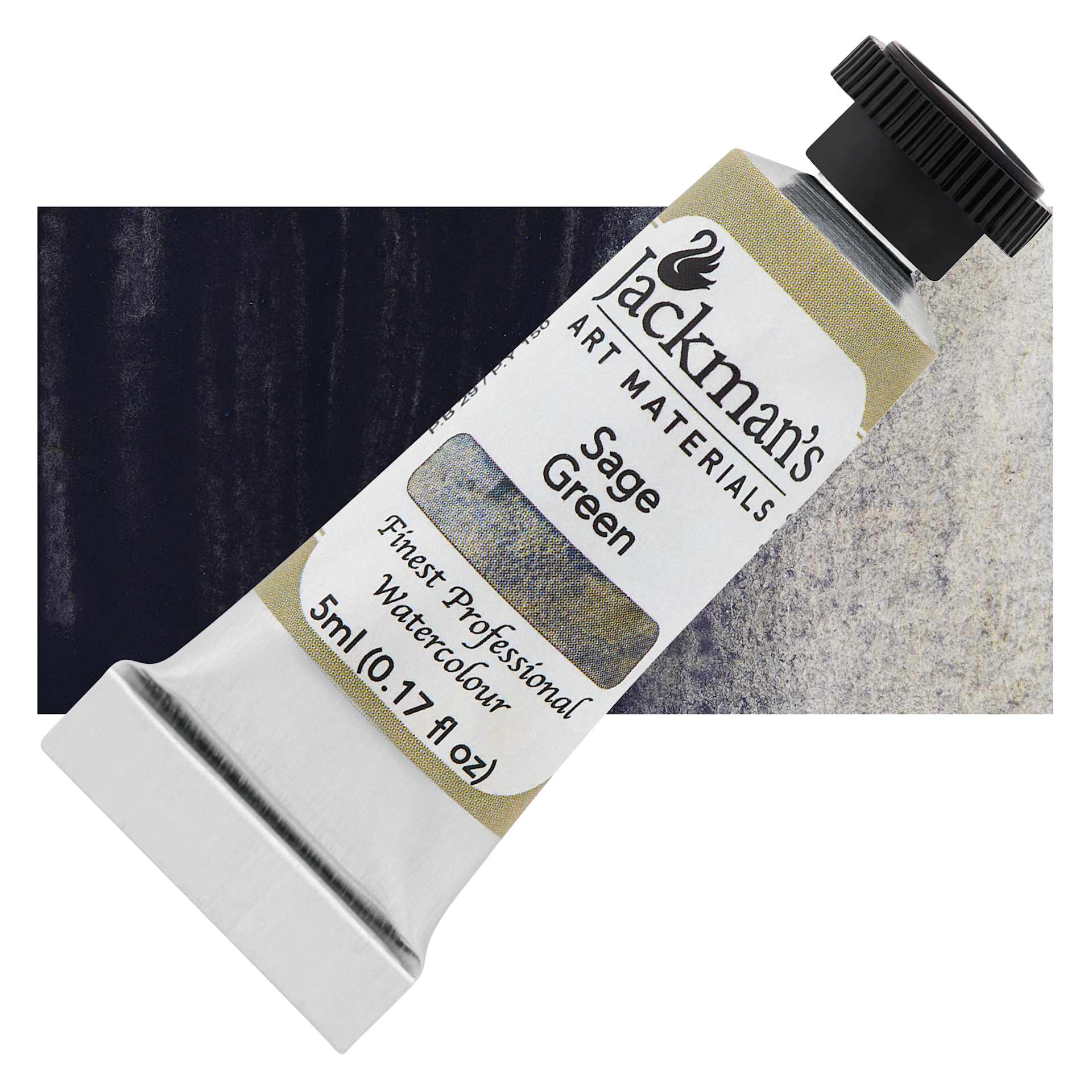
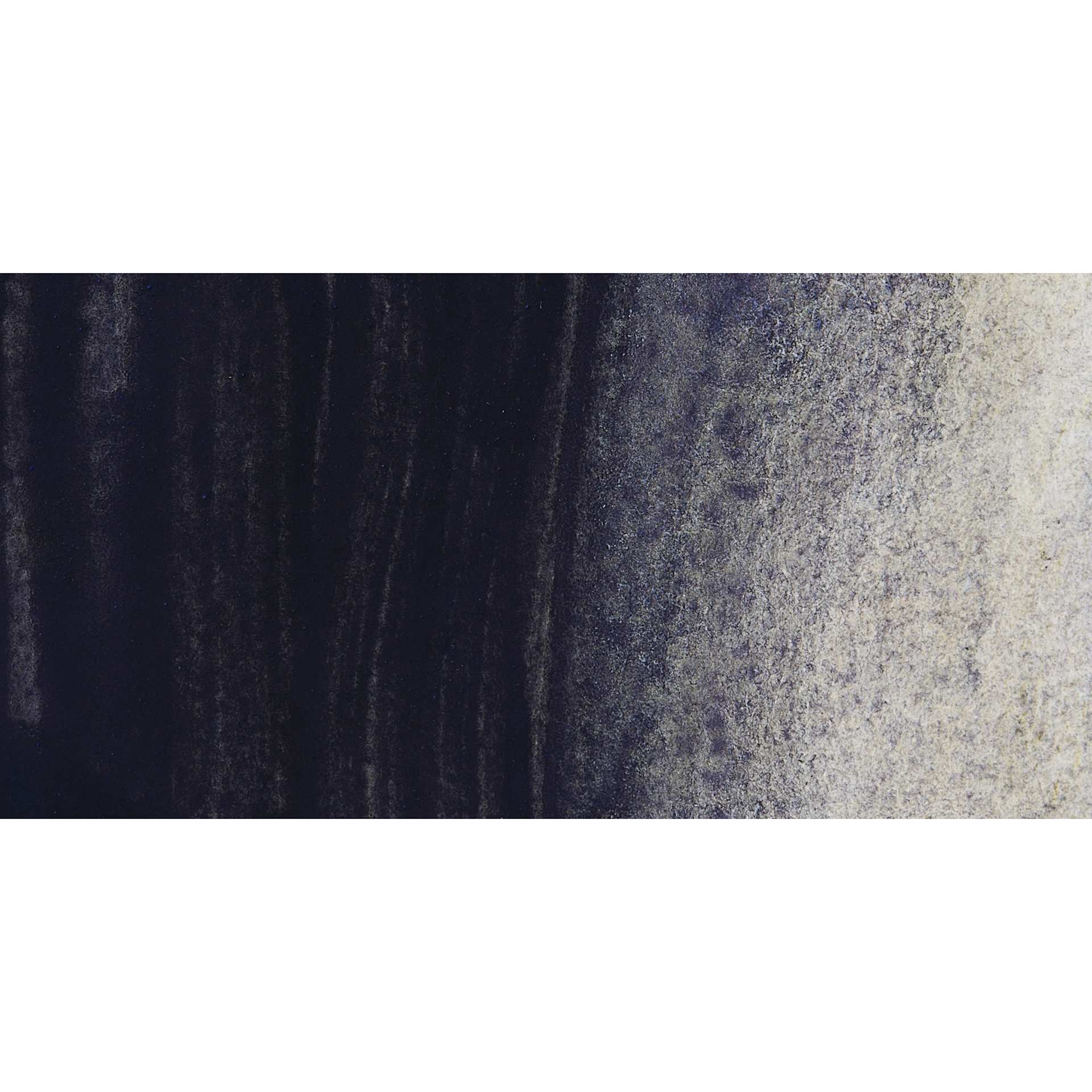
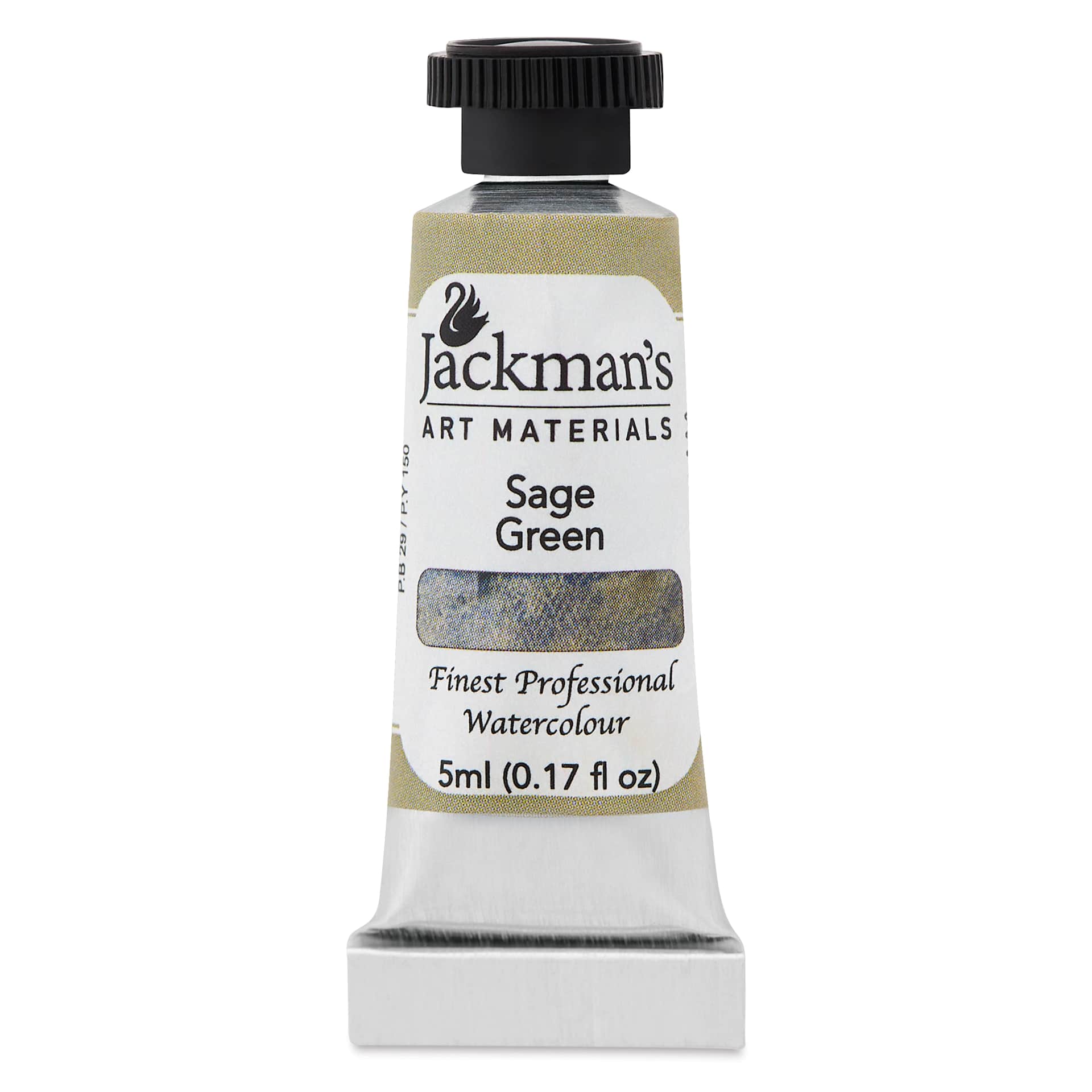
Jackman's Finest Professional Watercolour - Sage Green, 5 ml Tube
Save For Later
My Store Pickup List
Please select a storeMy Wish Lists
My BlickU List(s)
My Quick Quotes
Product Details
- No.
- 22074
- Description:
- Professional Watercolour
- Color:
- Sage Green
- Series:
- 3
- Lightfastness:
- 1 = Excellent
- Format:
- Tube
- Size:
- 5 ml (0.17 oz)
Colors on Monitors -
Due to differences in users’ monitors, the colors presented are an approximation of the true color.
Reviews
Pigment Information
This color contains the following pigments:
PR101-Red Iron Oxide
PR233-Chrome Tin Pink Sphene
PB29-Ultramarine [Blue]
PY150-Nickel Azo Yellow
Pigment Name
PR101-Red Iron Oxide
Pigment Type
earth, synthetic
Chemical Name
iron oxides (synthetic), iron oxide, silica, alumina, lime, and magnesia or hydrated iron oxide
Chemical Formula
Fe2O2 or Fe2O3 x H2O
Properties
Red iron oxide varies in hue and transparency, depending on hydration and slight impurities. Indian Red is a slightly duller, deep brick hue with a bluish undertone. It is very dense and opaque, with excellent tinting strength and covering power. It is dependable when mixing with all other permanent pigments and yields good flesh tints when mixed with Zinc White. It is the synthetic version of PR102, which is a pigment made from earth reds, or natural red iron oxides, and the names applied to PR101 and PR102 often overlap. The synthetic red iron oxides have mostly replaced natural red iron oxides and are brighter, stronger, finer, and more permanent. Indian Red is the highest grade bluish shade. Light Red, English Red, and Venetian Red are yellowish shades. Mars Violet is a dull and subdued bluish or purplish oxide.
Permanence
Red iron oxide is very lightfast with excellent permanence.
History
Natural red iron oxide comes from the mineral ore hematite, called bloodstone by the ancient Greeks from the word hema, meaning blood. It is one of the oldest pigments, has been used by every major civilization, and was an important mineral for medieval alchemists. It was not widely used in artists' materials until the 17th century and was not produced in large quantities until the 18th century.
Pigment Name
PR233-Chrome Tin Pink Sphene
Pigment Type
inorganic
Chemical Formula
CaO + SnO2 + SiO2 + Cr2O3
Properties
Chrome tin pink sphene comprises a mixture of silicates and metal oxide salts. The opacity of the formulation depends on the proportions of these salts. Tinting strength is low compared with most organic pigments.
Permanence
The inorganic metal salts in this pigment are extremely stable.
History
This inorganic pigment has been used in enamels and ceramic glazes. Naturally occurring mineral deposits have been used in ceramic glazes for centuries.
Pigment Name
PB29-Ultramarine [Blue]
Pigment Type
inorganic
Chemical Name
complex silicate of sodium and aluminum with sulfur
Chemical Formula
Na8-10Al6Si6O24S2-4 or Na6-8Al6Si6O24S2-4
Properties
Ultramarine is the standard warm blue, a brilliant blue pigment that has the most purple and least green in its undertone. It has a moderate to high tinting strength and a beautiful transparency. Synthetic Ultramarine is not as vivid a blue as natural Ultramarine. Ultramarine dries slowly in oil and tends to produce clean, though granular, washes in watercolor. French Ultramarine mixes well with Alizarin colors in oil and watercolor form to create a range of purples and violets. It can dull when mixed with white in acrylic form, but mixes well with other colors. The shade varies based on manufacturer. Considered a great color for glazes, it is not suitable for frescoing.
Permanence
Ultramarine has excellent permanence, although synthetic Ultramarine is not as permanent as natural Ultramarine. It may discolor if exposed to acid because of its sulfuric content.
History
The name for this pigment comes from the Middle Latin ultra, meaning beyond, and mare, meaning sea, because it was imported from Asia to Europe by sea. It is a prominent component of lapis lazuli and was used on Asian temples starting in the 6th century. It was one of the most expensive pigments in 16th century Europe, worth twice its weight in gold, and so was used sparingly and when commissions were larger. Ultramarine is currently imitated by a process invented in France in 1826 by Jean Baptiste Guimet, making blue affordable to artists and extending the range of colors on their palettes.
Pigment Name
PY150-Nickel Azo Yellow
Pigment Type
inorganic
Chemical Name
nickel azomethine yellow
Chemical Formula
C30H18Cl2N6NiO4
Properties
Nickel Azo Yellow is a transparent, moderately staining yellow pigment with high tinting strength. It is considered a good color match in botanical and landscape painting for natural gamboge (NY24), a historic yellow pigment with fair to poor lightfastness.
Permanence
Nickel azomethine yellow has excellent lightfastness.
History
Nickel azomethine yellow has been developed as an artist pigment becasue it is a close match for gamboge, a historic yellow.
Safety Data Sheet
UPC Code: 5061071722074