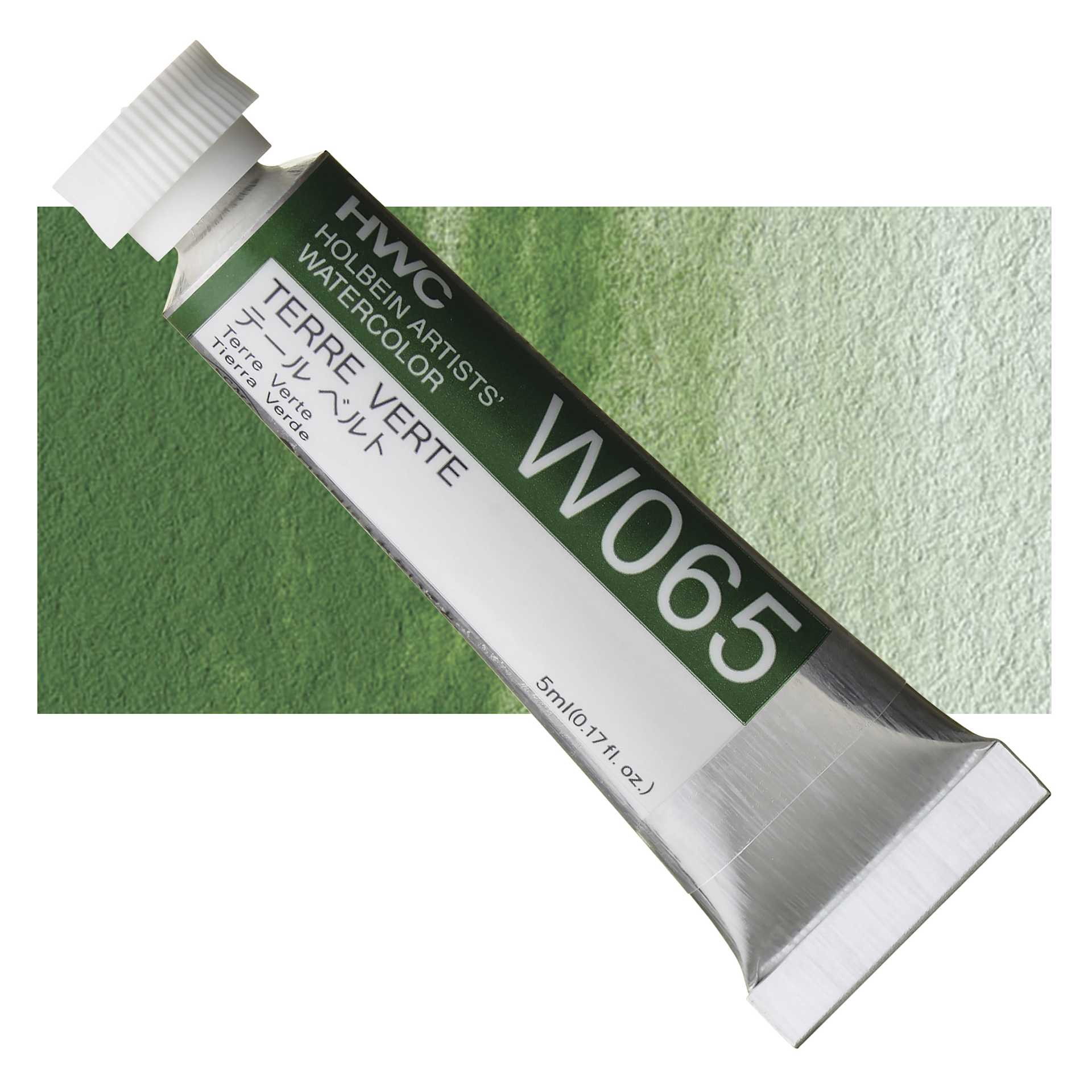
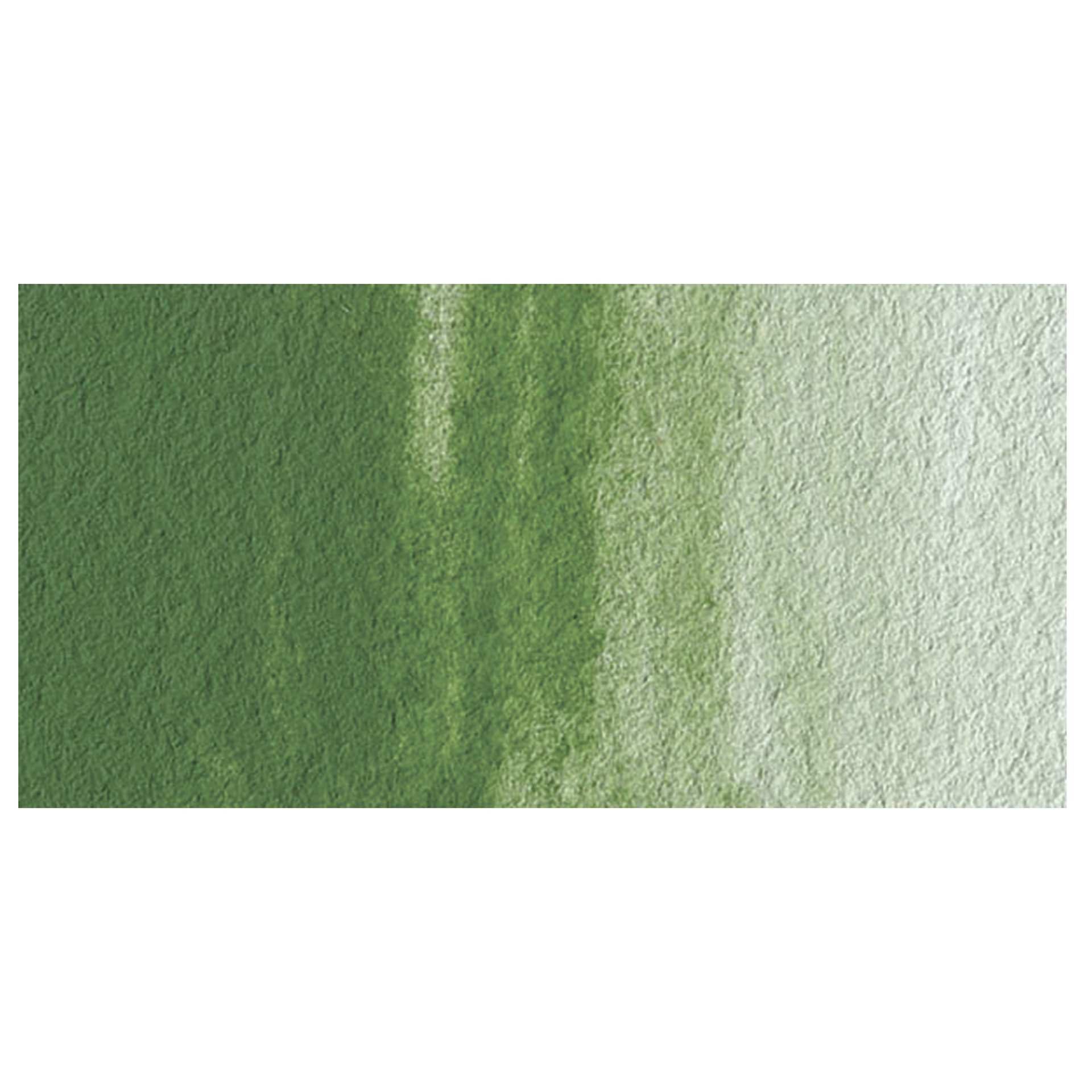
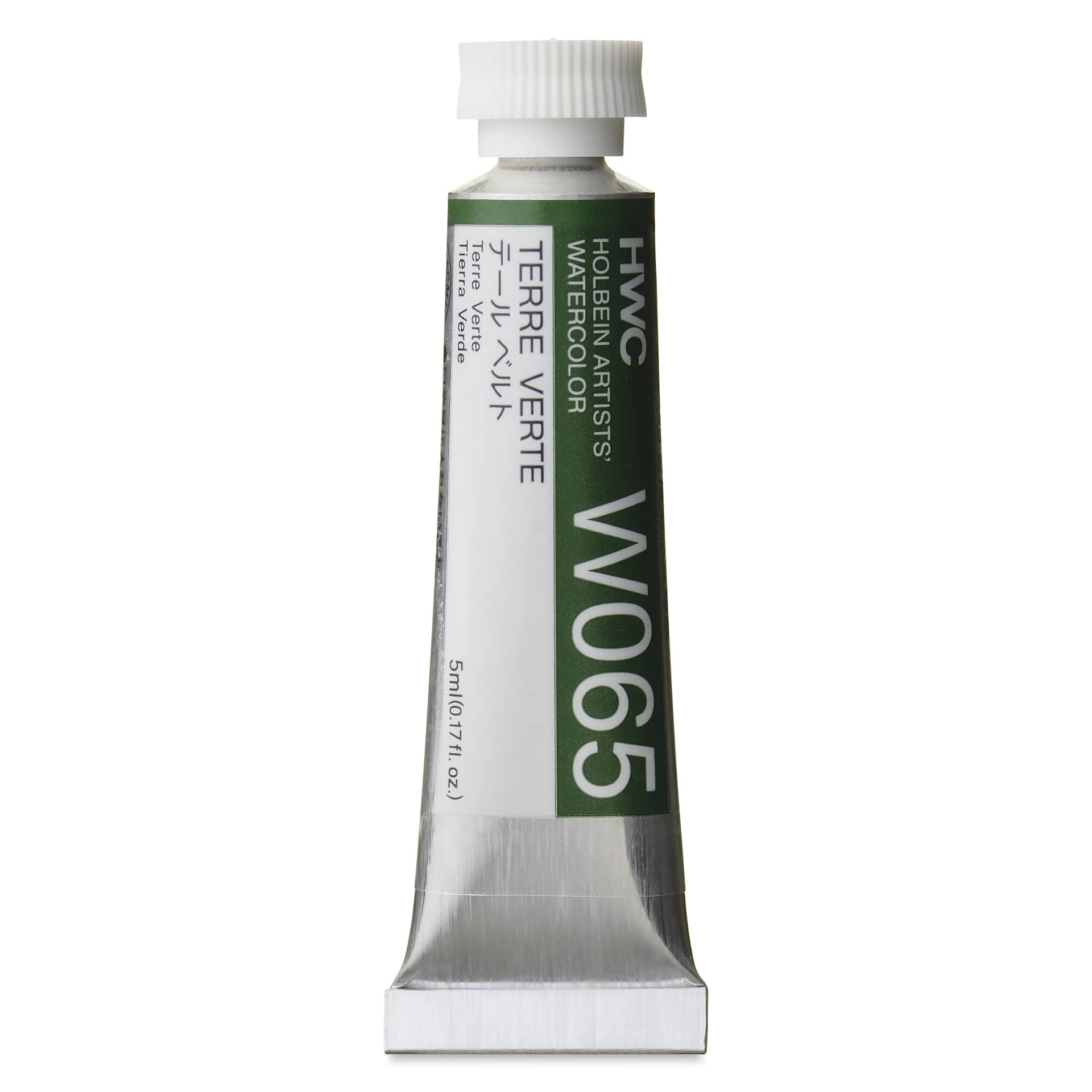
Holbein Artists' Watercolor - Terre Verte, 5 ml Tube
Save For Later
My Store Pickup List
Please select a storeMy Wish Lists
My BlickU List(s)
My Quick Quotes
Product Details
- No.
- 065
- Description:
- Granulating Artists' Watercolor
- Color:
- Terre Verte
- Series:
- A
- Format:
- Tube
- Size:
- 5 ml (0.17 oz)
Colors on Monitors -
Due to differences in users’ monitors, the colors presented are an approximation of the true color.
Reviews
Pigment Information
This color contains the following pigments:
PG23-Green Earth
PG17-Chromium Oxide Green
Pigment Name
PG23-Green Earth
Pigment Type
earth
Chemical Name
hydrated iron, magnesium, aluminum and potassium silicates
Chemical Formula
K[(Al,FeIII),(FeII,Mg)](AlSi3,Si4)O10(OH)2
Properties
Green earth is a natural pigment that varies from yellow and olive to blue-green in its composition and hues. It is semi-transparent, has low hiding power and tinting strength, muddies and darkens in oil, and is particularly good for tempera and fresco painting.
Permanence
Green Earth has excellent permanence and lightfastness, although some varieties can be developed by light calcining. It is one of the most permanent pigments because Earths are not affected by sunlight or atmospheric conditions.
History
Terre verte is French for green earth. It was discovered in antiquity, and its use has been traced to the Ajanta caves in India and a variety of Roman sites, including Pompeii. Green Earth was very popular for underpainting flesh tones in medieval paintings because this green was the compliment to pink on the medieval color wheel. Its use declined after the Renaissance. The natural supplies of the pigment are mostly depleted, and manufacturers currently duplicate the hue using mineral bases like Viridian, iron oxide, or chromium oxide, or artificial ceramic colorants. Pigments sold under this name can also be the result of mixing Sienna and Phthalo Green.
Pigment Name
PG17-Chromium Oxide Green
Pigment Type
inorganic
Chemical Name
chromium oxide
Chemical Formula
Cr2O3
Properties
Chromium Oxide Green is a dull, dense, willow or pale green color that is completely opaque. It has an average drying time and a low tinting strength. It is fairly flexible in oil form and is suitable for all purposes and mediums. This pigment is less versatile in mixtures than Viridian and Phthalocyanine Green, but mixes well with other colors without overpowering them.
Permanence
Chromium Oxide Green has excellent permanence, even at high temperatures.
Safety Data Sheet
UPC Code: 4900669030652