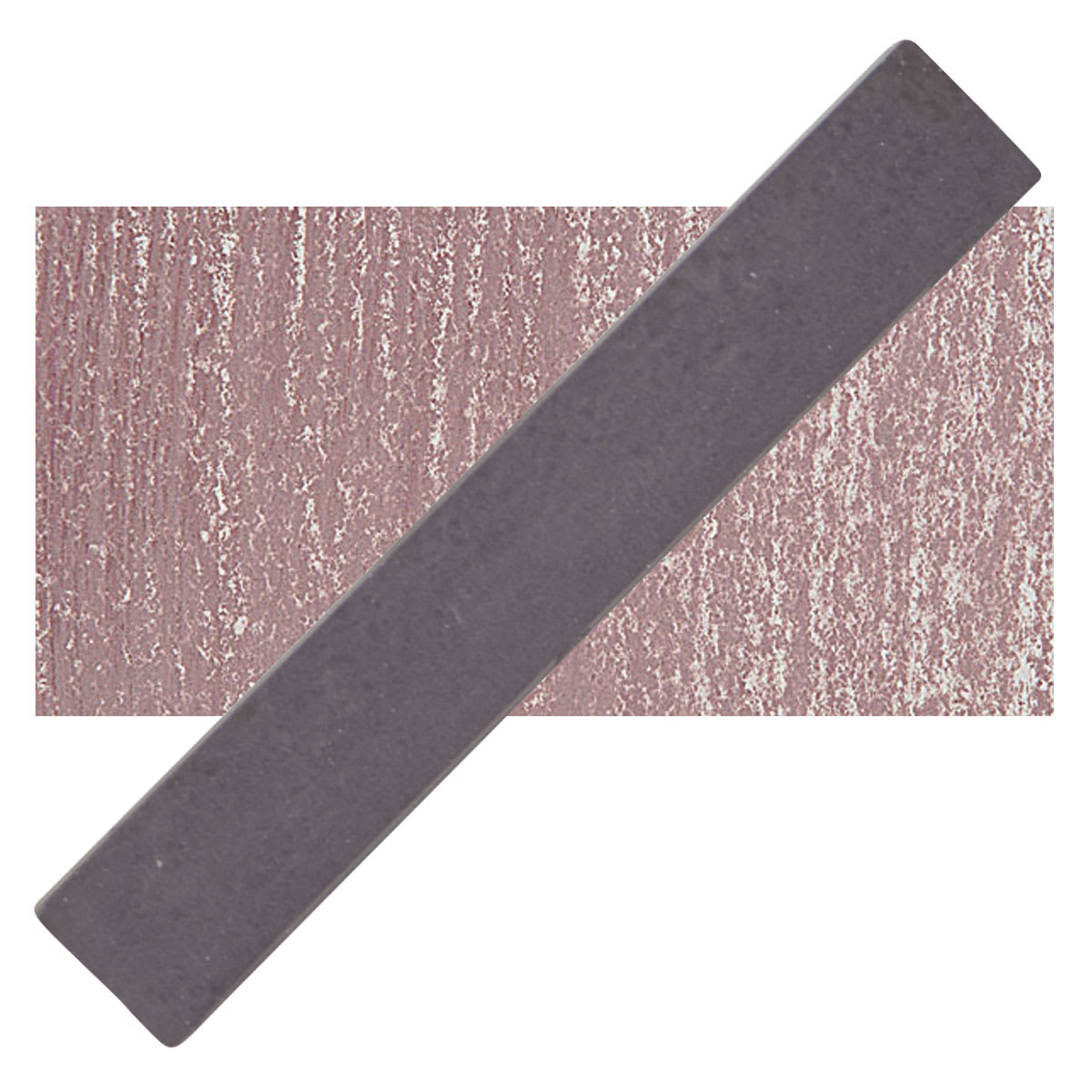
Holbein Artists' Soft Pastel - Old Gray Rose 3

Save For Later
My Store Pickup List
Please select a storeMy Wish Lists
My BlickU List(s)
My Quick Quotes
Product Details
- No.
- 17
- Description:
- Soft Pastel
- Color:
- Old Gray Rose 3
- Hardness:
- Soft
Colors on Monitors -
Due to differences in users’ monitors, the colors presented are an approximation of the true color.
Reviews
Pigment Information
This color contains the following pigments:
PBk11-Mars Black
PR202-Quinacridone Magenta
PW6-Titanium White
PB15:3-Phthalo Blue
PR101-Red Iron Oxide
Pigment Name
PBk11-Mars Black
Pigment Type
earth
Chemical Name
iron oxides
Chemical Formula
FeO or Fe2O3
Properties
Mars Black is an opaque black with a strong and cool masstone, a slightly warm tint, and a warm brown undertone. It is not as black as Ivory Black, but it dries more quickly and has three times the tinting strength. Mars Black is normally the only black available in acrylic form and that is safe to over paint. It can be used in all media without reservation and is widely used as an alternative to Lamp Black and Ivory Black.
Permanence
Mars Black is very lightfast with excellent permanence.
History
The word Mars refers to the Roman god of iron and war. Mars Black was developed in the early 20th century from inorganic, synthetic iron oxide.
Pigment Name
PR202-Quinacridone Magenta
Pigment Type
organic, dichloroquinacridone
Properties
PR202 has a bluish red color, but is more yellow than Quinacridone Red (PR122), which is the modern favorite for Magenta in CMYK (four color) process printing.
Permanence
Although it is not the most famous magenta in the quinacridone family of pigments, PR202 belongs to a related class chemically, and is thus relatively stable and permanent for a bluish red pigment. It is one of the pigments often used in inks and toners for process printing.
History
PR202 has been widely used as an automotive paint. Other applications include packaging, printing inks, and textiles.
Pigment Name
PW6-Titanium White
Pigment Type
inorganic
Chemical Name
titanium dioxide
Chemical Formula
TiO2
Properties
Titanium White is the most brilliant of the white pigments. It is considered an all purpose oil color useful in all techniques and the best all around white. Its masstone is neither warm nor cool, placing it somewhere between Lead White and Zinc White. It is less prone to cracking and yellowing than Lead White, but it still yellows easily. Titanium White dries slowly in oil form, more slowly than Lead White but more quickly than Zinc White. It is opaque in oil and acrylic forms and semi-opaque in watercolor form. This pigment has good chemical stability, and its tinting strength is superior to both Lead White and Zinc White.
Permanence
Titanium White has excellent permanence and lightfastness.
History
Titanium is the ninth most abundant element in the Earth's crust, however mineral deposits that are economical to mine are less common. Titanium dioxide was first discovered in 1821, although it could not be mass produced until 1919. Widespread use of the pigment began in the 1940s. Since that time, it has become the most commonly used white pigment. The name comes from the Latin word Titan, the name for the elder brother of Kronos and ancestor of the Titans, and from the Greek word tito, meaning day or sun.
Pigment Name
PB15:3-Phthalo Blue
Pigment Type
organic
Chemical Name
beta copper phthalocyanine
Chemical Formula
C32H16CuN8
Properties
Phthalo Blue PB15:3 is a structural variant of Phthalo Blue PB15 that produces more greenish tones.
Permanence
Phthalo Blues are completely lightfast and stable and are permanent for all paint uses. They are currently used in inks, coatings, and many plastics due to their stability and are considered a standard pigment in printing ink and the packaging industry.
History
Developed by chemists using the trade name Monastral Blue, the organic blue dyestuff now known as Phthalo Blue was presented as a pigment in November 1935 in London. Its discovery was accidental. The dark color was observed in a kettle where a dye was being made from a British dyestuff plant. The demand for such a pigment came from commercial printers who wanted a cyan to replace Prussian Blue.
Pigment Name
PR101-Red Iron Oxide
Pigment Type
earth, synthetic
Chemical Name
iron oxides (synthetic), iron oxide, silica, alumina, lime, and magnesia or hydrated iron oxide
Chemical Formula
Fe2O2 or Fe2O3 x H2O
Properties
Red iron oxide varies in hue and transparency, depending on hydration and slight impurities. Indian Red is a slightly duller, deep brick hue with a bluish undertone. It is very dense and opaque, with excellent tinting strength and covering power. It is dependable when mixing with all other permanent pigments and yields good flesh tints when mixed with Zinc White. It is the synthetic version of PR102, which is a pigment made from earth reds, or natural red iron oxides, and the names applied to PR101 and PR102 often overlap. The synthetic red iron oxides have mostly replaced natural red iron oxides and are brighter, stronger, finer, and more permanent. Indian Red is the highest grade bluish shade. Light Red, English Red, and Venetian Red are yellowish shades. Mars Violet is a dull and subdued bluish or purplish oxide.
Permanence
Red iron oxide is very lightfast with excellent permanence.
History
Natural red iron oxide comes from the mineral ore hematite, called bloodstone by the ancient Greeks from the word hema, meaning blood. It is one of the oldest pigments, has been used by every major civilization, and was an important mineral for medieval alchemists. It was not widely used in artists' materials until the 17th century and was not produced in large quantities until the 18th century.
Safety Data Sheet
UPC Code: 4938331290172
ASIN #: B005RE36SC