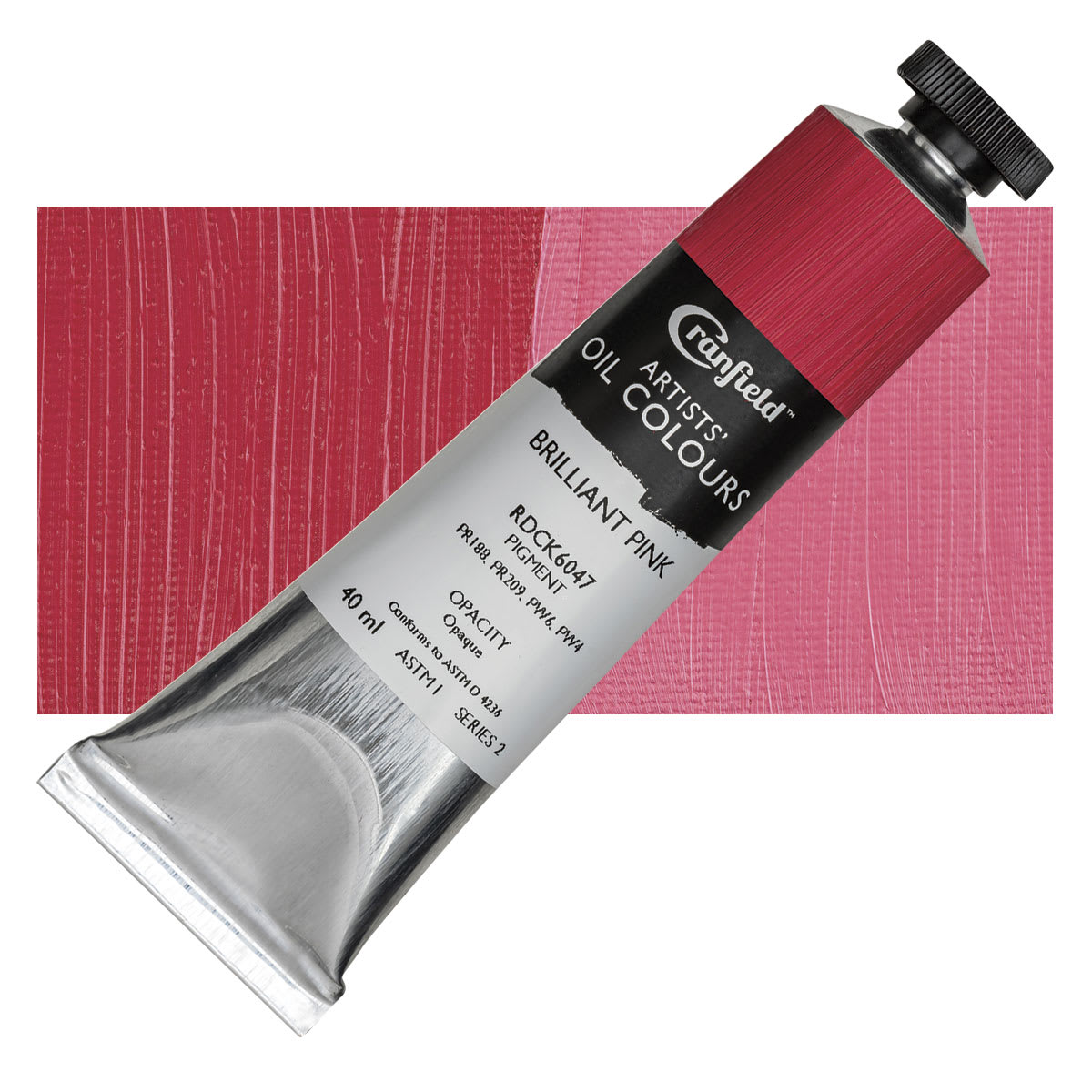
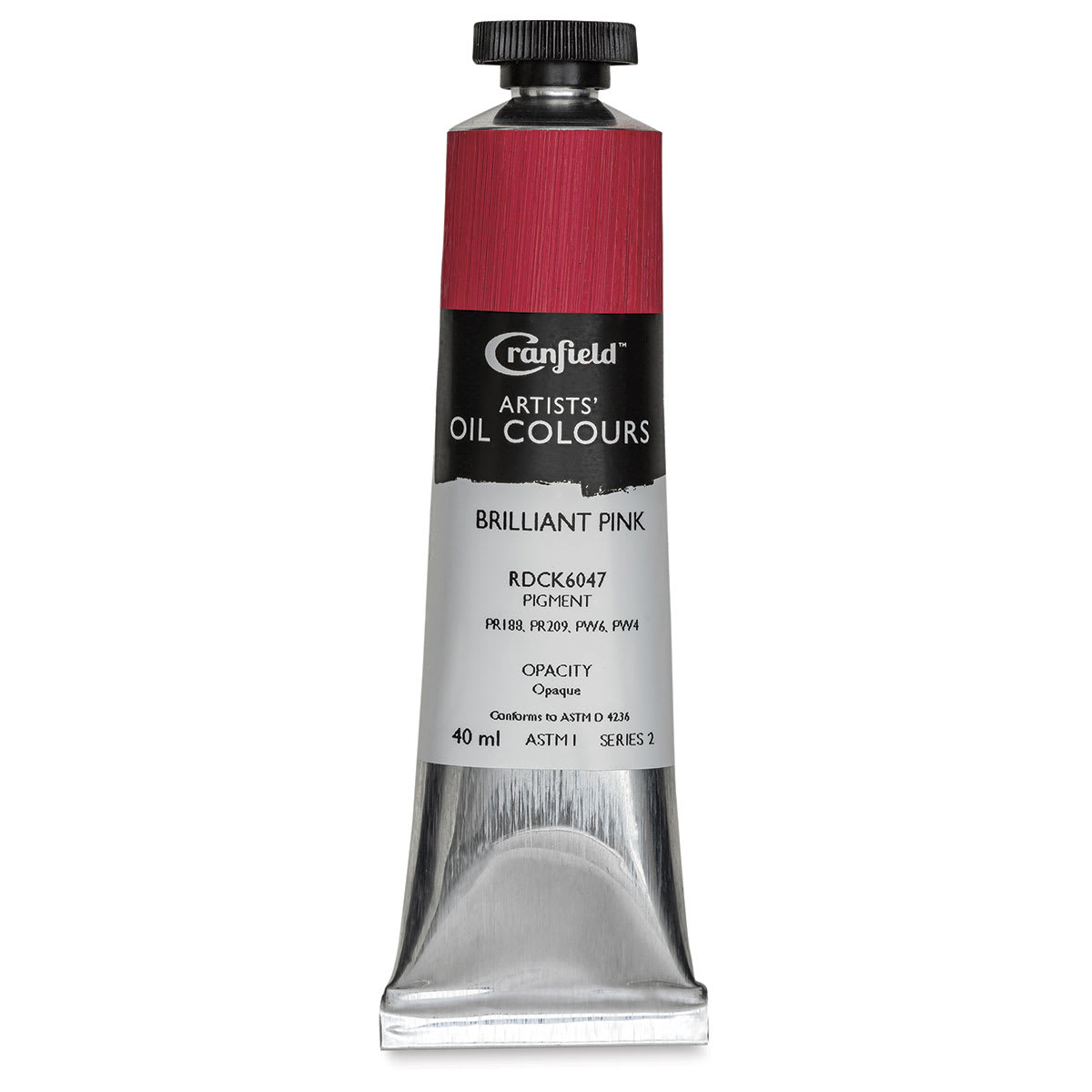
Cranfield Artists' Oils - Brilliant Pink, 40 ml, Tube
Save For Later
My Store Pickup List
Please select a storeMy Wish Lists
My BlickU List(s)
My Quick Quotes
Product Details
- Description:
- Artist Oil Paint
- Color:
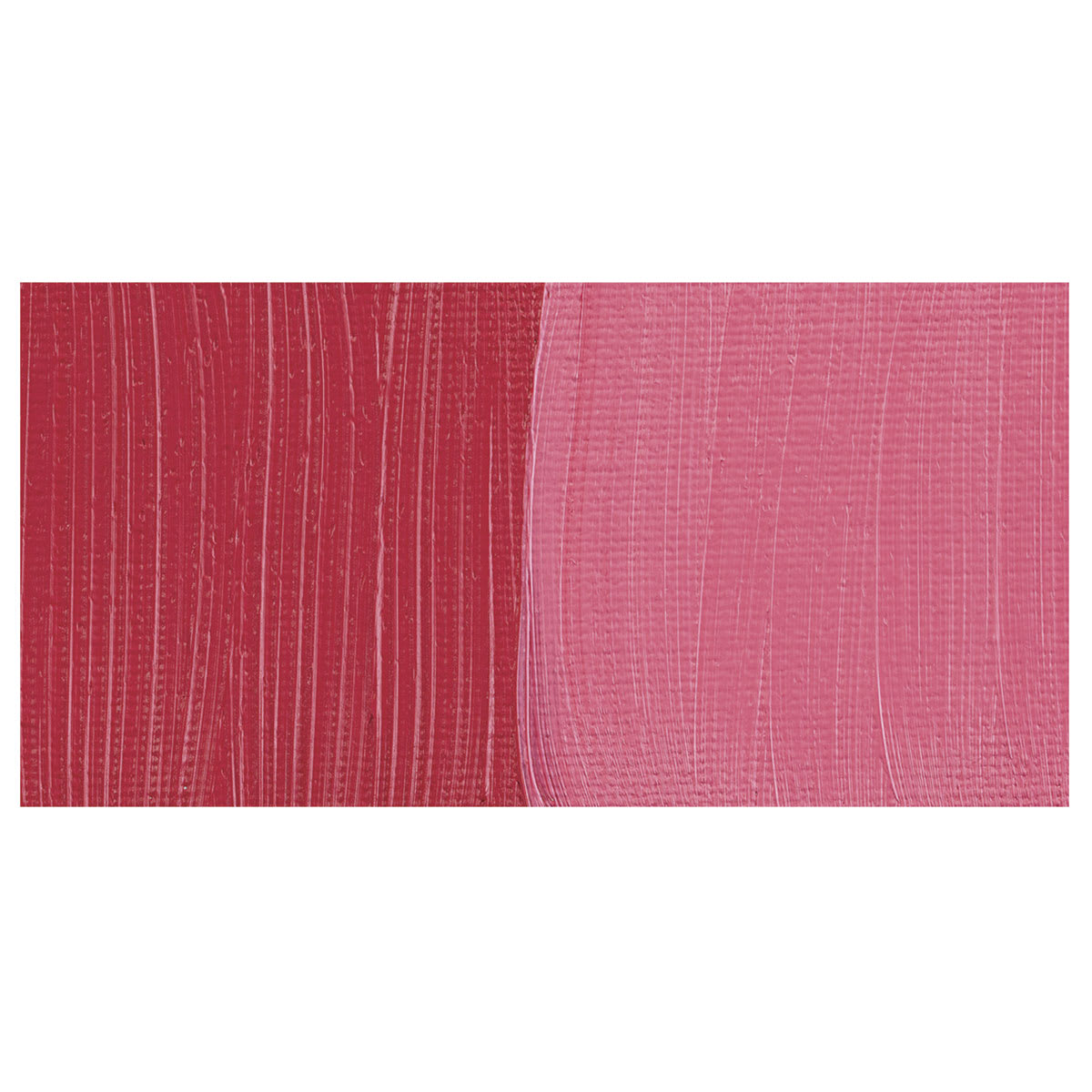
- Brilliant Pink
- Size:
- 40 ml (1.35 oz)
- Format:
- Tube
- Series:
- 2
Colors on Monitors -
Due to differences in users’ monitors, the colors presented are an approximation of the true color.
Reviews
Pigment Information
This color contains the following pigments:
PW6-Titanium White
PW4-Zinc White
PR188 -Naphthol Red
PR209-Quinacridone Red
Pigment Name
PW6-Titanium White
Pigment Type
inorganic
Chemical Name
titanium dioxide
Chemical Formula
TiO2
Properties
Titanium White is the most brilliant of the white pigments. It is considered an all purpose oil color useful in all techniques and the best all around white. Its masstone is neither warm nor cool, placing it somewhere between Lead White and Zinc White. It is less prone to cracking and yellowing than Lead White, but it still yellows easily. Titanium White dries slowly in oil form, more slowly than Lead White but more quickly than Zinc White. It is opaque in oil and acrylic forms and semi-opaque in watercolor form. This pigment has good chemical stability, and its tinting strength is superior to both Lead White and Zinc White.
Permanence
Titanium White has excellent permanence and lightfastness.
History
Titanium is the ninth most abundant element in the Earth's crust, however mineral deposits that are economical to mine are less common. Titanium dioxide was first discovered in 1821, although it could not be mass produced until 1919. Widespread use of the pigment began in the 1940s. Since that time, it has become the most commonly used white pigment. The name comes from the Latin word Titan, the name for the elder brother of Kronos and ancestor of the Titans, and from the Greek word tito, meaning day or sun.
Pigment Name
PW4-Zinc White
Pigment Type
inorganic
Chemical Name
zinc(II)-oxide
Chemical Formula
ZnO
Properties
Zinc White is the coolest white, and it has a cold, clean masstone and a slightly bluish tint. It has less hiding power and is more transparent than other whites. It dries slowly and is good for painting wet into wet and for glazing and scumbling. Zinc White is neither as opaque nor as heavy as Lead White, its covering power is not as good, and it takes much longer to dry. However, it does not blacken when exposed to sulfur in the air as Lead White does. It is very valuable for making tints with other colors. Unmixed Zinc White dries to a brittle and dry paint film that may crack over the years, so it is not good for frescoing. It is more transparent in acrylic form than Titanium White and is the most commonly used white with gouache. Chinese White is a version of Zinc White appropriate for opaque watercolor techniques.
Permanence
Zinc White has great permanence and lightfastness.
Pigment Name
PR188 -Naphthol Red
Pigment Type
organic monoazo
Chemical Formula
C33H24Cl2N2O6
Properties
This Naphthol Red is yellowish, with a high tinting strength and average drying time. It produces warmer shades and tints.
Permanence
This Naphthol Red has excellent lightfastness, though it is generally not considered adequate for exterior use.
History
Naphthol pigments are actually dyes that are "laked" to form pigments. First developed by the German chemical company Hoechst A.G. before World War I, their use in artist paints began in the 1920s.
Pigment Name
PR209-Quinacridone Red
Pigment Type
organic, quinacridone
Properties
Quinacridone Red is a bright, clean red pigment with average drying time. Quinacridone pigments have relatively low tinting strength in general. For this reason, quinacridone colors are often expensive, because more pigment is required in the formulation.
Permanence
Quinacridone Red has excellent permanence and lightfastness.
History
Although quinacridone compounds became known in the late 19th century, methods of manufacturing so as to make them practical for use as commercial pigments did not begin until the 1950s. Quinacridone pigments were first developed as coatings for the automotive industry, but were quickly adopted by artists.
Safety Data Sheet
UPC Code: 5060487090241