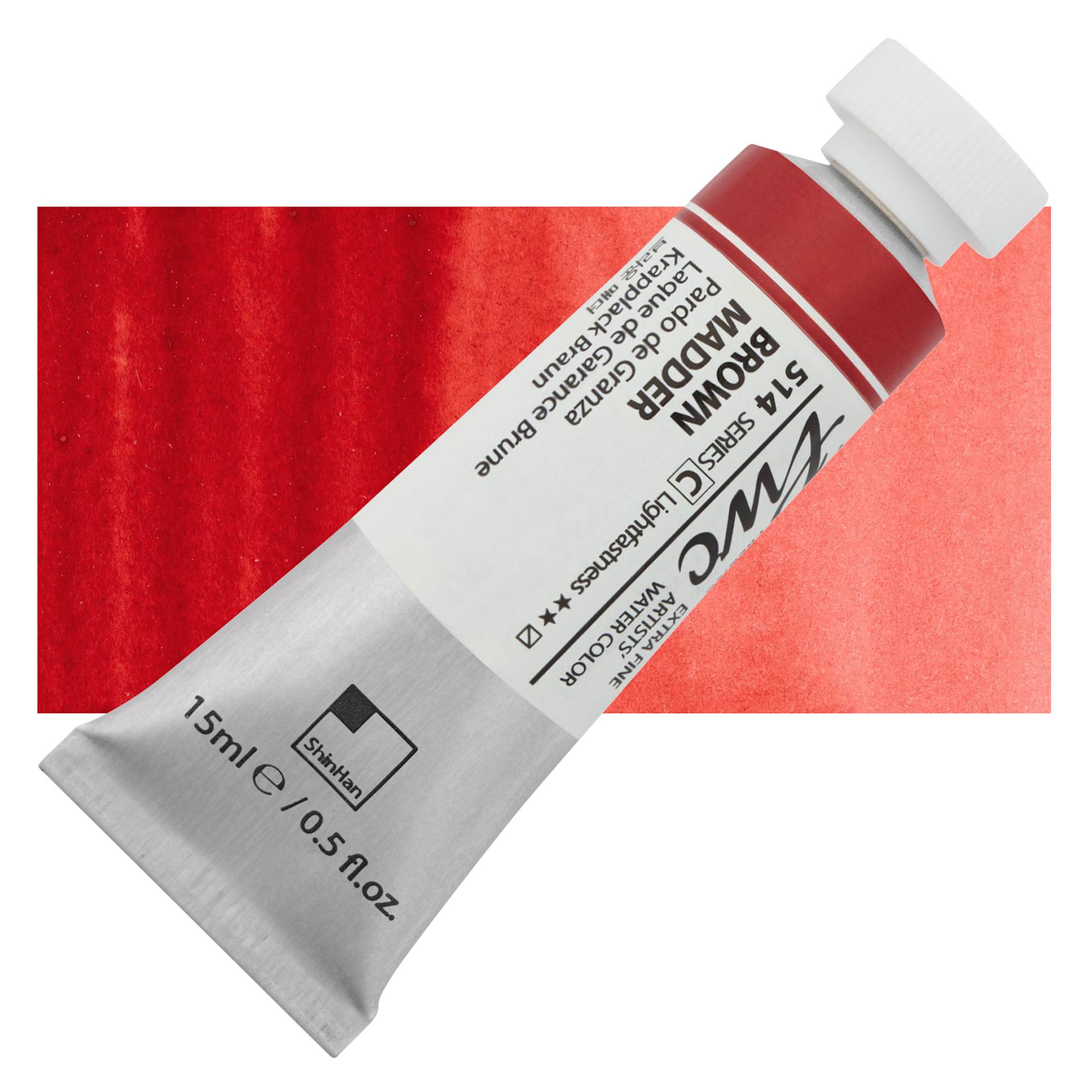
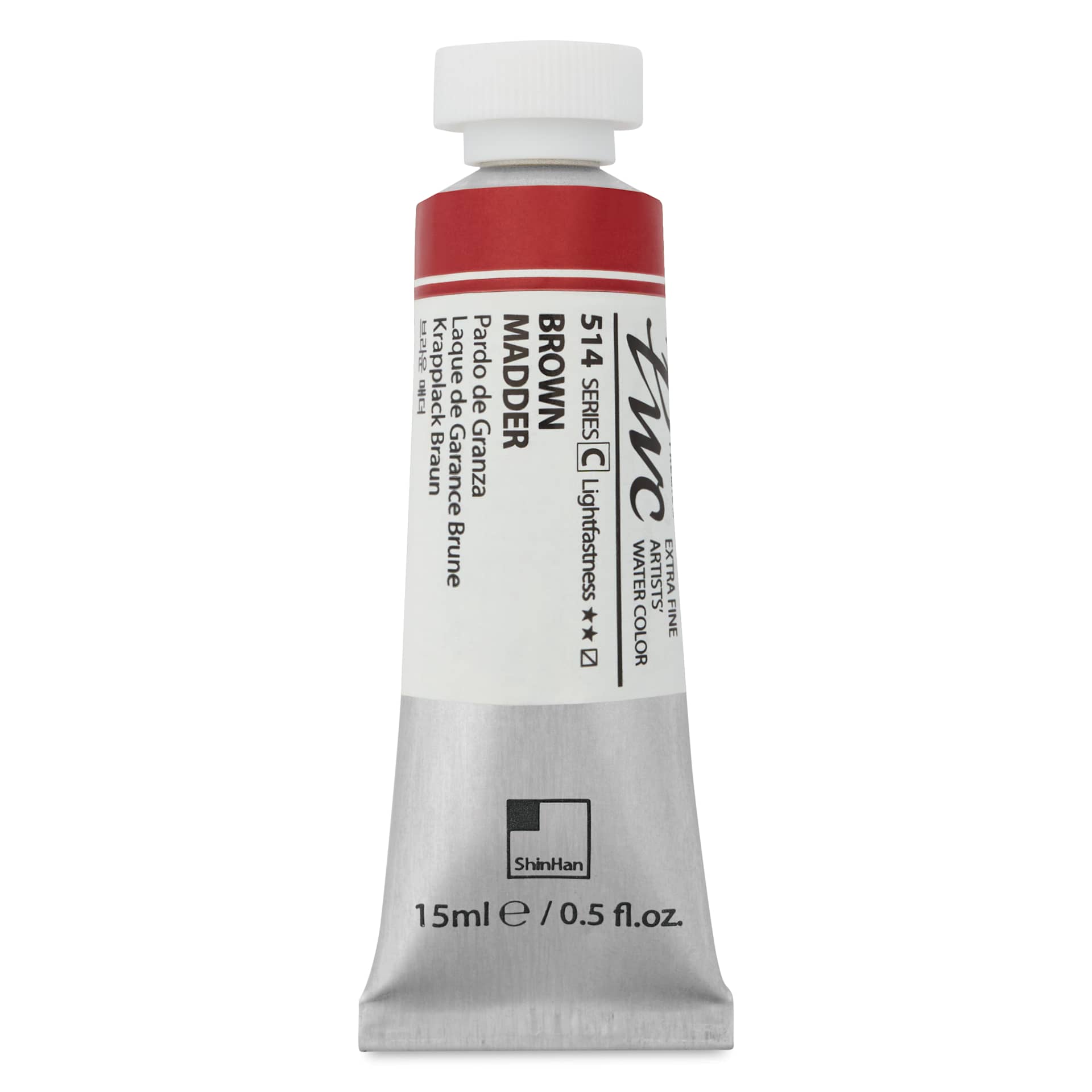
ShinHan PWC Extra Fine Professional Watercolor - Brown Madder, 15 ml, Tube
Save For Later
My Store Pickup List
Please select a storeMy Wish Lists
My BlickU List(s)
My Quick Quotes
Product Details
- No.
- 514
- Description:
- Professional Watercolor
- Color:
- Brown Madder
- Series:
- C
- Format:
- Tube
- Size:
- 15 ml (0.50 oz)
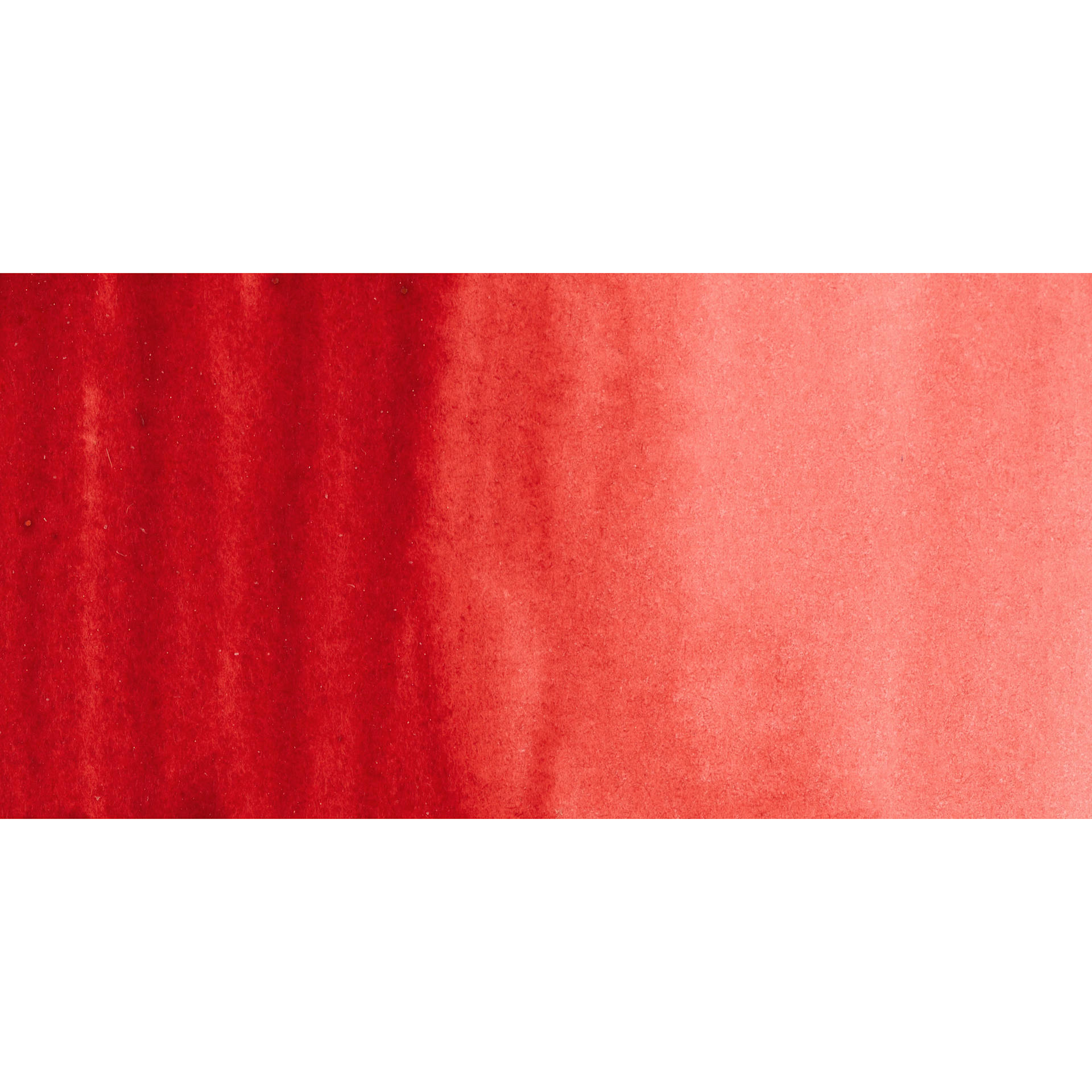
Colors on Monitors -
Due to differences in users’ monitors, the colors presented are an approximation of the true color.
Reviews
Pigment Information
This color contains the following pigments:
PR83-Alizarin Crimson
PY83-Diarylide Yellow 83
Pigment Name
PR83-Alizarin Crimson
Pigment Type
organic
Chemical Name
1,2-dihydroxyantraquinone
Chemical Formula
C14H8O4
Properties
Alizarin Crimson, the traditional cool counterpart to Cadmium Red, is a clear ruby-red with a maroon masstone and a bluish undertone. It is the artist's principal deep red pigment, is transparent, and has good tinting strength. It creates bright rosy pinks when mixed with white, a range of purples and violets when mixed with strong blues, can be slow drying when used with oils, and is compatible with all other pigments. Permanent Alizarin Crimson mixes well with Ultramarine in acrylic and watercolor form. Permanent Rose and Quinacridone Rose are possible alternatives on a watercolor palette. Alizarin Crimson is a popular glazing color.
Permanence
Alizarin Crimson is considered fugitive or marginally lightfast, and the appropriateness of its use in the modern artist palette is a subject of debate. There are many concerns regarding its permanence, particularly when mixed with ochre, sienna, and umber, or when used thinly. It is the least permanent red commonly used by today's artists. Modern synthetic preparations of Alizarin Crimson have better permanence and lightfastness that the original natural pigment, which was extracted from the madder plant. Quinacridone pigments have been used to create a modern hue that closely matches the original hue, but many artists object that the transparency and handling characteristics are not the same as for the original.
History
The word alizarin comes from the Arabic word al-usara, meaning juice. The base ingredient of this pigment is the Madder plant (Rubia Tinctorum). It was used for dyes and inks among craftsmen in Ancient Persia, India, and Egypt as early as 1500 BC In 1804, George Field, an English dye maker, developed Madder Lake by binding madder to alum, a white powder. The German chemists Carl Grabe and Carl Liebermann produced the first synthetic variety of this pigment, most commonly known as Alizarin Crimson, in 1868. They used anthracene, which greatly improved the lightfastness. The Colour Index International designation PR83:1 has been used to identify this synthetic laked pigment.
Pigment Name
PY83-Diarylide Yellow 83
Pigment Type
organic, disazo
Chemical Formula
C36H32Cl4N6O8
Properties
Diarylide Yellow is a semi-opaque, moderately staining, intense deep reddish yellow pigment with good tinting strength.
Permanence
Diarylide Yellow 83 has very good lightfastness and permanence. However, it can fade in tints, so some artists do not consider it suitable as an artists' color. Many other diarylide yellow pigments are reported to have fair to poor lightfastness, and some are completely fugitive. Diarylide Yellow 83 is reputed to be one of the most permanent of the entire group.
History
Diarylide Yellow comes from a family of azo pigments called Diarylide. These yellow hued pigments were developed around 1940 and are very important in printing inks.
Safety Data Sheet
UPC Code: 8803332570515