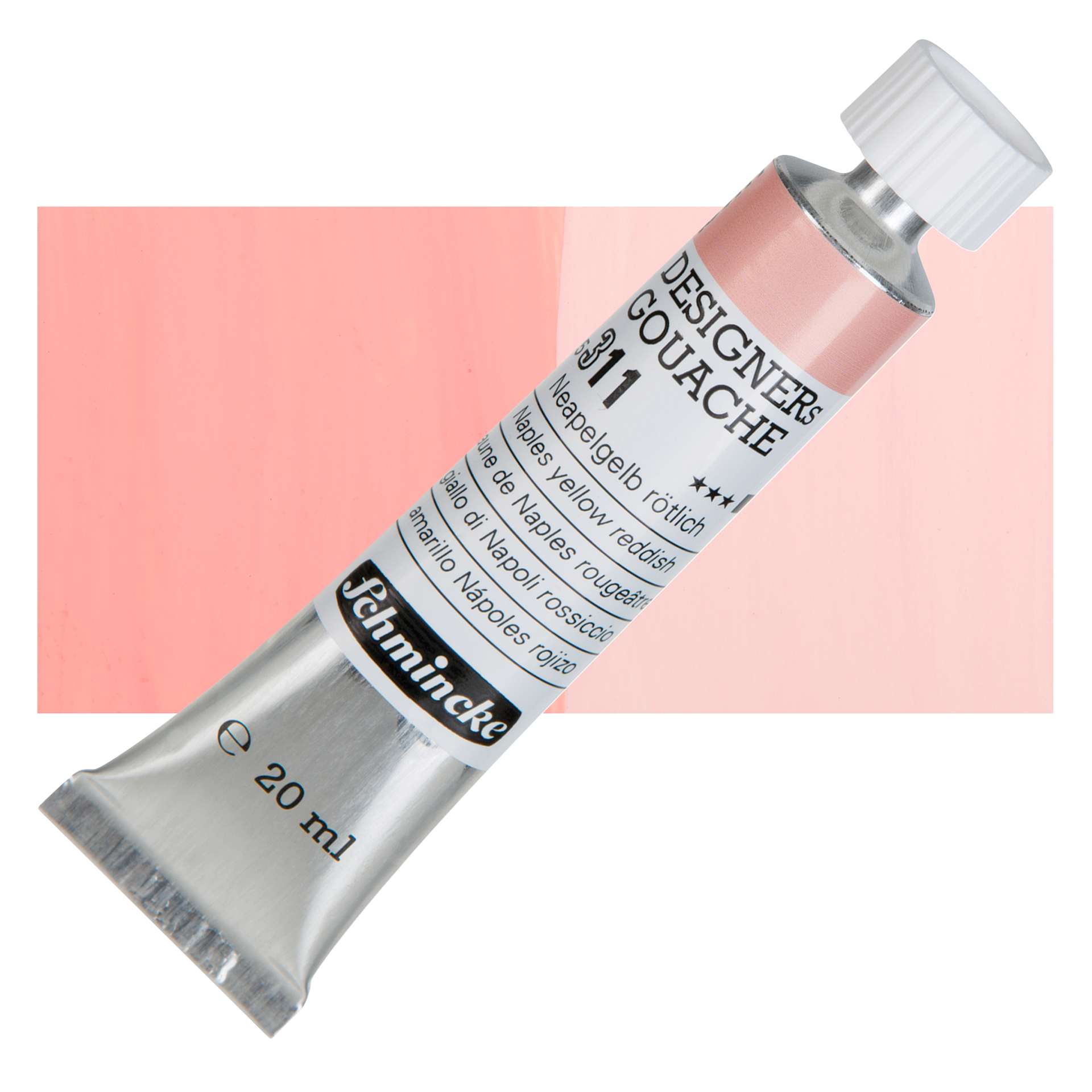
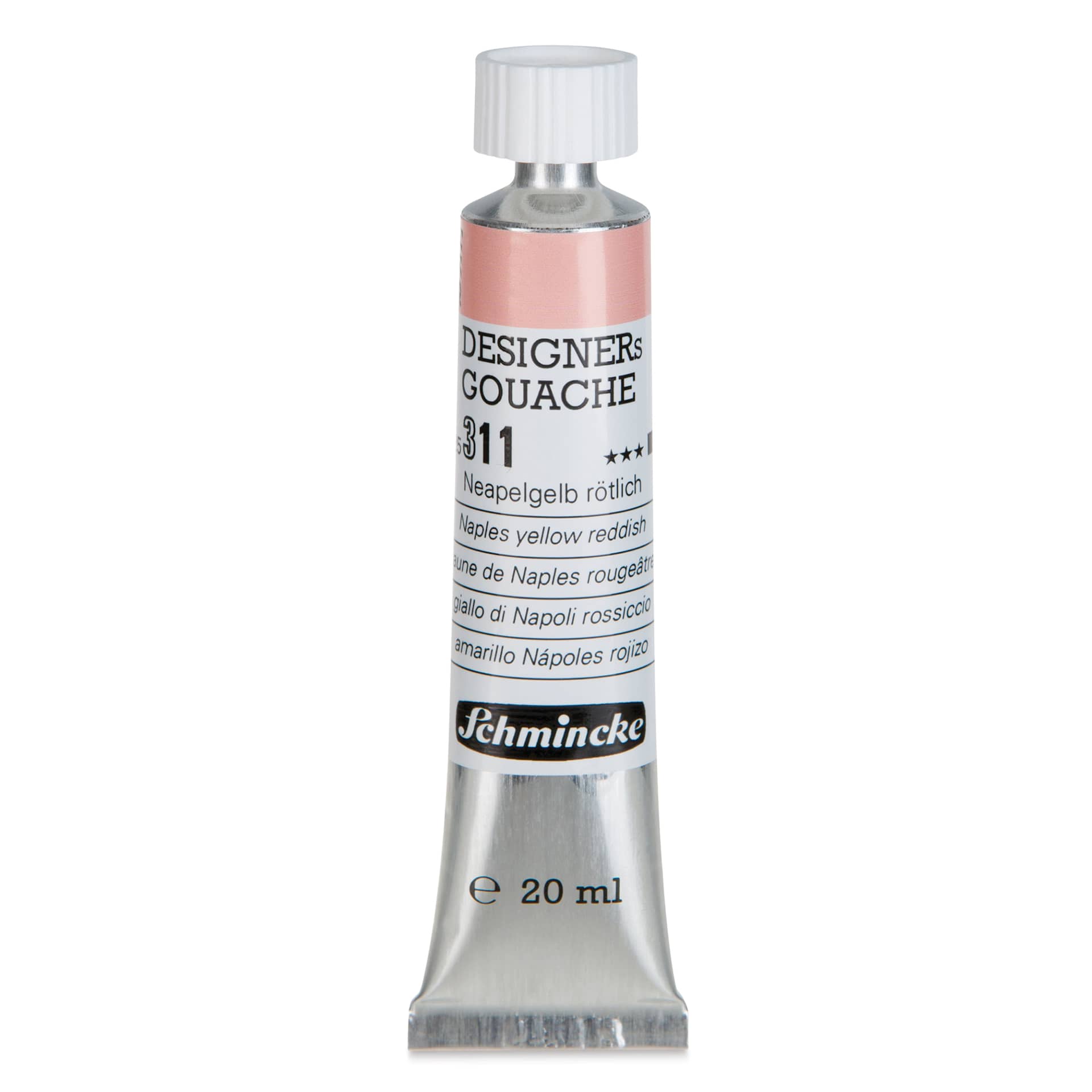
Schmincke Designers Gouache - Naples Yellow Reddish, 20 ml Tube

Save For Later
My Store Pickup List
Please select a storeMy Wish Lists
My BlickU List(s)
My Quick Quotes
Product Details
- No.
- 25311
- Description:
- Designers Gouache
- Color:
- Naples Yellow Reddish
- Format:
- Tube
- Size:
- 20 ml (0.68 oz)
Colors on Monitors -
Due to differences in users’ monitors, the colors presented are an approximation of the true color.
Reviews
Pigment Information
This color contains the following pigments:
PW5-Lithopone
PO36-Benzimidazolone Orange
PR242-Pigment Red 242
Pigment Name
PW5-Lithopone
Pigment Type
inorganic
Chemical Name
coprecipitated zinc sulphide and barium sulphate
Chemical Formula
Zn + BaSO4
Properties
Lithopone is a low tinting strength, semi-transparent white pigment that is often used as a filler or extender in other colors, or as the base for laked pigments.
Permanence
Lithopone is absolutely permanent and lightfast.
History
Lithopone was discovered by G.F. de Doubet in 1850. It was developed commercially in the 1870s as a substitute or supplement for lead carbonate, to overcome the many shortcomings of white lead pigment, including toxicity, poor weathering, and darkening in the presence of sulfur compounds. It is used most often in interior paints and enamels. Its use as a white pigment has been superceeded in many applications by titanium dioxide.
Pigment Name
PO36-Benzimidazolone Orange
Pigment Type
organic, monoazo
Chemical Formula
C17H13ClN6O5
Properties
Benzimidazolone Orange is a reddish orange pigment that can lose its intensity and become dull in tints. It has an average drying time.
Permanence
Benzimidazolone Orange has excellent lightfastness and outstanding heat and solvent stability for a monoazo pigment.
History
The benzimidazolone group of pigments was developed and patented in 1960 by Hoechst A.G., a German chemical manufacturer that was a forerunner of the pharmaceutical company Aventis. Use of benzimidazolone pigments in the auto industry, especially Benzimidazolone Orange, became common in the 1980s because they were common replacements for lead chromate pigments, which were phased out during this period.
Pigment Name
PR242-Pigment Red 242
Pigment Type
organic, disazo condensation
Properties
A bright yellowish red, often referred to as scarlet. It has average tinting strength.
Permanence
It has excellent resistance to solvents, acids, and alkali, and is heat stable up to 300°C. Disazo condensation compounds have very good lightfastness for organic pigments.
History
Pigment Red 242 is used to color plastics, paints, and printing inks.
Safety Data Sheet
UPC Code: 4012380021885