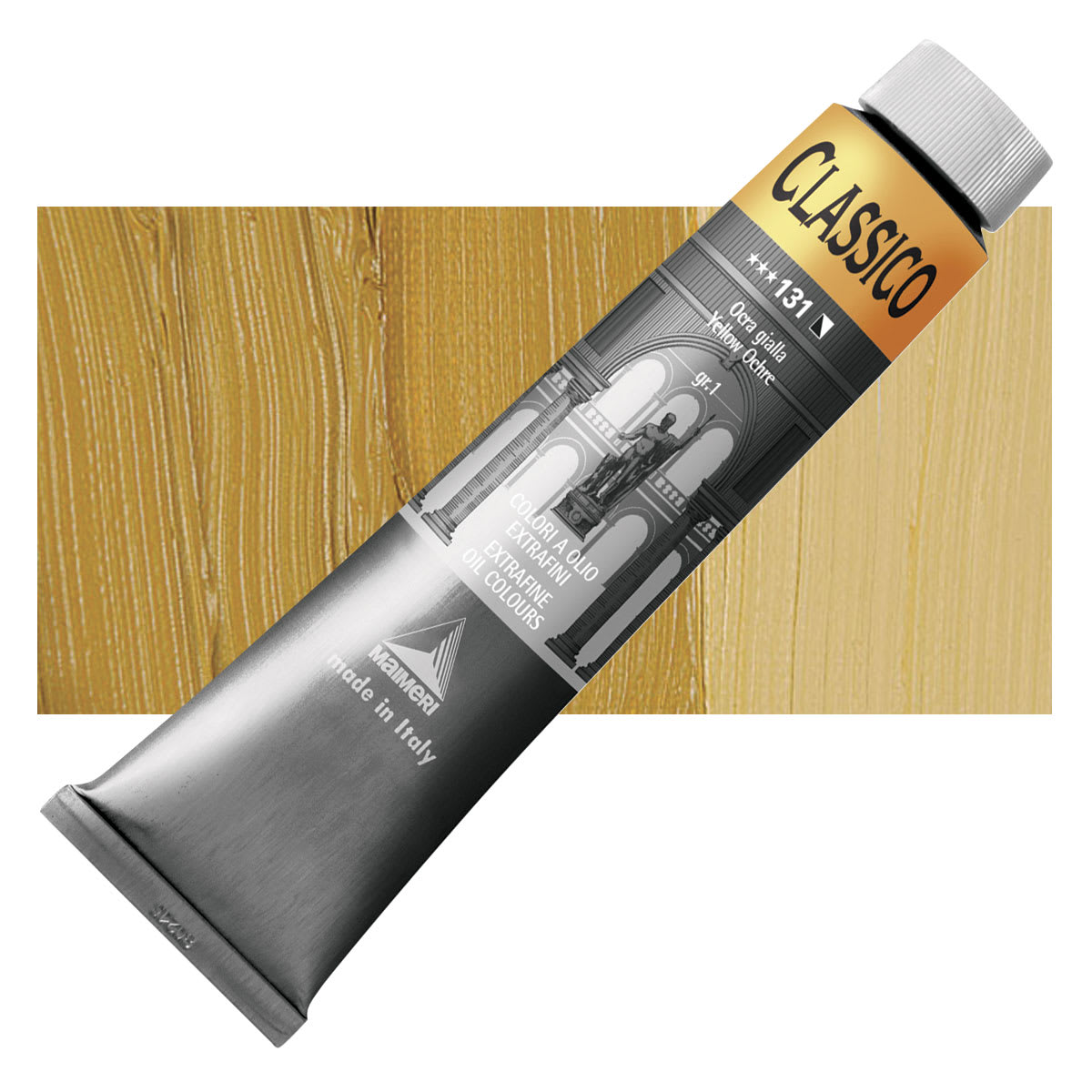
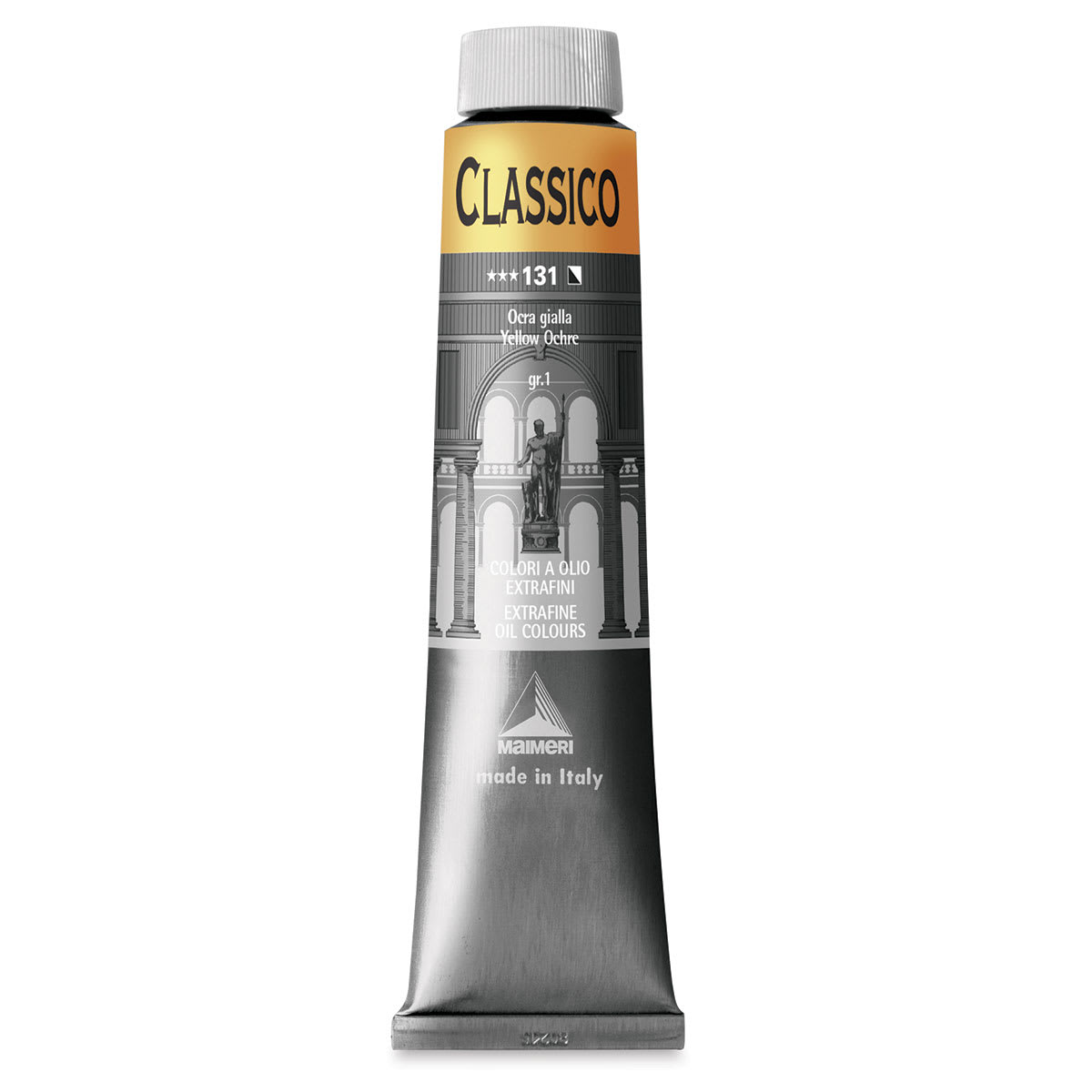
Maimeri Classico Oil Color - Yellow Ochre, 200 ml tube

Save For Later
My Store Pickup List
Please select a storeMy Wish Lists
My BlickU List(s)
My Quick Quotes
Product Details
- No.
- 131
- Description:
- Oil Paint
- Color:
- Yellow Ochre
- Size:
- 200 ml (6.76 oz)
- Format:
- Tube
- Series:
- 1
Colors on Monitors -
Due to differences in users’ monitors, the colors presented are an approximation of the true color.
Reviews
Pigment Information
This color contains the following pigments:
PY43-Brown Ochre
PY42-Yellow Iron Oxide
PW4-Zinc White
Pigment Name
PY43-Brown Ochre
Chemical Name
iron(III)-oxide, partly hydrated
Chemical Formula
Fe2O3(• H2O)
Properties
Brown Ochre provides artists with earthtones from cream to brown and is a dull, dark variety of Yellow Ochre. Its transparency varies widely from opaque shades to more transparent ones, which are valued for their use as glazes. It has good hiding power, produces a quick drying paint, and can be safely mixed with other pigments. The highest quality Brown Ochre comes from Cyprus, where it is yellow in its raw form and is roasted to get the deeper brown-red varieties that result when water is removed. (See Yellow Ochre, PY42/43.)
Permanence
Brown Ochre has excellent permanence.
History
Ochre comes from the Greek word ochros, meaning pale yellow. It has been used since prehistoric times, and evidence of its use has been found in some of the earliest known cave paintings in Lascaux, France. It has also been called Goethite, after the German philosopher and mineralogist Johann Wolfgang von Goethe (1749-1832).
Pigment Name
PY42-Yellow Iron Oxide
Chemical Name
iron(III)-oxide, hydrated
Chemical Formula
Fe2O3 • H2O
Properties
Yellow Ochre provides artists with earthtones from cream to brown. It has good hiding power, produces a quick drying paint, and can be safely mixed with other pigments. Its transparency varies widely from opaque shades to more transparent ones, which are valued for their use as glazes. If gypsum is present, Yellow Ochre is not suitable for frescoing. (See Brown Ochre, PY43.) PY42 is made from synthetic iron oxides. PY43 is made from natural iron oxide.
Permanence
Yellow Ochre has excellent permanence because ochres are some of the most permanent pigments available.
History
Ochre comes from the Greek word ochros, meaning pale yellow. It was one of the first pigments to be used by human beings, and evidence of its use has been found at 300,000 year old sites in France and the former Czechoslovakia.
Pigment Name
PW4-Zinc White
Pigment Type
inorganic
Chemical Name
zinc(II)-oxide
Chemical Formula
ZnO
Properties
Zinc White is the coolest white, and it has a cold, clean masstone and a slightly bluish tint. It has less hiding power and is more transparent than other whites. It dries slowly and is good for painting wet into wet and for glazing and scumbling. Zinc White is neither as opaque nor as heavy as Lead White, its covering power is not as good, and it takes much longer to dry. However, it does not blacken when exposed to sulfur in the air as Lead White does. It is very valuable for making tints with other colors. Unmixed Zinc White dries to a brittle and dry paint film that may crack over the years, so it is not good for frescoing. It is more transparent in acrylic form than Titanium White and is the most commonly used white with gouache. Chinese White is a version of Zinc White appropriate for opaque watercolor techniques.
Permanence
Zinc White has great permanence and lightfastness.
Safety Data Sheet
UPC Code: 8018721066191
ASIN #: B005X772WY