
Save For Later
My Store Pickup List
Please select a storeMy Wish Lists
My BlickU List(s)
My Quick Quotes
Product Details
- No.
- 341
- Description:
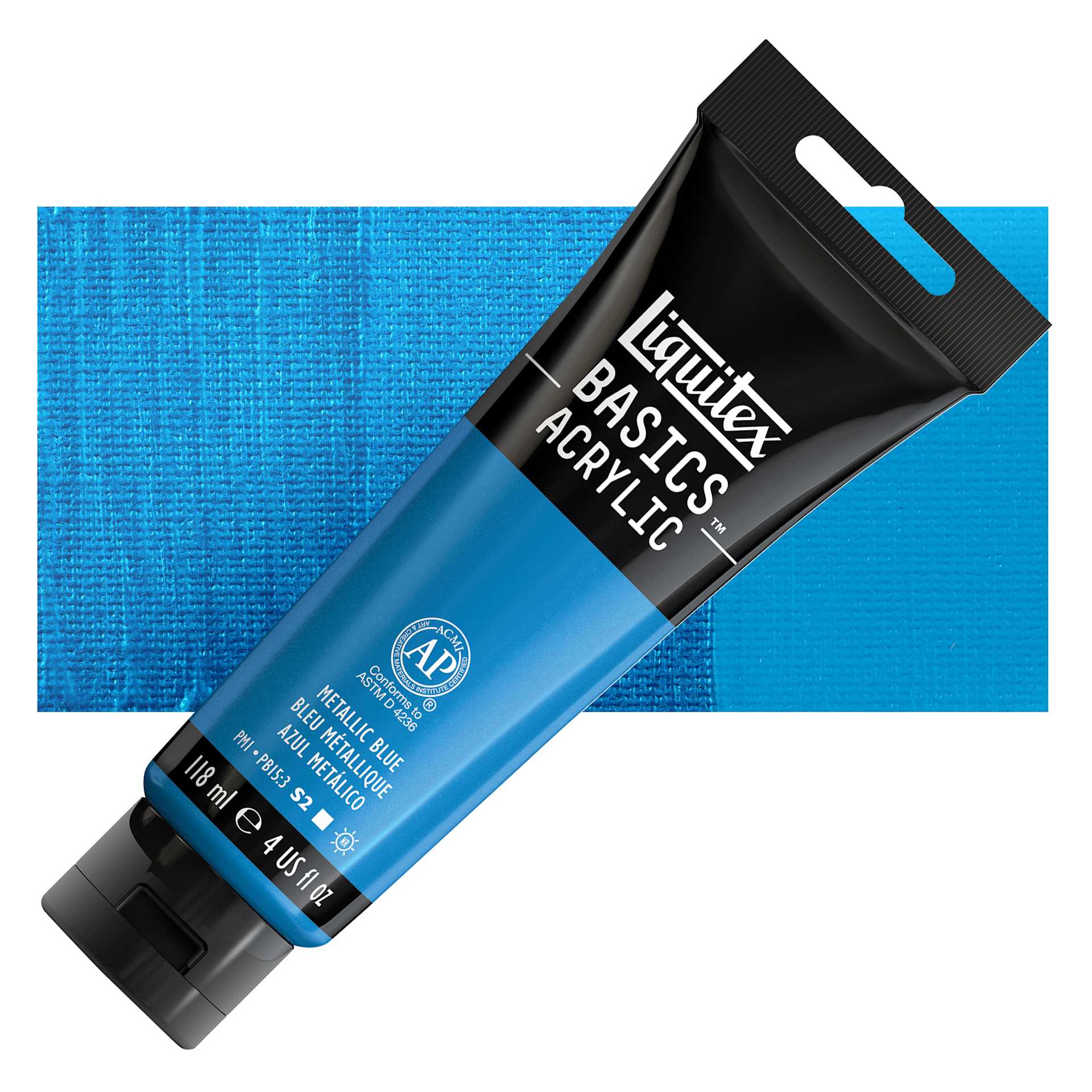
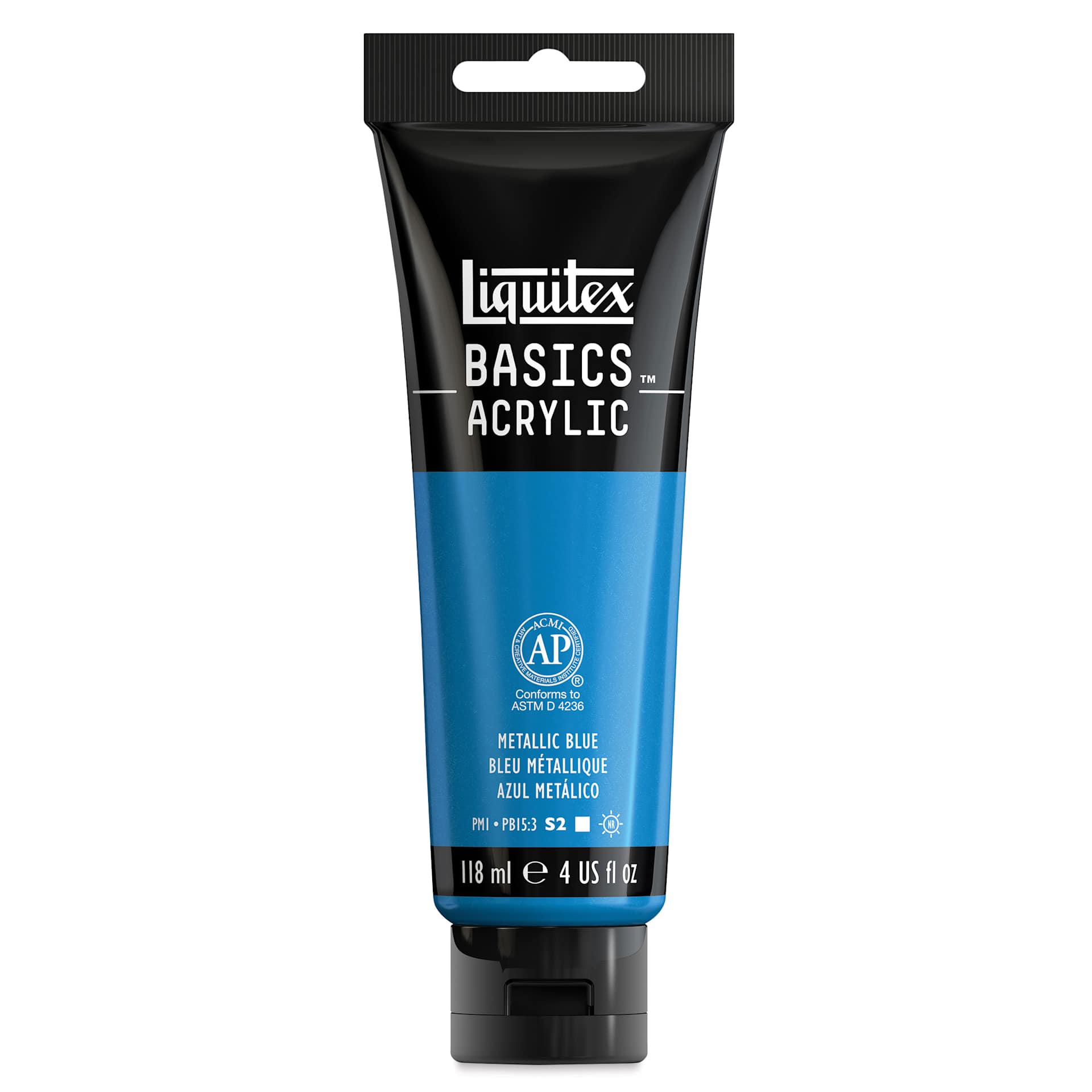
- Basics Acrylic
- Color:
- Metallic Blue
- Size:
- 118 ml (4 oz)
- Format:
- Tube
- Series:
- 2
Shipping Note - Due to manufacturer distribution restrictions, Liquitex products cannot be shipped to addresses outside of North America.
Colors on Monitors -
Due to differences in users’ monitors, the colors presented are an approximation of the true color.
Reviews
Pigment Information
This color contains the following pigments:
PM1-Aluminum
PB15:3-Phthalo Blue
Pigment Name
PM1-Aluminum
Pigment Type
inorganic
Chemical Name
aluminum
Properties
Powdered aluminum is used to create silvery metallic and interference effects.
Permanence
Aluminum powder is lightfast, but it must be protected from oxidation. Under normal conditions, aluminum metal is protected by a thin layer of oxides that forms on the metallic surface.
History
Although aluminum is an abundant element in the Earth's crust, it was a semi-precious metal until the late 19th century, when an electrolytic process was developed for extracting aluminum from the mineral oxide forms in which it naturally occurs.
Pigment Name
PB15:3-Phthalo Blue
Pigment Type
organic
Chemical Name
beta copper phthalocyanine
Chemical Formula
C32H16CuN8
Properties
Phthalo Blue PB15:3 is a structural variant of Phthalo Blue PB15 that produces more greenish tones.
Permanence
Phthalo Blues are completely lightfast and stable and are permanent for all paint uses. They are currently used in inks, coatings, and many plastics due to their stability and are considered a standard pigment in printing ink and the packaging industry.
History
Developed by chemists using the trade name Monastral Blue, the organic blue dyestuff now known as Phthalo Blue was presented as a pigment in November 1935 in London. Its discovery was accidental. The dark color was observed in a kettle where a dye was being made from a British dyestuff plant. The demand for such a pigment came from commercial printers who wanted a cyan to replace Prussian Blue.
Safety Data Sheet
UPC Code: 887452064534