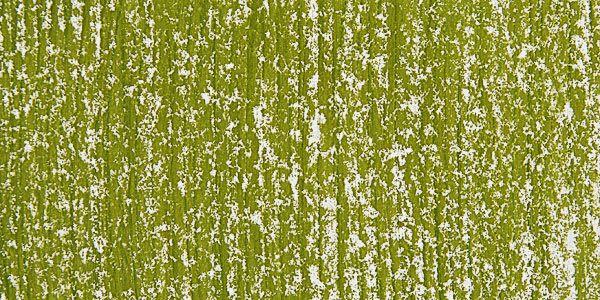
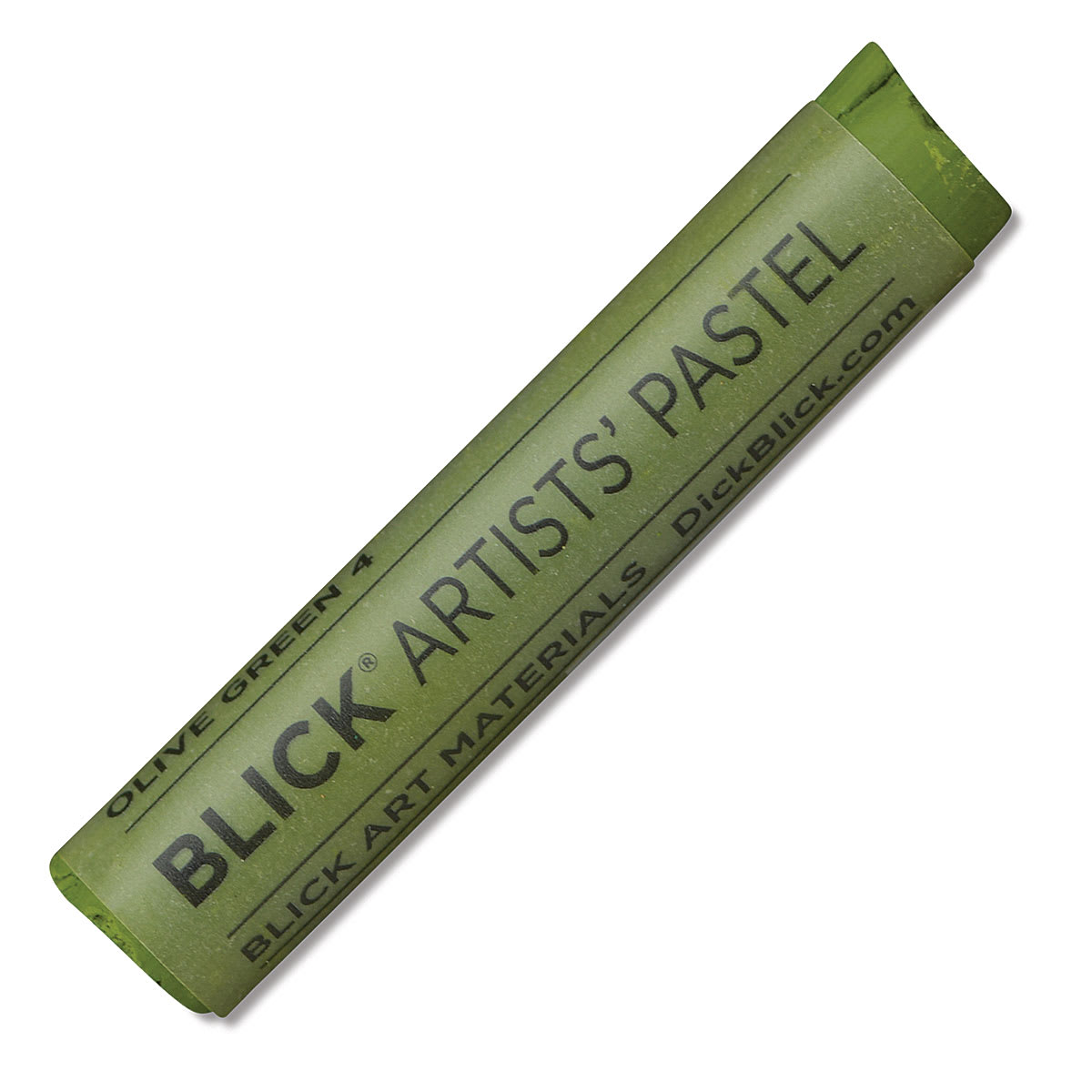
Blick Artists' Soft Pastel - Olive Green 4

Save For Later
My Store Pickup List
Please select a storeMy Wish Lists
My BlickU List(s)
My Quick Quotes
Product Details
- Description:
- Soft Pastel
- Color:
- Olive Green 4
- Hardness:
- Soft
Colors on Monitors -
Due to differences in users’ monitors, the colors presented are an approximation of the true color.
Reviews
Pigment Information
This color contains the following pigments:
PY83-Diarylide Yellow 83
PR264-Pyrrole Rubine
PG7-Phthalo Green
Pigment Name
PY83-Diarylide Yellow 83
Pigment Type
organic, disazo
Chemical Formula
C36H32Cl4N6O8
Properties
Diarylide Yellow is a semi-opaque, moderately staining, intense deep reddish yellow pigment with good tinting strength.
Permanence
Diarylide Yellow 83 has very good lightfastness and permanence. However, it can fade in tints, so some artists do not consider it suitable as an artists' color. Many other diarylide yellow pigments are reported to have fair to poor lightfastness, and some are completely fugitive. Diarylide Yellow 83 is reputed to be one of the most permanent of the entire group.
History
Diarylide Yellow comes from a family of azo pigments called Diarylide. These yellow hued pigments were developed around 1940 and are very important in printing inks.
Pigment Name
PR264-Pyrrole Rubine
Pigment Type
organic, aminoanthroquinone
Chemical Name
1,4-diketo-3,6-di(4'-tertiary butyl phenyl)-2,5-dihydro pyrrolo[3,4-c]pyrrole
Properties
This bluish red transparent pigment has high tinting strength. Diketo pyrrolo pyrrole pigments are noteworthy for their light stability, excellent weatherability, and outstanding heat stability.
Permanence
Pyrrole Rubine has excellent permanence and lightfastness for an organic pigment in its color range.
History
The Pyrrole group of synthetic organic pigments was developed in the 1980s. Pyrrole Rubine was first manufactured by Ciba Specialty Chemicals under the trade name Irgazine Ruby. Although not a perfect match for alizarin crimson, Pyrrole Rubine is one of several new pigments that has helped to close a traditional gap in the gamut of artist pigments, the lack of lightfast and transparent colors in the red/blue and red/violet parts of the spectrum.
Pigment Name
PG7-Phthalo Green
Pigment Type
organic
Chemical Name
polychlorinated copper(II) phthalocyanine
Chemical Formula
C32H3Cl13CuN8 to C32HCl15CuN8 or C32H16CuN8Cl15 (PG7) or C32Br6Cl10CuN8 (PG36)
Properties
Phthalo Green is a transparent, cool, bright, high intensity color used in oil and acrylics. It comes from a Phthalocyanine Blue pigment where most of the hydrogen atoms have been replaced with chlorine, forming highly stable molecules. It has similar pigment properties and permanence to Phthalo Blue. It is slow drying and an excellent base color for mixing a range of bright greens. Phthalo Green is considered a very good alternative to Viridian because it is intense and mixes well and can be used to emphasize mineral colors in various tints. However, its tinting strength is very high, so it can overpower other colors. This pigment most closely resembles the discontinued and toxic Verdigris.
Permanence
Phthalo Greens are completely lightfast and resistant to alkali, acids, solvents, heat, and ultraviolet radiation. They are currently used in inks, coatings, and many plastics due to their stability and are considered a standard pigment in printing ink and the packaging industry.
Safety Data Sheet
UPC Code: 741389072164