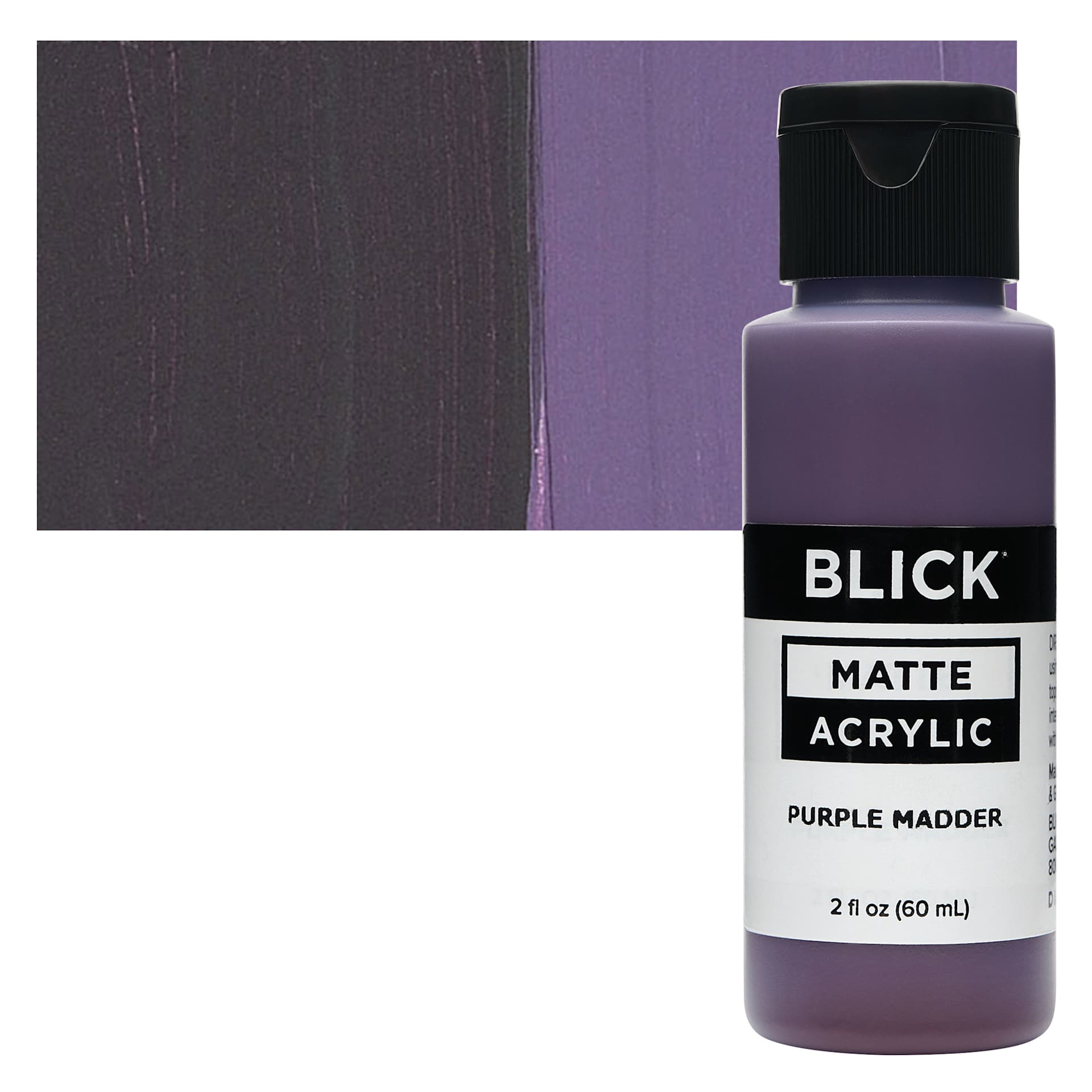
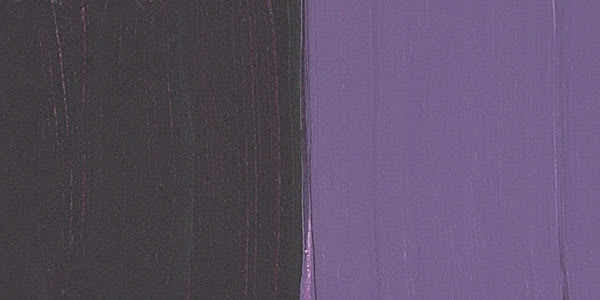
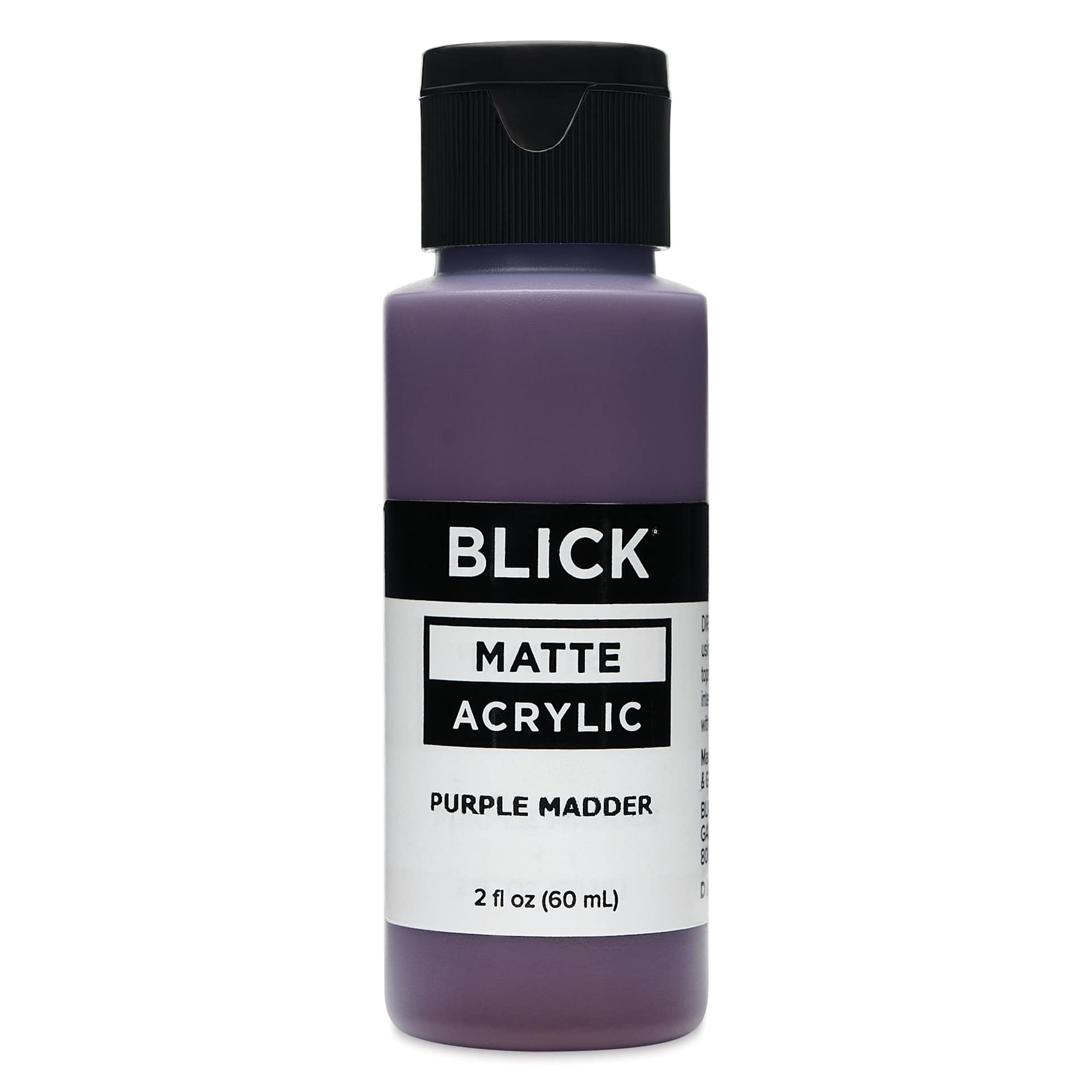
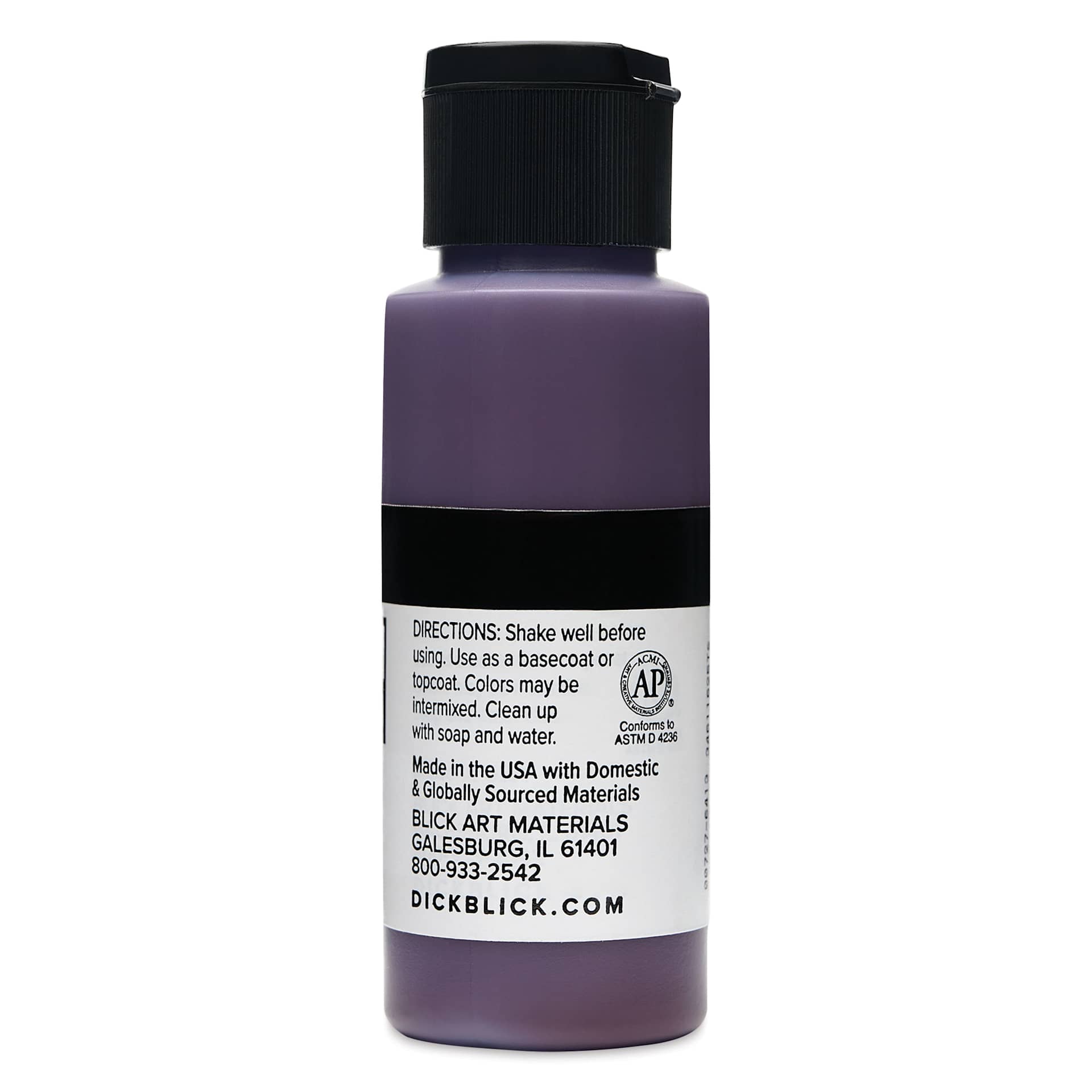
Blick Matte Acrylic - Purple Madder, 2 oz bottle
Save For Later
My Store Pickup List
Please select a storeMy Wish Lists
My BlickU List(s)
My Quick Quotes
Product Details
- Description:
- Matte Acrylic
- Color:
- Purple Madder
- Size:
- 60 ml (2 oz)
- Format:
- Bottle
Colors on Monitors -
Due to differences in users’ monitors, the colors presented are an approximation of the true color.
Products described as “Safe,” “Non-Toxic,” “Harmless,” or similar terms are understood to be safe WHEN USED IN A NORMAL FASHION FOR THEIR INTENDED PURPOSE AND IN ACCORDANCE WITH ANY APPLICABLE PRECAUTIONS.
Reviews
Pigment Information
This color contains the following pigments:
PBr7-Burnt Sienna
PR122-Quinacridone Magenta
PV23-Dioxazine Violet
Pigment Name
PBr7-Burnt Sienna
Pigment Type
earth
Chemical Name
iron oxides
Chemical Formula
Fe2O3
Properties
Burnt Sienna is a warm, mid-brown color formed by burning the yellow-brown limonite clay called Raw Sienna. It ranges from semi-opaque to semi-transparent due to the combination of its opaque, red-brown mass tone and its transparent, orangey undertone. It is an excellent mixing complement for blues and greens and creates salmon or peach colored tints when mixed with white. It can be useful for subduing bright colors and does not get chalky in dark mixtures.
Permanence
Burnt Sienna has good permanence and is considered one of the most versatile of the permanent pigments.
History
Burnt Sienna has been used as a pigment since prehistoric times, but its current name came about during the Renaissance. It comes from the city of Siena, in Italy, and is short for terra di Siena, meaning earth of Siena. Sienna was famous for the mining and production of earth pigments from the Renaissance until World War II. Due to the depletion of clay deposits in Tuscany, Italian siennas now come from other areas, including Sicily and Sardinia.
Pigment Name
PR122-Quinacridone Magenta
Pigment Type
organic, quinacridone
Chemical Formula
C22H16N2O2
Properties
Quinacridone Magenta is a semi-transparent and powerful bluish red with an impressive mixing range. It makes an excellent glazing color and is one of the bluest of the Quinacridone colors. The pigment's properties vary considerably, depending on how it is ground. Quinacridone pigments have relatively low tinting strength in general. For this reason, quinacridone colors are often expensive, because more pigment is required in the formulation.
Permanence
Quinacridone Magenta offers very good lightfastness in most media, but some have argued that it is less lightfast in watercolor form. Although Quinacridone Magenta received only a passing grade of "fair" under ASTM test protocols, other test results have rated the pigment very good to excellent. Transparent reddish violet pigments in general have more problems with lightfastness than any other range of colors. PR122 is often used as the Magenta of CMYK (four color) process printing because it offers a better tradeoff between tinting strength and lightfastness than other pigments in its class.
History
Quinacridone Magenta came from a red violet aniline dye that was first produced in 1858 by Natanson. It was called Magenta to commemorate a battle in Magenta, Italy. Over time, Magenta became the standard color name for a deep, violet red. Although quinacridone compounds became known in the late 19th century, methods of manufacturing so as to make them practical for use as commercial pigments did not begin until the 1950s. PR122 has become particularly popular in the formulation of Magenta for CMYK process printing.
Pigment Name
PV23-Dioxazine Violet
Pigment Type
organic
Chemical Name
carbazole dioxazine
Chemical Formula
C34H22Cl2N4O2
Properties
Dioxazine Violet is transparent and has very high tinting strength. It is a staining pigment, very dark valued when it is used at full strength. Concentrated, it paints out nearly black, but it mixes with Titanium White to form bright, opaque tints of purple. PV23 produces slightly redder shades than PV37. Because the hue can vary with the conditions of preparation and grinding, it may be offered in red shade, blue shade, and so forth.
Permanence
Dioxazine Violet has good lightfastness. There may be some concern about it fading or shifting in color in tints and washes. Some artists have reported that PV37, a molecular variant, is more lightfast than PV23.
History
Two molecular variants of Dioxazine Violet, PV23 and PV37, are available. They have similar properties, but mix slightly differently.
Safety Data Sheet
UPC Code: 092200018817