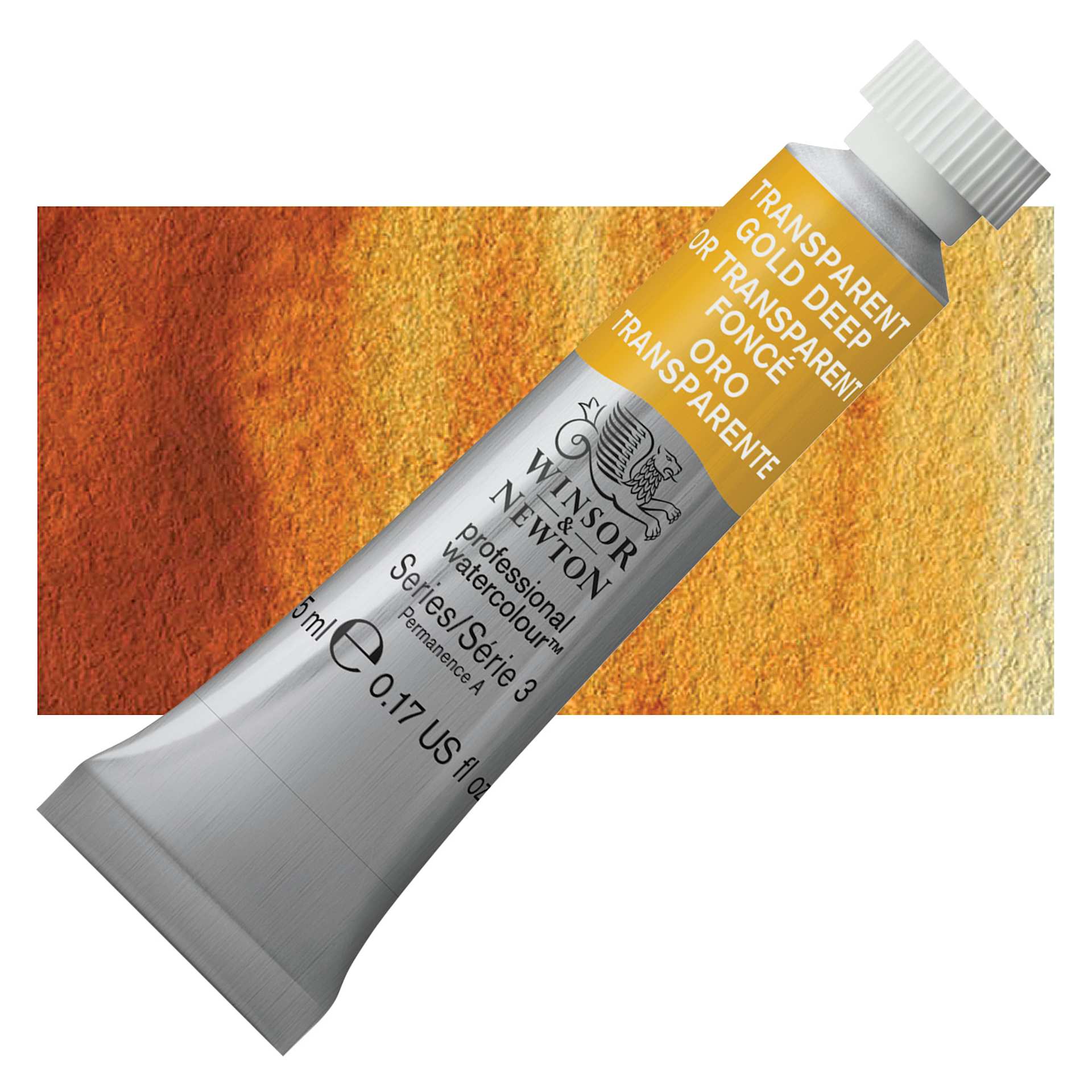
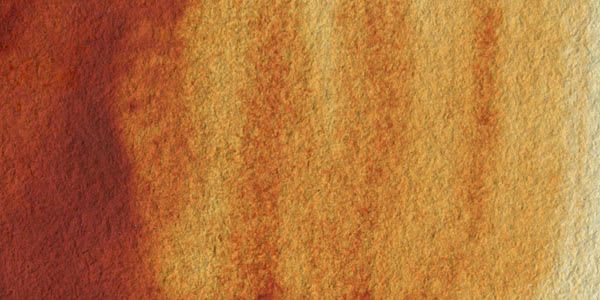
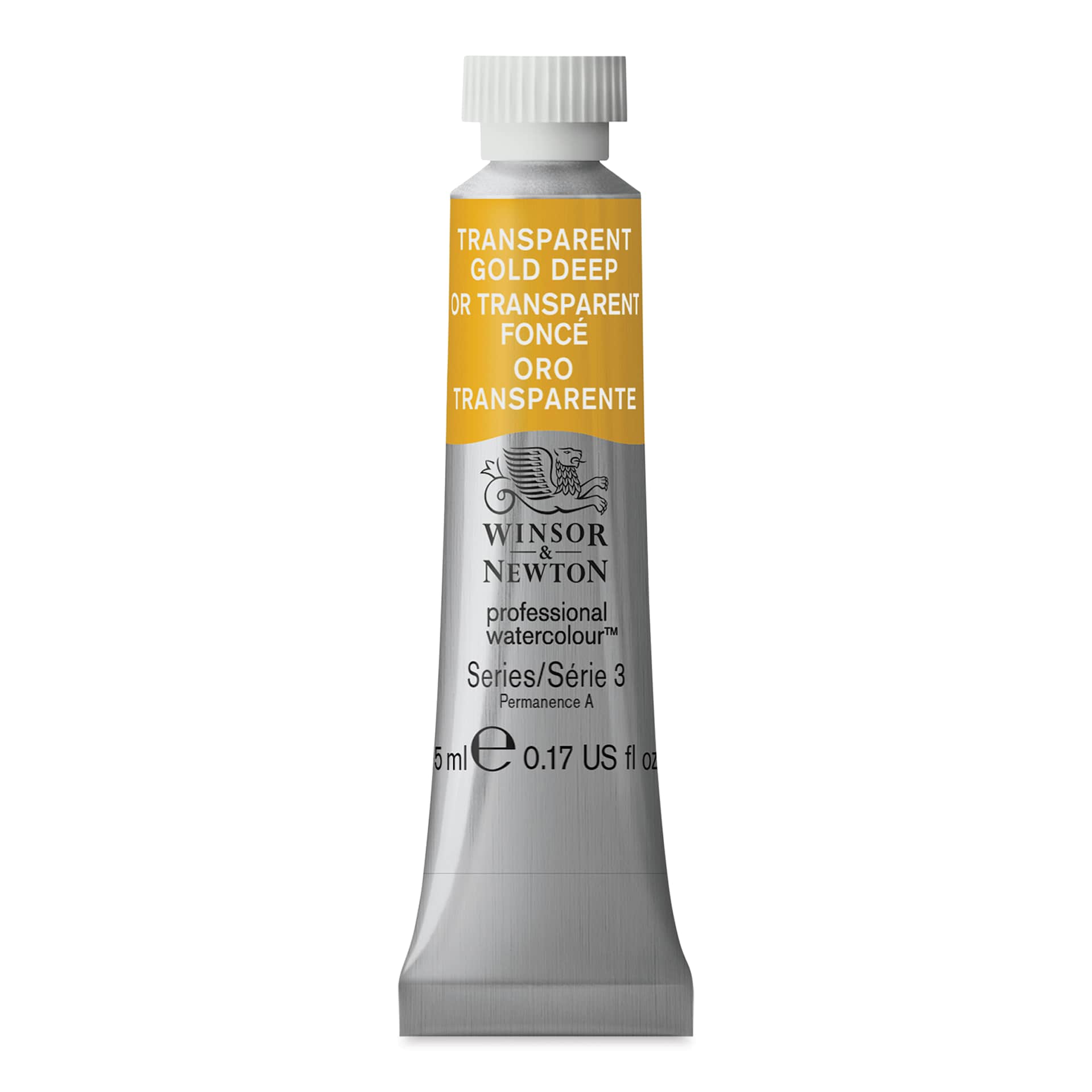
Winsor & Newton Professional Watercolor - Transparent Gold Deep, 5 ml Tube
Save For Later
My Store Pickup List
Please select a storeMy Wish Lists
My BlickU List(s)
My Quick Quotes
Product Details
- No.
- 547
- Description:
- Professional Watercolor
- Color:
- Transparent Gold Deep
- Series:
- 3
- Format:
- Tube
- Size:
- 5 ml (0.17 oz)
Shipping Note - Due to manufacturer distribution restrictions, Winsor & Newton products cannot be shipped to addresses outside of North America.
Reviews
Pigment Information
This color contains the following pigments:
PR179-Perylene Maroon
PV19-Quinacridone Violet
PY150-Nickel Azo Yellow
Pigment Name
PR179-Perylene Maroon
Pigment Type
organic, anthraquinone
Chemical Formula
C26H14N2O4
Properties
Perylene Maroon is a transparent, dull to moderately dull, deep red pigment. Its transparency makes it useful as a glazing color. Its mixing complement is Phthalo Green, and together they produce a pure black that is darker than most carbon-based pigments.
Permanence
Perylene Maroon has excellent permanence and lightfastness, and it can be an appropriate replacement for Anthraquinone Red in watercolor form.
History
Perylenes have been used as vat dyes since 1912, but they were not manufactured and sold as pigments until 1957.
Pigment Name
PV19-Quinacridone Violet
Pigment Type
organic synthetic, quinacridone
Chemical Formula
C20H12N2O2
Properties
Quinacridone Red is a high performance, transparent pigment with an average drying time and uneven dispersal. It is another name for Quinacridone Violet (PV19) and Quinacridone Red (PR192). Quinacridone pigments have relatively low tinting strength in general. For this reason, quinacridone colors are often expensive, because more pigment is required in the formulation.
Permanence
Quinacridone Violet has excellent lightfastness and is considered the most lightfast organic pigment in this shade range.
Pigment Name
PY150-Nickel Azo Yellow
Pigment Type
inorganic
Chemical Name
nickel azomethine yellow
Chemical Formula
C30H18Cl2N6NiO4
Properties
Nickel Azo Yellow is a transparent, moderately staining yellow pigment with high tinting strength. It is considered a good color match in botanical and landscape painting for natural gamboge (NY24), a historic yellow pigment with fair to poor lightfastness.
Permanence
Nickel azomethine yellow has excellent lightfastness.
History
Nickel azomethine yellow has been developed as an artist pigment becasue it is a close match for gamboge, a historic yellow.
Safety Data Sheet
UPC Code: 50694860
ASIN #: B00079TB9U